Global Value Chains in an Energy-Bound World
Europe as the Organising Node Between Africa and Eurasia
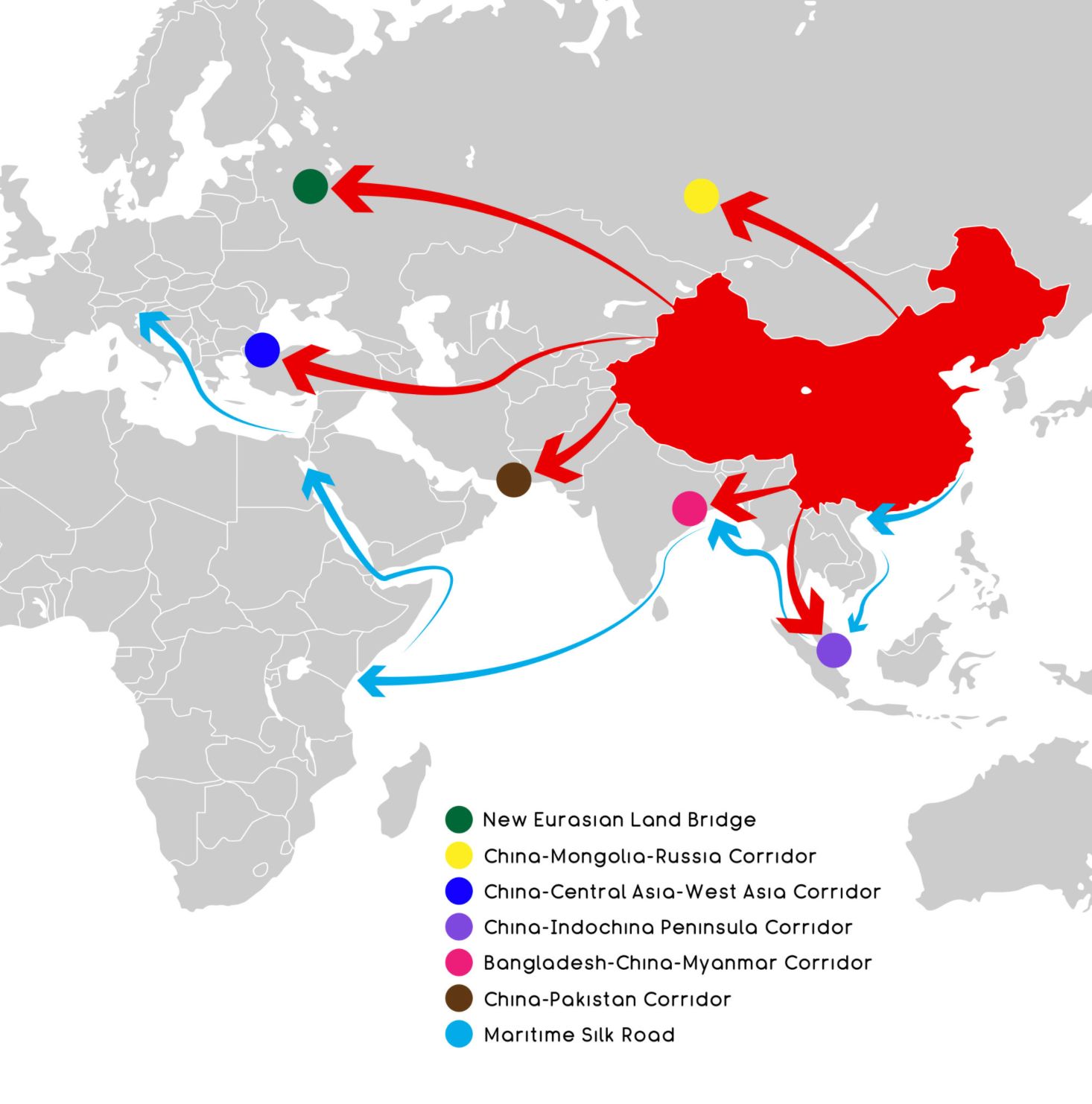
Keynote
Global value chains were built for a world of abundant energy, frictionless logistics, and cost arbitrage across borders. That world has ended. In an energy-bound system, production geography is no longer determined primarily by labour costs or trade openness, but by access to stable, affordable energy, resilient infrastructure, and controllable corridors. This article examines how energy constraint is reorganising global value chains—driving regionalisation, reshoring failures, and new forms of dependency—and why supply chains have become instruments of power rather than neutral channels of efficiency.
Preface: From Globalisation to System Integration
This paper examines how global value chains (GVCs) reorganise under conditions of energy constraint, and why this reorganisation places Europe at the structural centre of an integrating Africa–Eurasia economic system.
It builds directly on:
- The Energy Paradigm Shift, which establishes energy as the binding constraint of modern production
- System Default, which explains how energy constraint produces an anarchic, G2-structured system under stress
The purpose here is narrower and operational:
to explain how value chains now form, where they anchor, and why
geography matters again.
This is not an argument for de-globalisation. It is an argument that globalisation has changed form.
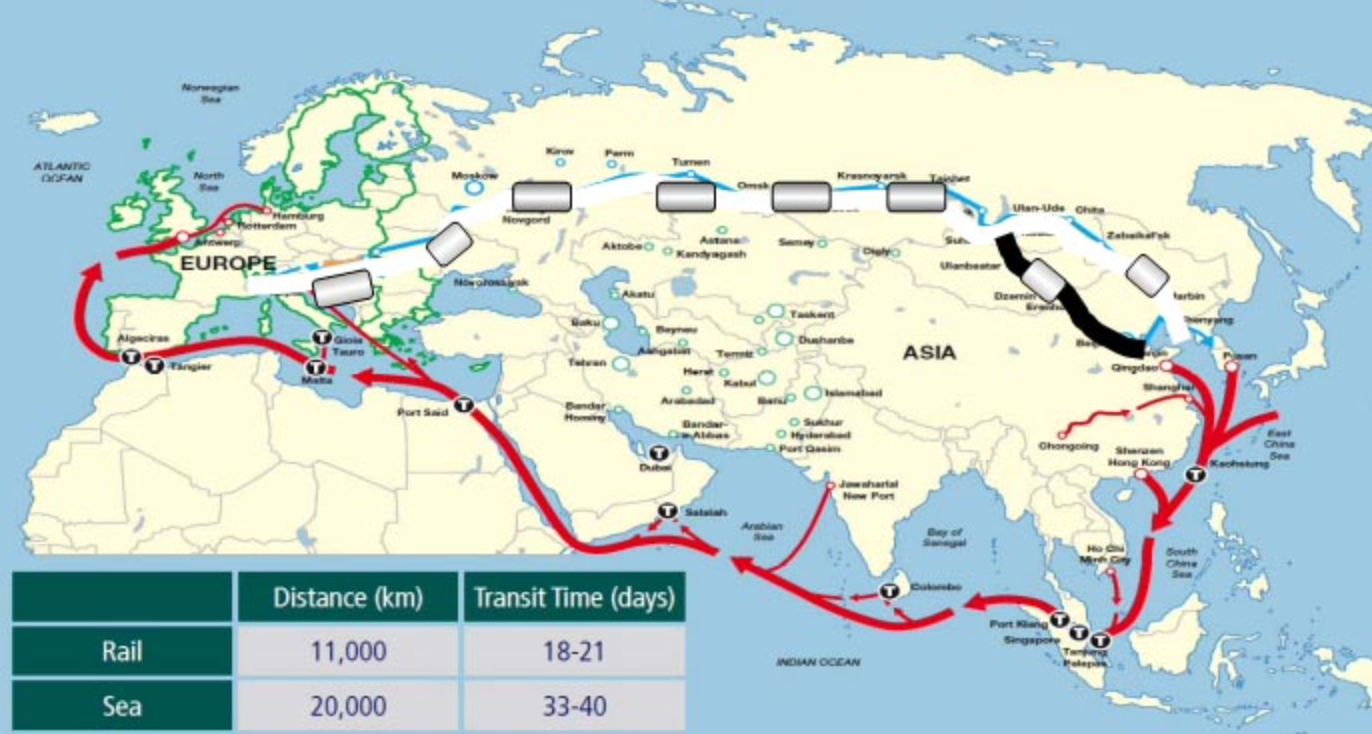
Eurasia functioning as a continuous industrial and logistics space under energy constraint.
1. The End of Cost-Only Global Value Chains
The dominant model of globalisation treated value chains as:
- Cost-minimising
- Energy-agnostic
- Geography-neutral
- Financially optimised
That model depended on three assumptions:
- Cheap and abundant energy
- Stable logistics and fuel costs
- Predictable geopolitical conditions
Those assumptions no longer hold.
In an energy-bound world, value chains are constrained by:
- Energy availability and price volatility
- Grid capacity and infrastructure speed
- Transport energy intensity
- Exposure to geopolitical and financial shocks
As a result, resilience, proximity, and controllability increasingly outweigh pure cost efficiency.
2. Energy as the Anchor of Value Chains
In the current system, energy anchors value chains spatially.
Production does not locate where labour is cheapest, but where:
- Energy is reliable
- Power costs are predictable
- Grids can scale
- Infrastructure deployment is feasible
This applies across:
- Heavy industry
- Advanced manufacturing
- AI and data infrastructure
- Defence production
- Logistics and transport
Value chains therefore reorganise around energy-secure nodes, not abstract markets.
This is the core mechanism reshaping global trade.
3. The European Stack: Energy → Industry → Compute
Europe’s relevance in this system lies in its stacked structure, not in scale dominance.
At its core, Europe combines:
- Dense energy demand
- Advanced industrial ecosystems
- High-value manufacturing
- Regulatory and standards capacity
- Proximity to multiple energy and resource zones
The European stack is not self-contained. It is designed to integrate.
This is where Africa and Eurasia enter—not as peripheries, but as
functional layers.  ###
4. Africa as the Energy and Regeneration Layer
###
4. Africa as the Energy and Regeneration Layer
Africa’s role in future GVCs is often framed narrowly as:
- A development challenge
- A migration concern
- A source of raw materials
This framing is strategically incomplete.
In an energy-bound world, Africa functions as:
- A renewable energy expansion zone
- A source of energy-intensive inputs
- A site for early-stage processing and industrialisation
- A long-term demand and growth anchor
When integrated with Europe:
- Energy production can scale where land and solar/wind potential are abundant
- Value capture shifts from extraction to processing
- Infrastructure investment becomes bankable through proximity to European markets
- Trade becomes stabilising rather than extractive
Africa is therefore not an external dependency, but a structural extension of Europe’s energy and industrial stack.
5. Eurasia as the Industrial and Logistics Continuum
Eurasia, understood as a continuous landmass rather than a bloc, functions as:
- A manufacturing and processing corridor
- A logistics and transport backbone
- A site of industrial depth and specialisation
In an energy-bound system:
- Overland routes regain importance
- Transport energy intensity matters
- Reliability and redundancy outperform distance minimisation
Europe’s position at the western terminus of Eurasian land routes allows it to:
- Anchor industrial standards
- Shape value chain governance
- Integrate production stages without full offshoring
- Reduce exposure to maritime chokepoints
This is not about dominance, but system coordination.
6. Overlaying Africa and Eurasia onto the European Stack
When Africa and Eurasia are overlaid onto Europe’s energy–industry–compute stack, a different map of globalisation emerges:
- Energy generation and expansion concentrate where geography allows (Africa, periphery zones)
- Industrial transformation and system coordination concentrate in Europe
- Manufacturing depth and logistics extend across Eurasia
- Compute, standards, finance, and governance anchor in European institutions and markets
This configuration:
- Shortens supply chains without collapsing them
- Diversifies risk without fragmenting markets
- Preserves openness while reducing systemic exposure
It is not a bloc. It is a functional system.

Africa as the southern energy and regeneration layer of the European system
7. Why This Matters Under System Default Conditions
Under conditions of systemic stress:
- Long, energy-intensive value chains break first
- Financial and logistical shocks propagate faster
- Political leverage concentrates around chokepoints
Europe’s ability to act under System Default conditions depends on:
- Whether its value chains are energy-aware
- Whether its trade architecture supports resilience
- Whether Africa and Eurasia are integrated structurally, not rhetorically
GVC design becomes a strategic instrument, not a market outcome.
Conclusion: Europe as Organiser, Not Periphery
In an energy-bound world, global value chains do not disappear. They re-anchor.
Europe’s strategic opportunity is not to retreat from globalisation, nor to compete on scale with system-builders. It is to act as the organising node of an integrated Africa–Eurasia economic system—one that aligns energy, industry, compute, and governance under conditions of constraint.
This is not a return to old trade models.
It is the emergence of system-aware globalisation.
In an energy-bound system, value chains follow power, power follows energy, and geography reasserts itself as strategy.
Further Reading
To place this analysis within the broader system architecture, readers may wish to consult:
Energy as the Base Constraint
Energy and the Base Layer of Constraint*(Systems under Constraint) On why energy availability, cost, and system design now condition all downstream economic activity.
Energy as Operating System of Power The foundational thesis: energy as the organising substrate of modern economic and geopolitical power.
System Control and Sovereignty
- Energy Sovereignty as System Control (Global / Doctrines) On why control over energy infrastructure and coordination determines strategic autonomy.
- Europe’s Energy Paradigm Shift (EU
Sovereignty)
On Europe’s structural exposure to energy cost volatility and infrastructure fragmentation.
Trade, Corridors, and Fragmentation
- Corridors, Chokepoints, and the Geography of
Pressure (Systems under Constraint)
On how logistics routes and infrastructure bottlenecks transmit pressure in constrained systems. - Industrial Power Post-Globalisation (Tech War /
Security)
On why industrial capacity and trade are increasingly shaped by security and resilience rather than efficiency.
Downstream Effects
- Industrial Policy Inside Constrained Systems
(Systems under Constraint)
On why reshoring and industrial policy fail without energy-aligned value chains. - Decarbonisation as a Tech War Instrument (Tech War
/ Dynamics)
On how electrification reshapes production geography and competitive advantage.
I. GLOBAL — Structural Foundations
These essays establish energy as the base layer of constraint and explain how stress reveals systemic asymmetry.
Asymmetry Under Stress How constraint reveals differences in resilience, coordination capacity, and shock absorption.
Energy–Industry–Compute Hierarchy
II. TECHWAR — Stack Fractures Under Constraint
These pieces show how energy constraint propagates upward into technology stacks and compute concentration.
Stack-Level Fractures in the Tech War How system dependencies fracture under pressure — and why energy stress cascades across layers.
Compute Locality in an Energy-Bound AI System Why AI infrastructure gravitates toward power stability and low marginal electricity cost.
AI and Energy — The Sovereignty Stress Test
How artificial intelligence intensifies energy dependency and amplifies structural ceilings.Industrial Ecosystems and System Competition
III. EU SOVEREIGNTY — Constraint as Political Condition
These essays apply the Energy-Bound framework specifically to Europe’s structural position.
Energy as Europe’s Strategic Constraint Why energy marginal cost structure now defines Europe’s competitive ceiling.
Energy Sovereignty as System Control (EU) From fuel ownership to integration control: sovereignty as system design
Beyond Ideology — Foundational Doctrine
How Europe’s Political Lens Obscures Structural Realities in a Multipolar World
Sequencing, Deregulation, and the Political Economy of ExposureEurope’s Microprocessor and Energy Dependency Trap
How compute dependency and energy cost structure interact as a failure mode.
IV. Boundaries — Social and Temporal Limits
Energy constraint is not only technical or geopolitical. It is social and institutional.
**The Legitimacy Boundary— Labour Markets and the Social Limits of Strategic Autonomy**
Democratic durability under transition stress.Legitimacy, Labour, and System Durability — Reference Index Consolidated essays on consent, affordability, and social absorption capacity.
EU Decisive Decade Time as constraint: irreversibility and strategic narrowing windows.
V. Doctrinal Extensions
These doctrine cards operationalise the Energy-Bound condition into actionable architectural principles.
- Mediterranean
Decentralised Energy Doctrine Why fragmented geography and climate
stress make decentralised electrification structurally optimal.
- Energy Sovereignty as System Control Integration, pricing, storage, and governance as the new loci of power.
Suggested Reading Path (For New Readers)
If someone encounters the term Energy-Bound System for the first time, the most coherent sequence is:
Energy-Bound System (this page)