SYSTEM STACK ANALYSIS
Propagation pf power in an energy-bound system
System Architecture
Power propagates through a structured chain:
Energy → Industry → Compute → Ecosystems → Platforms → Standards → Capital → Currency → Sovereignty
Control of lower layers determines the structure and limits of higher layers.
I. Energy Systems — Physical Input Layer
→ defines cost, availability, and the structural ceiling of the system
• Energy Systems — Cross-Panel Index
• Decarbonisation, Electrification, and Cost
II. Industrial & Ecosystem Systems — Transformation Layer
→ converts energy into production, capability, and scaling capacity
• Industrial Ecosystems — Cross-Panel Index
III. Compute & AI Systems — Acceleration Layer
→ converts energy and industry into computation, intelligence, and infrastructure
• Energy–AI Infrastructure — Cross-Panel Index
IV. Digital Sovereignty — Control Layer
→ determines access, governance, and system-level control of computation
• Digital Sovereignty — Index
V. Capital & Monetary Systems — Outcome Layer
→ reflects how system control translates into capital formation, pricing power, and monetary stability
• Energy Capital Currency Index
• Energy Constraint Index
VI. Geopolitics of Systems — External Constraint Layer
→ shapes system interaction through competition, chokepoints, and external dependencies
• Energy Geopolitics — Index
VII. System Interface — Strategic Interpretation Layer
→ where system structure becomes geographically and operationally visible
• Mediterranean Guide to the System
EUROPEAN SOVEREIGNTY
Core Navigation
• Strategic Constraint
• Europe’s Challenge
• Energy Constraint and the Monetary Ceiling
• Digital Sovereignty — Index
• Doctrine — Index
• Toward a European Power Architecture
• Monetary Ceiling — Core Transmission (Northern Europe)
• Execution Under Compression
• Legitimacy — Index
• Capital Allocation Problem Map — Greece
• System Evidence — Validation Layer
• Investor — Index
• Strategic Autonomy
• From Constraint to Sovereignty — European System Architecture
Key Reading Paths
Energy → System → Monetary
• Energy as Europe’s Strategic Constraint
• Systemic Asymmetry in Europe
• Chokepoints Under Compression
• Energy Constraint and the Monetary Ceiling
AI, Compute, Platform
• AI and Compute Ecosystems in Europe
• Compute Locality in an Energy-Bound AI System
• Platform Dependence and Capital Leakage in Europe
• Standards as Power
Execution → Limits
• Monetary Ceiling — Core Transmission (Northern Europe)
• Execution Under Compression
• Legitimacy Boundary
• The Physical Limits of Power
Mediterranean / Regional
• Greece as an Energy–Compute Node
• Mediterranean Energy–Compute Corridors
• Greece Capital Allocation Problem Eu Sovereignty
Evidence / Investor
• Evidence for Investors
• EU–US Structural Resilience Matrix
• The Monetary Ceiling — Greece
• Investor Path — Capital Allocation in an Energy-Bound System
• Executive Brief — Capital Allocation in an Energy-Bound System
• Mediterranean Executive Allocation Note
• Greece — Market Transmission Investor Brief
• Mediterranean Energy–Compute Investment Platform (MECIP)
Miscellaneous / Supplementary
• Financial–Physical Asymmetry in an Energy-Bound System
• Energy Infrastructure Investment Vehicle — Mediterranean System
• Greek Energy Infrastructure Yield Vehicle (GEIYV)
• GEIYV — Phase 1 Asset Map
• GEIYV — Phase 2 Expansion Framework
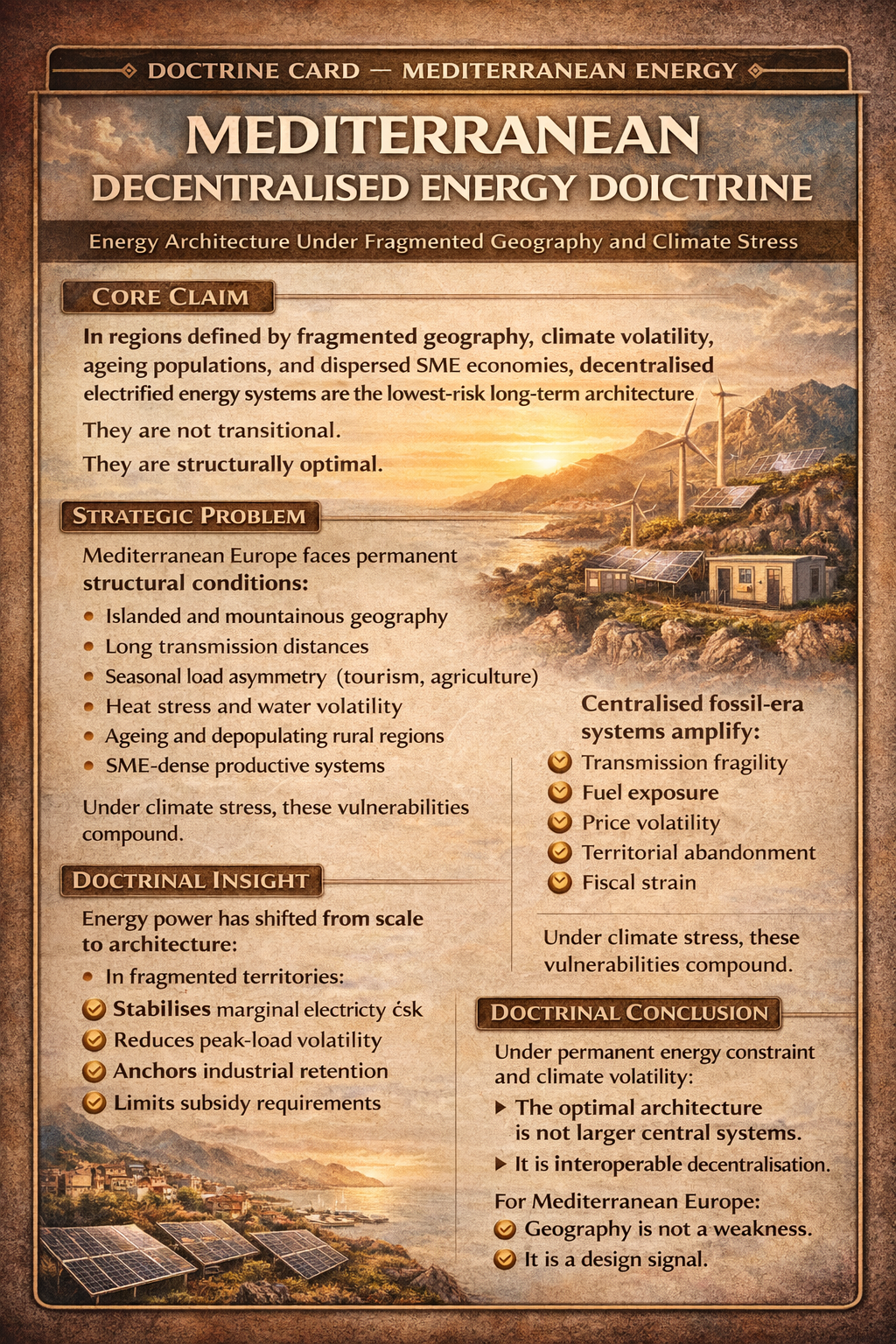 ## Mediterranean Decentralised Energy
Doctrine
## Mediterranean Decentralised Energy
Doctrine