10. Demography After Malthus: Energy, Technology, and the Geography of the 21st Century
Energy, growth, and strategic autonomy — a systems perspective
 This article is part of the “New
G2 Global Order” series, which examines how energy, finance, technology,
and governance are restructuring global power.
This article is part of the “New
G2 Global Order” series, which examines how energy, finance, technology,
and governance are restructuring global power.
Preface: Why Demography Can No Longer Be Read in Isolation
Global demographics are shifting at a speed and scale without historical precedent. Yet the defining feature of this transformation is not population growth or decline alone, but the decoupling of demography from its historical constraints. Land, climate, and geography no longer determine economic viability in the way they once did. Energy systems, infrastructure, technology, and institutional capacity increasingly mediate the relationship between people, place, and productivity.
This article argues that demographic change must now be read through a systems lens: energy availability, technological capability (including AI), infrastructure, and economic integration. Where these align, population growth generates demand, resilience, and development. Where they do not, even stable or declining populations face stagnation.
For Europe, this shift has strategic implications. Demographic decline at home coincides with rapid population growth in neighbouring regions. The question is not whether this creates pressure, but whether Europe treats this reality defensively — through migration politics alone — or constructively, by converting neighbouring growth into regenerative economic integration.
1. The End of the Malthusian World
The long-standing Malthusian assumption — that population growth is constrained primarily by land, climate, and resource scarcity — has been decisively overturned. Over the past half century, population growth has accelerated precisely in regions once considered too arid, tropical, cold, or environmentally hostile to sustain large-scale settlement.
Climate is no longer destiny. Technology, energy, and infrastructure have progressively weakened the constraints that once defined where people could live, work, and produce. Few inventions symbolise this more clearly than the air conditioner, which — alongside modern medicine, fertilisers, irrigation, electricity, and transport — transformed vast swathes of the planet from marginal to economically viable.
Historically, inadequate transportation and communications imposed severe friction on development. Low population density per square kilometre reduced market size, productivity, and state capacity. Over the past two generations, this constraint has eroded rapidly. What matters today is no longer land availability, but energy availability and system capacity.
2. Energy as the New Habitability Constraint
Across Africa, Asia, and the Middle East, societies have demonstrated that harsh environments can be adapted to — and in some cases transformed — through technological innovation and institutional learning. Infrastructure, urbanisation, agricultural adaptation, and above all energy systems have allowed economies to function in conditions once assumed to be prohibitive.
Crucially, energy — not climate — has become the binding constraint. Where energy is abundant, reliable, and scalable, habitability expands. Where it is scarce or unstable, development stalls regardless of population size.
Decentralised energy systems — solar, wind, micro-grids, storage, and distributed generation — are accelerating this transformation. Unlike legacy centralised grids, they:
- scale faster in low-income and low-density regions
- reduce exposure to imported fuel volatility
- extend electricity access beyond dense urban cores
- support development without waiting for full grid build-out
In this context, decarbonisation is not primarily an environmental objective. It is a development accelerator. Lower long-run energy costs, improved balance-of-payments resilience, and modular deployment enable industrialisation and service-sector growth in regions historically excluded from large-scale power infrastructure.
Pakistan offers a concrete illustration. Faced with chronic energy shortages, external fuel dependence, and rapid population growth, it has accelerated deployment of solar, hybrid systems, and distributed generation. While challenges remain, these investments are reshaping local economies — improving energy access for households, agriculture, and small industry while reducing vulnerability to external shocks. Similar dynamics are visible across South Asia, the Middle East, and East Africa.
3. Africa: The Demographic Core of the 21st Century
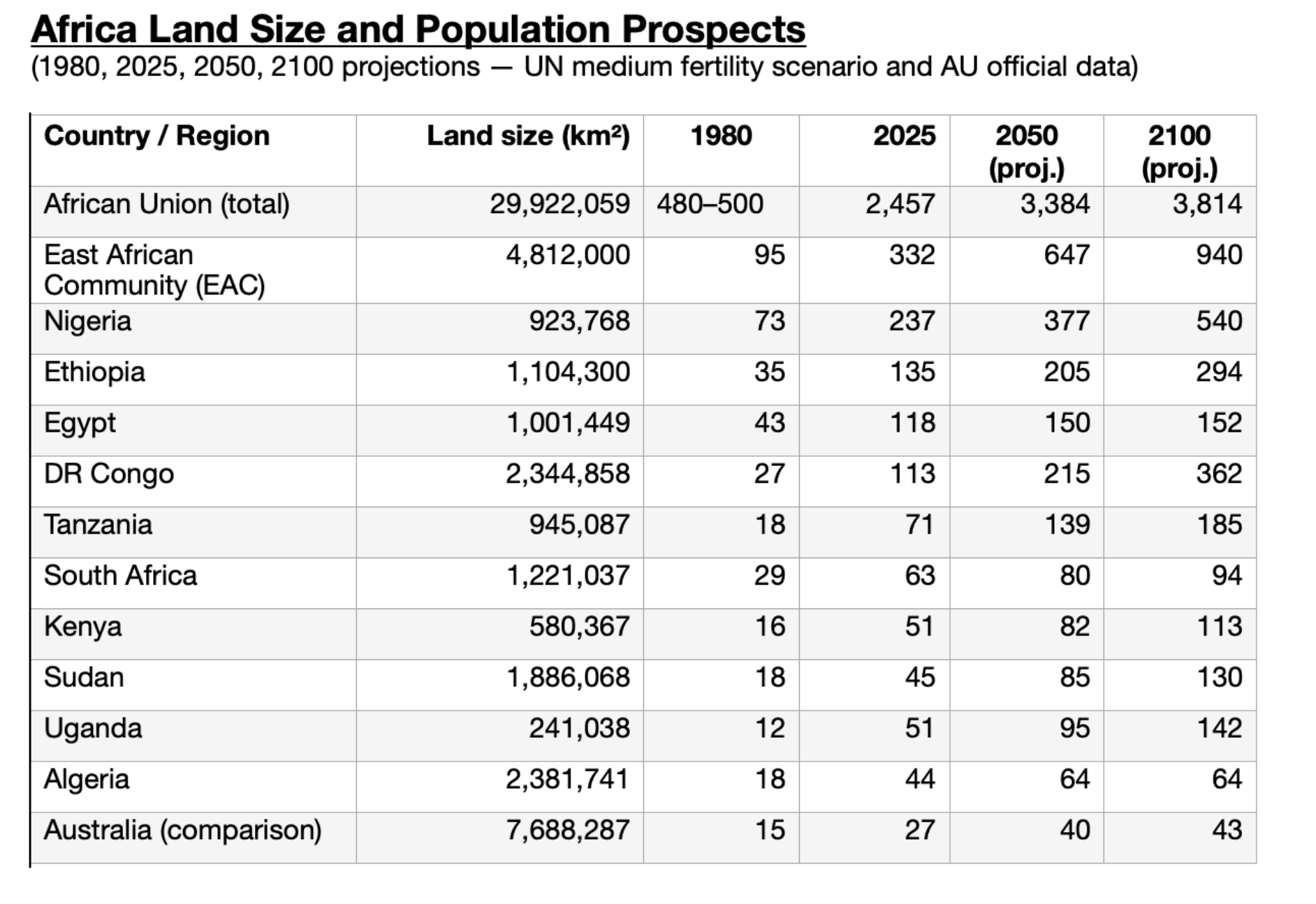
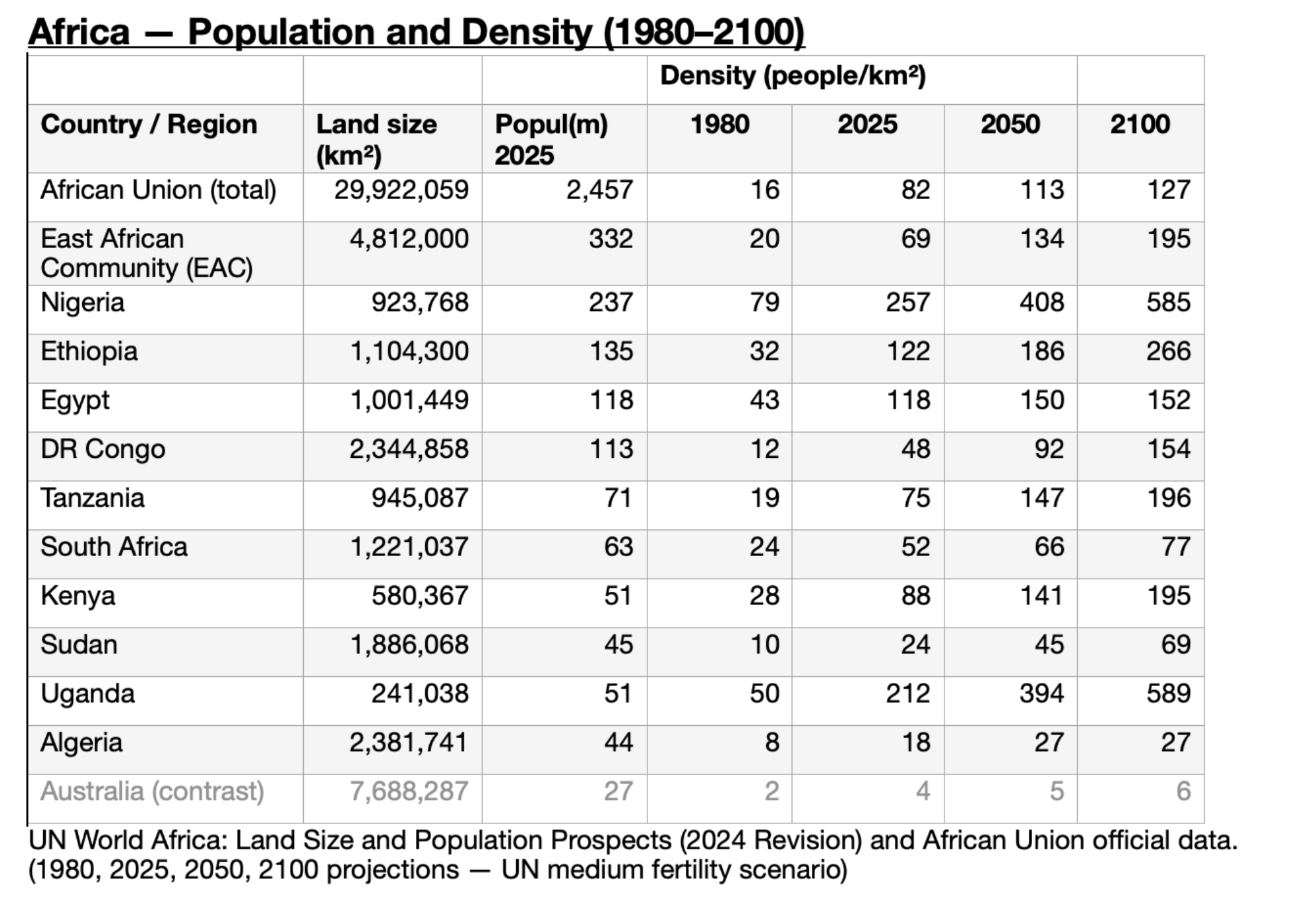
Nowhere is the decoupling of population growth from land constraints more visible than in Africa. According to the UN World Population Prospects (2024, medium-fertility variant), Africa’s population has grown from roughly 0.5 billion in 1980 to over 2.45 billion today and is projected to reach nearly 3.8 billion by 2100. Population density increases more than sevenfold over this period.
This growth is uneven but transformative:
- Nigeria remains Africa’s largest population and is projected to become the world’s second largest by late century
- The East African Community is the fastest-growing region globally
- DR Congo, Uganda, Tanzania, and Kenya experience the largest absolute increases
- Algeria, Egypt, and South Africa plateau earlier due to fertility decline and geography
Africa’s challenge is not land scarcity but tempo: the speed at which energy systems, infrastructure, education, and governance scale to match demographic reality. Decentralised energy, mobile communications, and modular infrastructure reduce the historical lag between population growth and economic integration.
4. Eurasia: From Climatic Constraint to Engineered Landmass
Running parallel to Africa’s expansion is a quieter but equally significant transformation across Eurasia. Long portrayed as climatically constrained or demographically stagnant, Eurasia is increasingly an engineered continent.
China’s demographic story is not only one of population size, but of land engineering. Irrigation networks, desert stabilisation, reforestation, energy deployment, and high-speed transport corridors have integrated regions once considered marginal. Xinjiang, Inner Mongolia, and western provinces illustrate how infrastructure and energy can substitute for climate and density. Even as China’s population declines, these transformations allow economic output to remain resilient.
Russia faces the inverse challenge: immense land area combined with extremely low population density. Yet here too, technology has altered the equation. Cold-climate habitation, energy-intensive urban systems, Arctic logistics, pipelines, and agricultural expansion in southern Siberia increase the economic usability of territory. With population density between roughly 9 and 12 people per km², relatively small demographic or migration shifts can have outsized economic effects when paired with infrastructure and energy capacity.
Taken together, Eurasia is no longer passively shaped by climate. It is increasingly defined by:
- energy substituting for climatic comfort
- infrastructure substituting for density
- technology substituting for labour
5. The Arab World: From Energy Chokepoint to System Integrator
For much of the 20th century, the Middle East’s global role was defined by fossil fuels and strategic trade routes. Oil rents shaped domestic political economies, while geography placed the region at the centre of maritime and security architectures. This produced both wealth and instability.
That configuration is now evolving.
The region combines some of the world’s lowest-cost fossil energy with exceptional solar and wind potential, high capital availability, and compact population clusters surrounded by vast land. As decentralised and low-carbon energy systems scale, the region’s energy advantage broadens rather than disappears.
Energy-intensive systems — air conditioning, desalination, vertical urbanisation, and digital infrastructure — already allow large populations to thrive in extreme climates. As energy becomes cheaper and more resilient, environmental constraints weaken further.
Geographically, the Arab world remains the hinge between Africa, Eurasia, and South Asia. As global value chains regionalise, this position gains renewed relevance. The region is increasingly positioned not merely as a transit corridor, but as a system integrator — linking African demographic growth, Eurasian land and energy, and European demand.
6. Demographic Reversal in the Industrial World
In contrast, the demographic trajectory of much of Europe, Japan, and East Asia has reversed. Persistently low fertility and rapid aging are producing population decline.
The consequences are structural:
- shrinking workforces and rising dependency ratios
- fiscal pressure on pensions and healthcare
- slower productivity growth
- constrained public investment
Europe’s issue is not density — it remains highly populated — but momentum. Workforce shrinkage is no longer cyclical but structural. At the same time, Europe is relatively resource-poor, particularly in energy and raw materials.
7. Europe, Neighbours, and the Opportunity for Regenerative Integration
Taken together, demographic and energy trends point to a rebalancing of global growth engines. Africa and Eurasia will supply most population growth, labour, and incremental demand this century. Europe’s long-term resilience therefore depends on how it positions itself relative to these regions.
This is where the energy–AI–sovereignty framework matters. Advanced economies no longer compete on labour quantity but on their ability to convert energy into productivity through technology, infrastructure, and coordination. AI and automation raise output per worker — but only where energy systems and value chains are robust.
Engagement with Africa, the Mediterranean, and Eastern Europe offers Europe a positive, growth-oriented strategy:
- neighbouring growth generates demand for European goods and services
- regional value chains reduce fragility and logistics costs
- energy cooperation lowers long-term volatility
- demand growth works in both directions
This reframes engagement away from immigration alone toward shared production, investment, and demand creation.
8. Uncertainty, Projections, and Political Narratives
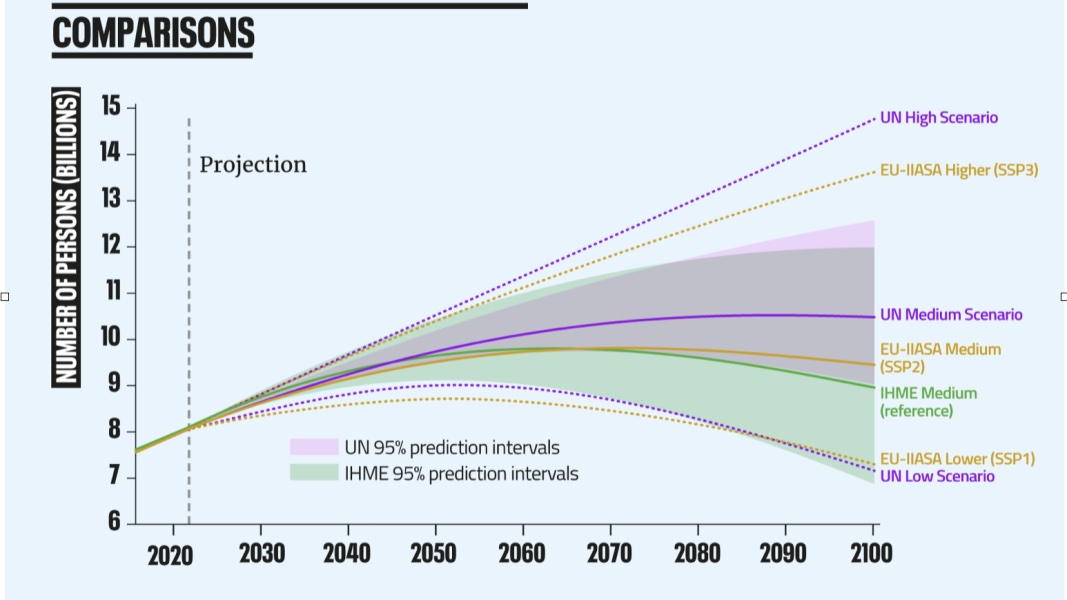
All population projections remain contingent. Fertility, mortality, migration, and policy choices materially alter outcomes. High-migration scenarios produce very different trajectories from medium or low variants, particularly for countries such as the UK.
The UN World Population Prospects 2024 medium-fertility variant remains the most widely accepted baseline. Claims that diverge sharply from it often rely on high-migration assumptions, selective scenario choice, or political framing. Discrepancies between media claims and demographic consensus usually reflect this methodological divergence rather than demographic fact.
Conclusion: Adaptation, Not Abundance
The defining demographic story of the 21st century is not collapse or explosion, but adaptation. Africa’s growth, Eurasia’s engineered habitability, and Europe’s demographic reversal are interlinked components of a single global transition.
Malthus was not defeated by abundance, but by energy, technology, and organisation.
For Europe, the challenge ahead is not to manage decline, but to build regeneration — by aligning energy systems, AI-enabled productivity, and regional economic integration into a strategy that converts demographic reality into shared prosperity and sustained sovereignty.
Annex: Demographic, Land, and Density Evidence
This annex consolidates demographic tables, charts, and projections referenced in the main article. All population figures are harmonised using the UN World Population Prospects 2024 (medium-fertility variant), supplemented by African Union, Eurostat, World Bank, and regional bloc data.
A1. Africa: Land Size, Population Growth, and Density
Africa’s population has increased from approximately 0.5 billion in 1980 to over 2.45 billion in 2025, while land area remains constant. Under the UN medium-fertility scenario, Africa approaches 3.8 billion people by 2100, with average density rising from ~16 to ~127 people per km2.
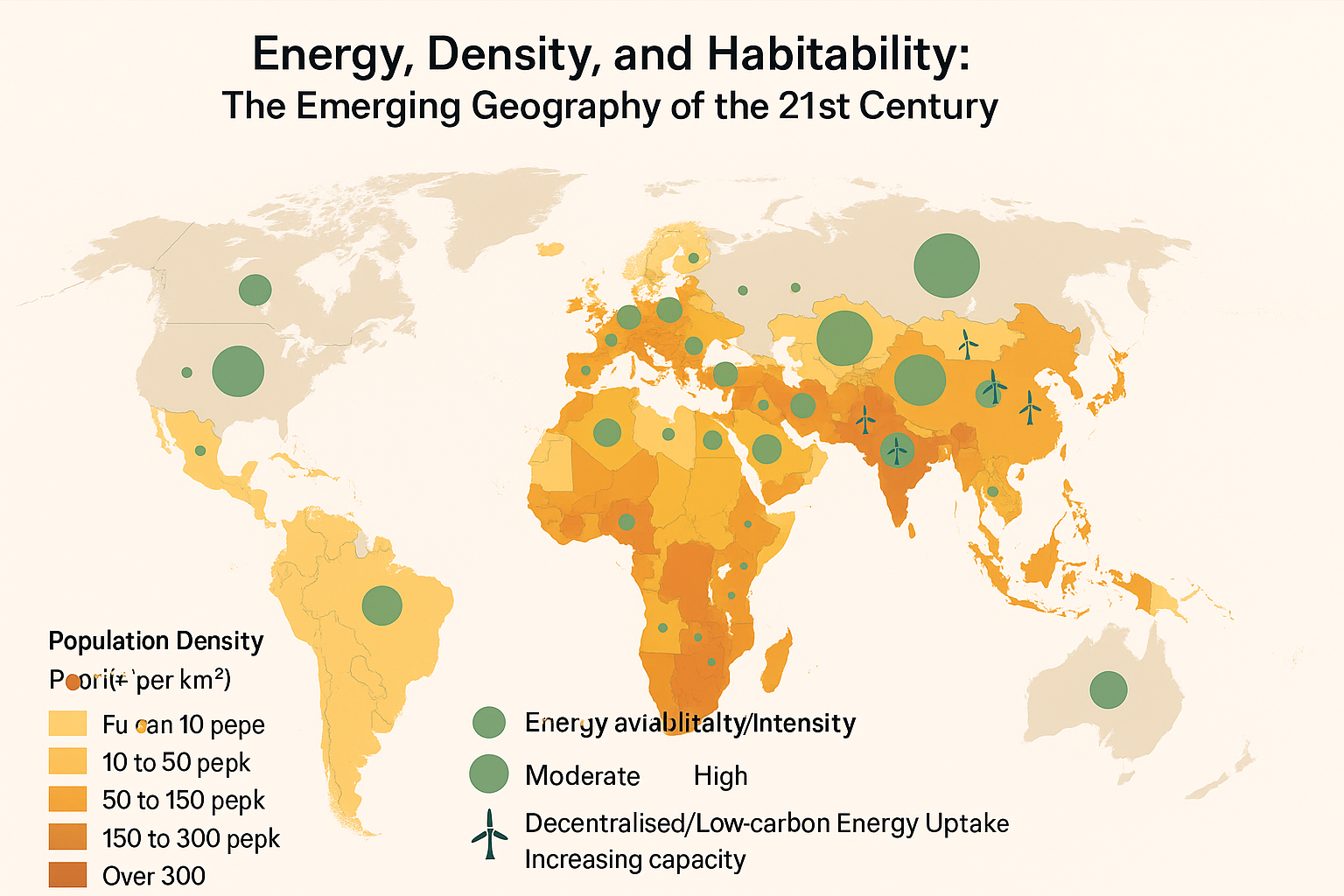
A2. Energy, Density, and Habitability
These figures illustrate how energy availability increasingly determines habitability and population density. Regions with decentralised energy deployment show improved resilience and economic integration even under harsh climatic conditions.
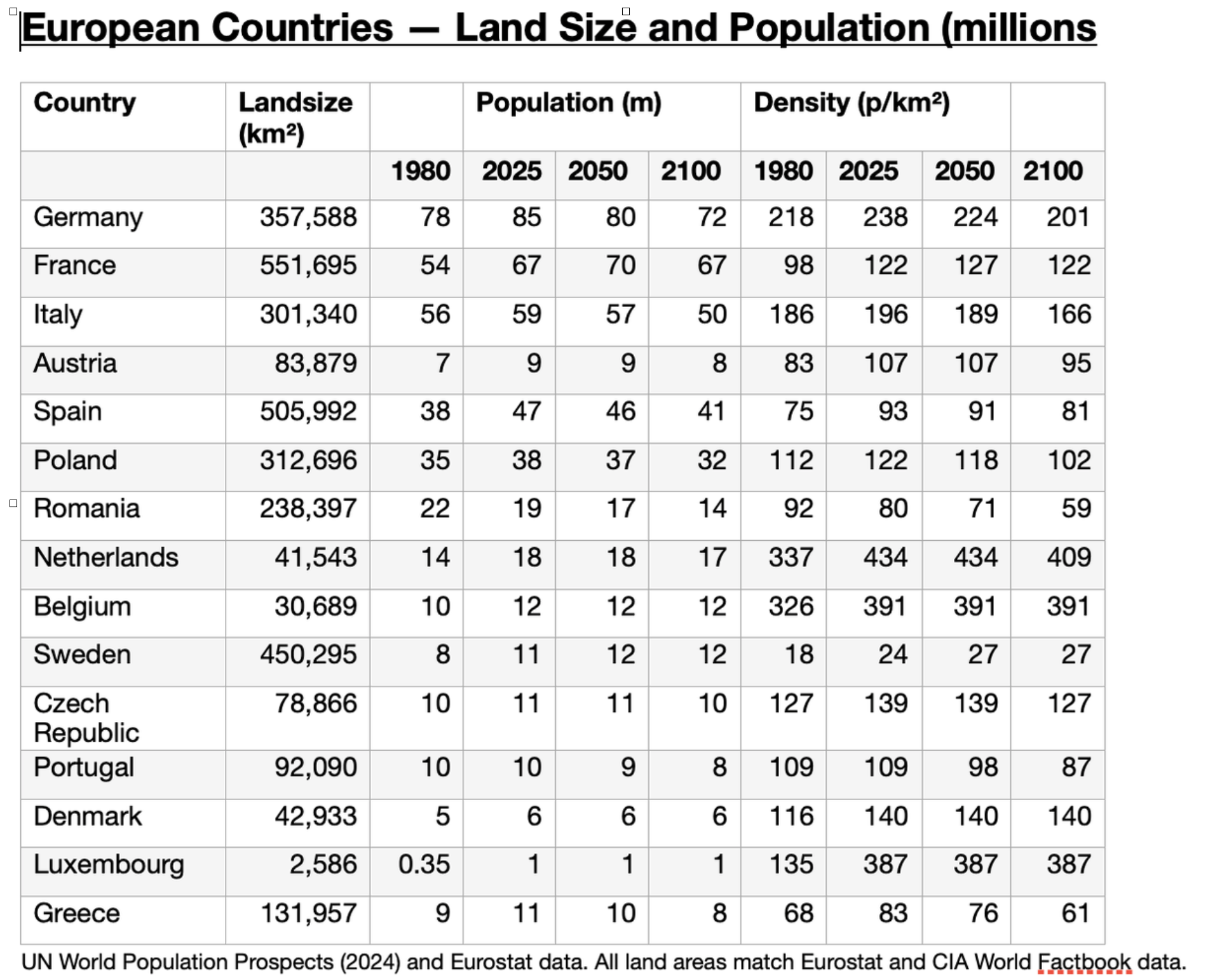
A3. Europe: Land Size, Population, and Density Trends
Europe remains densely populated despite demographic contraction. The charts below show sustained aging and population decline across major European economies, reinforcing the importance of productivity, energy security, and external economic integration.
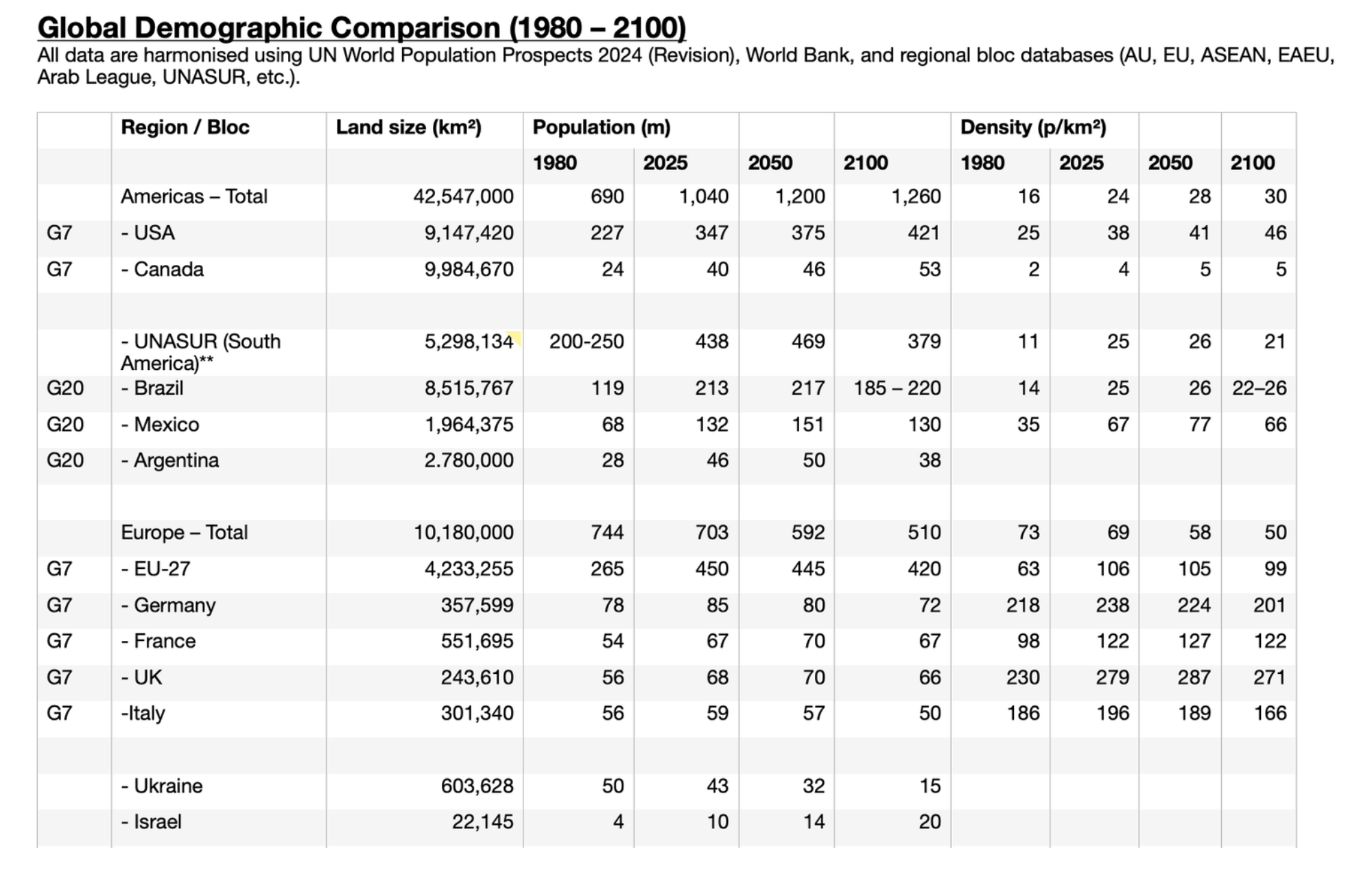
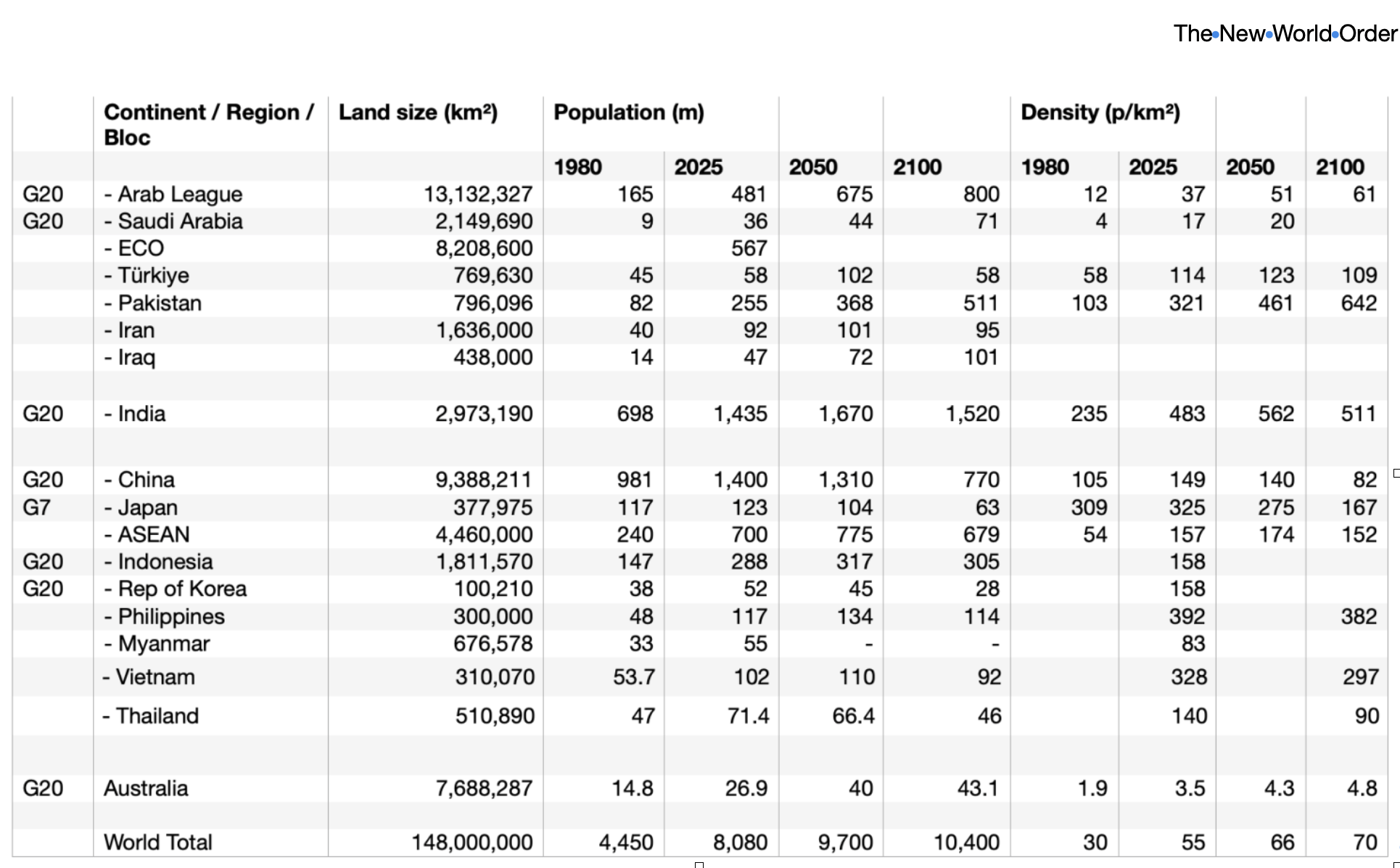
A4. Global Demographic Comparison (1980–2100)
Global population more than doubled between 1980 and 2025 and is projected to stabilise mid-century. Africa drives nearly all net growth, while Europe and Russia contract and age.

A5. Population Projection Variants and Uncertainty
Population projections vary significantly depending on fertility and migration assumptions. The UN medium-fertility variant remains the most widely accepted baseline for long-term planning.
