9. A Wider-War, Spill-Over, Military Build-Up?
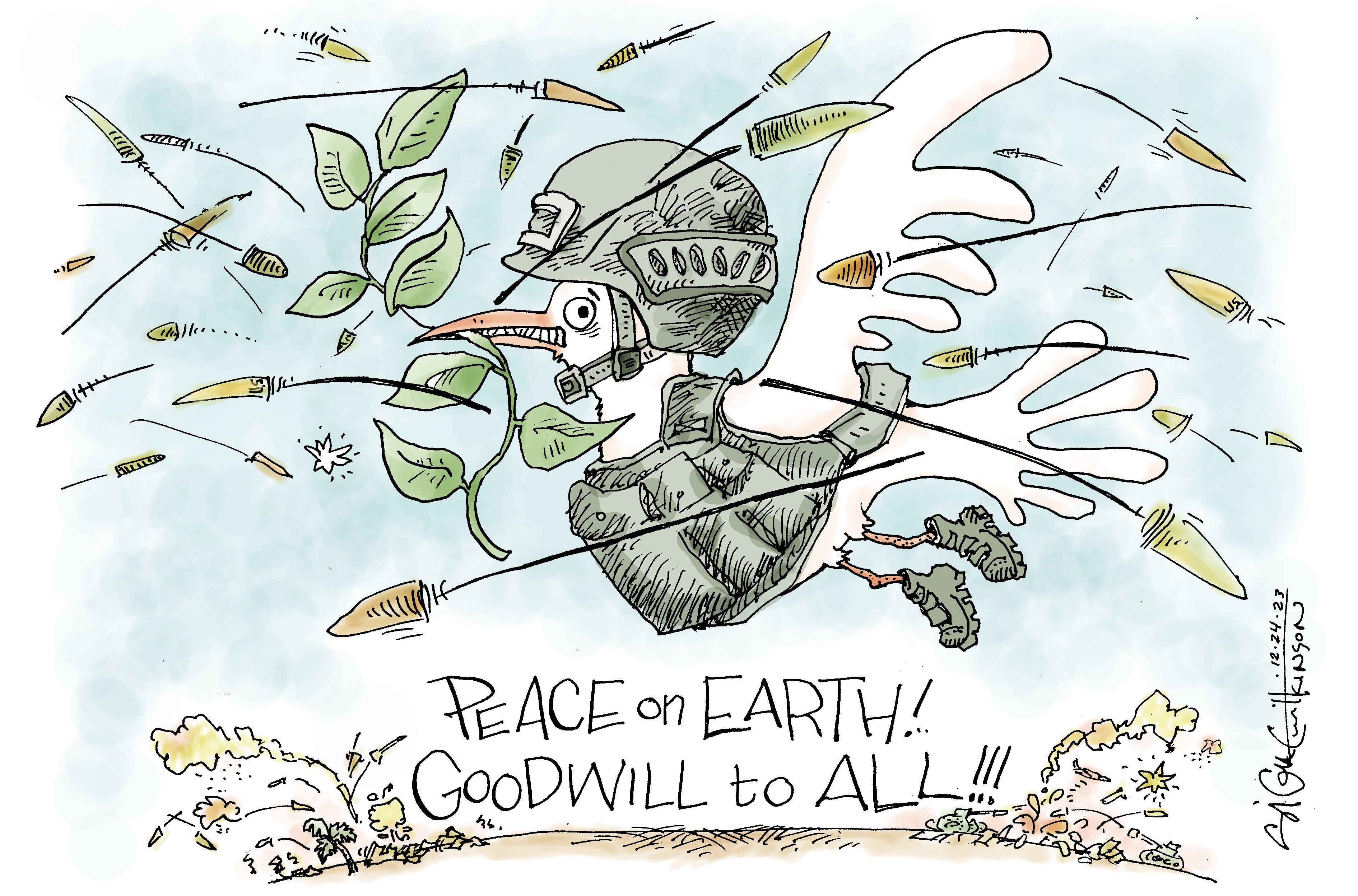
This article is part of the “New G2 Global Order” series, which examines how energy, finance, technology, and governance are restructuring global power._
Key Thesis
Military power is not autonomous. It depends on energy systems, industrial capacity, technological sovereignty, and fiscal credibility. Europe’s current rearmament, undertaken within a NATO framework dominated by the United States, risks deepening dependency rather than delivering security. Without parallel investment in energy sovereignty, industrial capability, and global governance reform, military build-up may increase the risk of escalation while reducing Europe’s strategic autonomy.
Preface: Rearmament Without Sovereignty
The acceleration of military spending across Europe is widely presented as an unavoidable response to a deteriorating security environment. Russia’s invasion of Ukraine, rising tensions in the Indo-Pacific, and the erosion of arms-control regimes have revived fears of a wider war and legitimised rapid rearmament. Yet beneath this renewed focus on defence lies a deeper structural question: whether military build-up without energy, industrial, and strategic autonomy can produce security at all.
Within NATO, defence capacity remains overwhelmingly concentrated in the United States, which accounts for roughly two-thirds of total allied military spending and provides the bulk of deployable power, command infrastructure, and global reach. European defence budgets, while rising, are largely national, fragmented, and heavily oriented toward procurement from U.S. suppliers. The alliance’s common budget — which finances shared infrastructure and command structures — remains comparatively small, reinforcing dependence rather than collective capacity.
This imbalance reflects a broader pattern visible across the global order. Military power is often treated as an independent variable, capable of compensating for weaknesses elsewhere. In reality, it is inseparable from energy systems, industrial capacity, technological depth, and fiscal sustainability. Rearmament without sovereignty risks reproducing the very dependencies it seeks to deter — substituting procurement for production, spending for strategy, and escalation for resilience.
At the same time, the collapse of Cold War–era arms-control frameworks has removed key stabilising mechanisms from the international system. The erosion of treaties such as the Anti-Ballistic Missile Treaty, the INF Treaty, and the weakening of New START have increased strategic mistrust and narrowed diplomatic off-ramps. As security dilemmas intensify, military build-up risks becoming self-reinforcing rather than deterrent.
This article situates current defence dynamics within the wider argument of this series: that security cannot be sustained by military means alone. Without reform of global governance, rebalancing of international institutions, and restoration of credible multilateral frameworks, Europe faces a choice not between strength and weakness, but between autonomy and managed dependence. In this context, preventing a wider war requires not only deterrence, but structural transformation of the system that produces insecurity in the first place.
A Wider War? Spill-Over and Military Build-Up
Defense spending within NATO is overwhelmingly dominated by the United States, which accounts for roughly two-thirds of all allied military expenditure. This dominance reflects the scale of the U.S. economy and its global military posture rather than the existence of shared alliance assets. The bulk of NATO’s military capability consists of national forces and equipment owned, financed, and controlled by individual member states, which are only placed at NATO’s disposal when required.
By contrast, NATO’s common budgets — which fund shared headquarters, command structures, infrastructure, communications systems, joint training, and limited operations — are comparatively small. In 2024, these total approximately €3.8 billion (around $4 billion). The United States contributes about 16 percent of this sum, with the remaining 84 percent divided among the other 31 members according to a formula based on national income. The frequently cited 2 percent of GDP target refers solely to national defense spending, not NATO’s common budget. In practice, a significant share of this spending flows back to U.S. defense firms, reinforcing structural dependence rather than collective European capacity.
This imbalance mirrors the pattern identified in Europe and Russia: Power, Dependency, and the Illusion of Choice. Europe’s security posture remains heavily reliant on U.S. power projection, procurement, and strategic decision-making, limiting its autonomy even as military budgets rise.
The United States is projected to spend between $25 and $30 trillion over the next three decades to maintain and operate its armed forces, based on current annual defense budgets of roughly $850 billion and expected inflation. Within this total, around $1–1.2 trillion is earmarked specifically for modernizing and sustaining the U.S. nuclear triad — submarines, bombers, missiles, and command systems. Much of this military-industrial complex remains deeply dependent on fossil fuels and combustion-engine logistics.
The U.S. also maintains an estimated 750–800 military installations across more than 80 countries, providing unmatched global reach. Russia, by comparison, operates roughly 20–25 overseas bases, largely within the former Soviet space and a limited number of strategic locations such as Syria. China currently maintains only one confirmed overseas military base, in Djibouti.
China’s presence in Djibouti functions as an official overseas support facility for anti-piracy operations, peacekeeping, evacuation, and logistics. It coexists with French, American, Japanese, and Italian bases serving similar purposes. In short, the U.S. operates a truly global military network, Russia’s footprint is regional and strategic, and China’s remains limited, gradual, and tightly focused.
China’s broader overseas presence is primarily commercial. Through the Belt and Road Initiative, Chinese state-owned firms such as COSCO and China Merchants have invested in more than 70 ports across over 40 countries, including Greece, Pakistan, Sri Lanka, Djibouti, and the Gulf. These projects are formally civilian, but a subset — including Gwadar, Hambantota, Kyaukpyu, Ream, and Djibouti — possess clear dual-use potential, enabling logistical support, intelligence gathering, or naval resupply if host-nation consent and political conditions permit.
China’s military posture closer to home is largely defensive. Bases and artificial islands in the South China Sea and facilities on Hainan Island are designed to secure maritime approaches, protect sea lanes, and deter foreign intervention, particularly by U.S. and allied forces. These installations form an anti-access/area-denial (A2/AD) buffer rather than a platform for global power projection. Notably, China has no military bases in the northern Pacific or Baltic regions.
The United States, meanwhile, maintains no bases inside China’s territory or territorial waters, but operates a surrounding network of major facilities and access points in Okinawa, Guam, Hawaii, Japan, South Korea, the Philippines, and Alaska. In Europe, U.S. forces rotate through NATO’s eastern flank — Estonia, Latvia, Lithuania, and Poland — as part of deterrence missions rather than permanent basing.
Russia’s overseas military presence remains concentrated in its immediate neighborhood, the Middle East, and the Arctic. Beyond these regions, Moscow relies on access agreements, temporary deployments, and naval visits rather than a permanent global network, extending influence selectively in parts of Africa and Latin America.
The Collapse of Arms-Control and Escalatory Logic
The erosion of nuclear arms-control regimes has removed critical stabilizers from the international system. The 1987 INF Treaty eliminated an entire class of intermediate-range missiles and contributed significantly to de-escalation at the end of the Cold War. START I, signed in 1991, reduced strategic nuclear arsenals and reinforced verification mechanisms.
Today, New START remains the last major bilateral arms-control agreement between Russia and the United States, and its practical relevance has been sharply reduced. Other frameworks, including the Comprehensive Nuclear-Test-Ban Treaty, have lost political support. Diplomatic channels formally exist, but substantive progress is minimal.
The United States’ withdrawal from the Anti‑Ballistic Missile Treaty in 2002 marked a turning point. Subsequent deployment of missile-defense systems, including NATO components in Europe, intensified Russian perceptions of encirclement and potential first-strike vulnerability. Combined with successive rounds of NATO expansion, this fed a deepening security dilemma.
According to economist Jeffrey Sachs, the war in Ukraine reflects a long-term proxy confrontation. From Moscow’s perspective, NATO expansion and military infrastructure near its borders constituted an existential threat. Russia’s response, while condemned in the West, was framed domestically as defensive containment of a tightening strategic noose in the Black Sea and Baltic regions.
History shows that wars are often triggered not only by material imbalance, but by humiliation and escalation dynamics. Game-theory logic suggests that when both sides escalate, no actor “wins”; the outcome is either prolonged conflict or catastrophic failure. The nuclear standoff of the 1980s carried existential risks. Today’s environment, with fewer guardrails and faster escalation cycles, may be even more unstable.
The Middle East: From Central Theatre to Structural Residual Risk
The Middle East remains a region of high volatility, but its role in the global security system has changed. For decades, it functioned as the central strategic theatre of great-power competition, primarily due to its role in global energy supply. Today, as energy systems diversify and major powers reduce direct dependence on Middle Eastern hydrocarbons, the region’s importance has become more systemic than central. Instability in the Middle East no longer determines global order on its own, but it continues to act as a multiplier of risk — capable of transmitting shocks through energy markets, migration flows, maritime chokepoints, and alliance politics.
From a structural perspective, the Middle East illustrates a broader pattern visible elsewhere: security arrangements built around external guarantees, fragmented sovereignty, and proxy alignments tend to reproduce instability rather than resolve it. As major powers recalibrate their priorities toward energy transition, Indo-Pacific competition, and domestic resilience, the region is increasingly shaped by local and regional dynamics operating within weakened global governance frameworks.
For Europe, the relevance of the Middle East lies less in direct military engagement than in spill-over effects — energy price volatility, refugee movements, and the erosion of multilateral norms. As with Europe’s relationship to Russia, long-term stability depends less on deterrence alone than on inclusive security frameworks and economic integration that reduce dependency, escalation incentives, and external manipulation.
Europe’s Strategic Dilemma
Europe’s weakness in this environment lies not in insufficient spending, but in political fragmentation. At recent peace initiatives, the European Union lacked a unified foreign and defense policy, with national divisions — including between the UK and France — undermining credibility. This mirrors the structural vulnerability identified in Europe and Russia: ambition without autonomy.
France is well placed to lead the development of a coherent European strategy, but no durable settlement is possible without reform of global governance. A rebalanced United Nations Security Council and a revised G7/G20 architecture that represents the EU collectively — while granting real voice to emerging powers — are prerequisites for legitimacy.
Europe itself was born from the ruins of World War II with the explicit aim of preventing renewed conflict through cooperation and shared sovereignty. Today, it faces a similar test. Militarization alone cannot deliver security. Without a genuinely multilateral framework for security, trade, climate, and development, the world risks fragmenting into rival blocs and sliding into a new Cold War.
As global power shifts, Europe must develop its own foreign and defense policy — independent of NATO, the United States, and the United Kingdom — focused on defensive deterrence and long-term stability. Such a strategy must withstand changing hegemonic cycles and avoid entanglement in external power struggles.
Only a neutral, reformed international system — including a revised UN Security Council capable of negotiating security guarantees with Russia and others — offers a credible path to lasting peace, as was achieved with Germany after World War II.
#NATO #USA #China #Russia #Arms proliferation
References
Billion dollar companies with no revenues
US technology stocks now account for a record 56% of total US stock market cap
Unpacking US tech valuations: An agnostic assessment
Why your S&P 500 index fund might be more risky than the internet bubble
The Global Digital Economy Will Reach $16.5 Trillion And Capture 17% Of Global GDP By 2028
Digital Assets in a Deglobalized World
From Mag 7 to ‘Mag 10’: The New AI Playbook
The tech prosperity deal is huge. But will the UK reap the benefits?
Uruguay passes law regulating crypto, could set precedent for rest of Latin America
Kenya Proposes First Crypto Bill To Regulate Stablecoins
Export Manufacture Competitiveness and Commodity Dependence: An Empirical Analysis of the Dutch Disease on Argentina and Chile During the Commodity Price Boom Backed_Revolution_How_the_BRICS_Stablecoin_Could_Redefine_Global_Finance_and_Challenge_the_US_Debt_Paradigm
#DigitalEconomy #DigitalCurrencies #Cryptocurrencies #Blockchain #FinancialRegulation #GlobalGovernance #MonetarySystem #AI #Bitcoin #Web3 #DigitalPlatforms #Privacy #IntellectualProperty #AI #Cybersecurity #Fintech #DigitalCurrencies