AI, Smart Tech, and the New Sovereignty Divide
Why AI Sovereignty Now Depends on Energy, Infrastructure, and System Control
Keynote
AI is often framed as a productivity tool. In practice, it functions as a control layer embedded in energy systems, industrial processes, and infrastructure coordination. This article examines how smart technologies reshape sovereignty by concentrating decision-making, optimisation, and dependency within system architectures.
Preface — AI Sovereignty Under Energy Constraint
Debates about artificial intelligence and digital sovereignty often assume that control over software, data, and regulation is sufficient to secure strategic autonomy. In an energy-bound global system, this assumption no longer holds.
As AI systems scale, they become inseparable from the physical foundations that sustain them: electricity supply, grid capacity, industrial infrastructure, and long-cycle capital. Compute concentrates where energy is abundant, reliable, and cheap. Cloud and edge architectures follow grid logic. Digital sovereignty is therefore increasingly determined upstream — by energy systems and infrastructure coordination — rather than by regulation or platform design alone.
This article examines how artificial intelligence and smart technologies have become a critical arena in the tech war, not as standalone innovations but as control layers embedded within energy and industrial systems. It situates Europe between two competing models — U.S. fossil-powered platform dominance and China’s state-integrated electro-digital architecture — and analyses why neither is structurally compatible with Europe’s energy constraints, political economy, or long-term competitiveness.
The argument is not that Europe lacks ambition or regulatory capacity, but that digital strategy pursued without parallel control over energy, grids, and compute infrastructure deepens dependency rather than reducing it. In an electrified economy, AI sovereignty cannot be declared or regulated into existence; it must be built on secure, scalable, and domestically anchored system foundations.
Europe is entering a decisive phase in the global struggle for digital sovereignty. Building on the system foundations and stack logic established elsewhere in this series, this article examines the technological dimension: the race for cloud infrastructure, compute capacity, and AI systems. Together, these forces are reshaping the foundations of sovereignty and global competition.
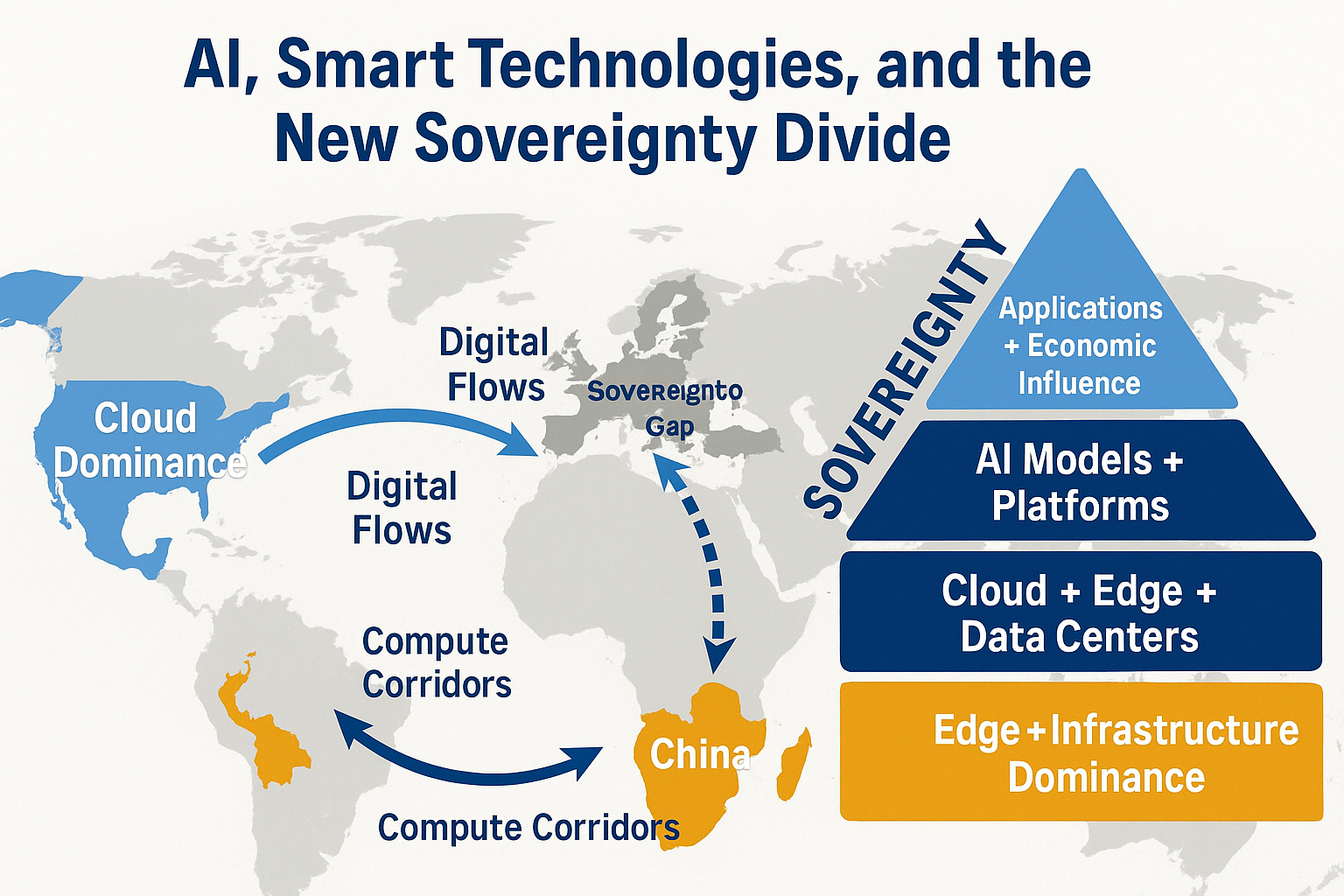
Today’s digital order is dominated by two competing models. The United States controls cloud platforms, AI models, data pipelines, and the hyperscale infrastructure that powers them. Its innovation model is fast, private-sector driven, and anchored in an energy system still powered largely by fossil fuels. China, by contrast, deploys compute at massive scale, backed by industrial policy, state coordination, and integrated cloud–edge networks. This model accelerates AI adoption, manufacturing modernisation, and strategic influence across the Global South.
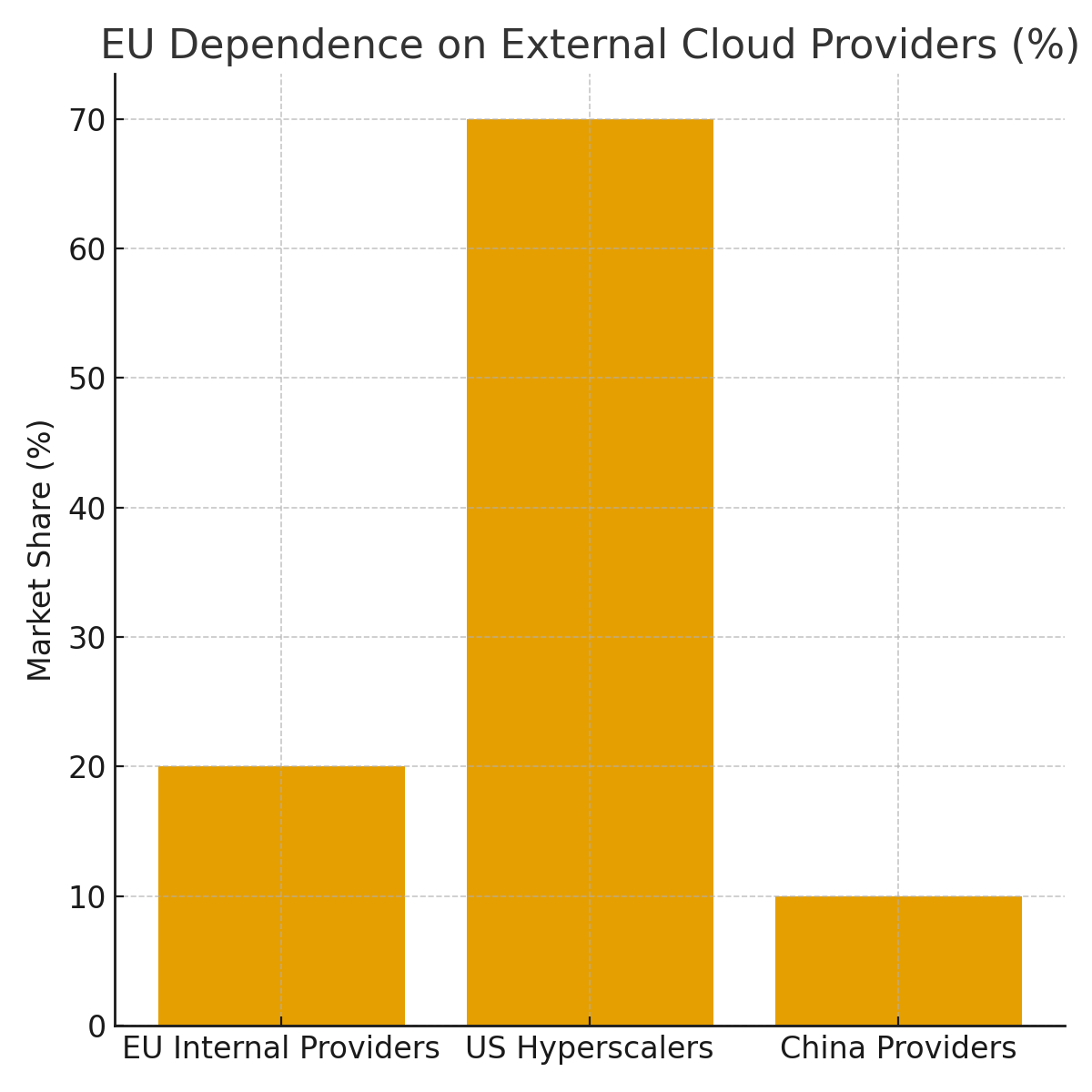
Europe sits between these two poles—strong in regulation and rights, weak in infrastructure and compute.Despite leadership in data governance, standards, and ethical AI, Europe imports most of its digital foundations: cloud services, chips, large language models, and increasingly the energy needed to run them. Dependency on US hyperscalers and Chinese hardware creates a “sovereignty gap” that widens as AI demand explodes.
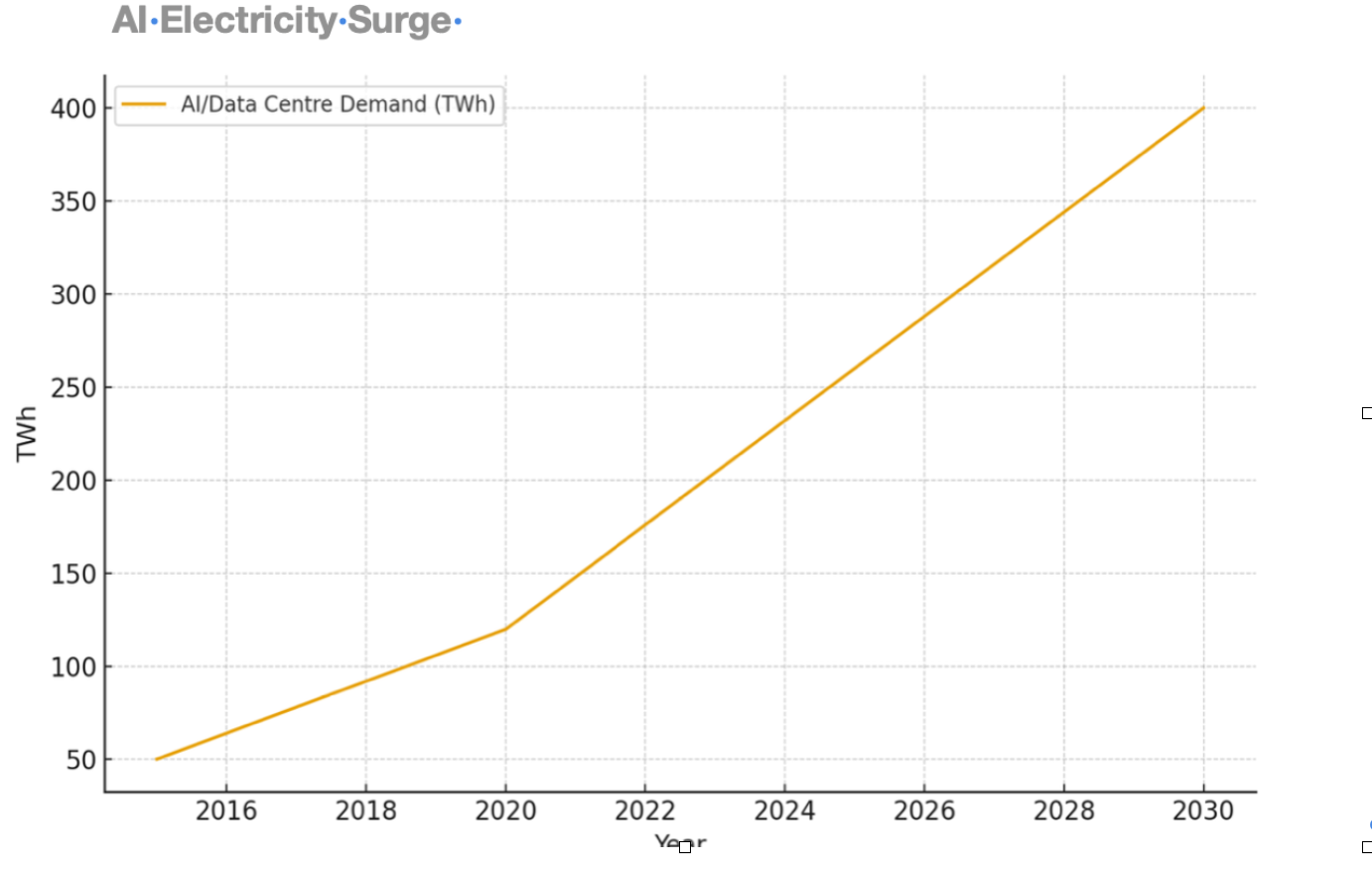
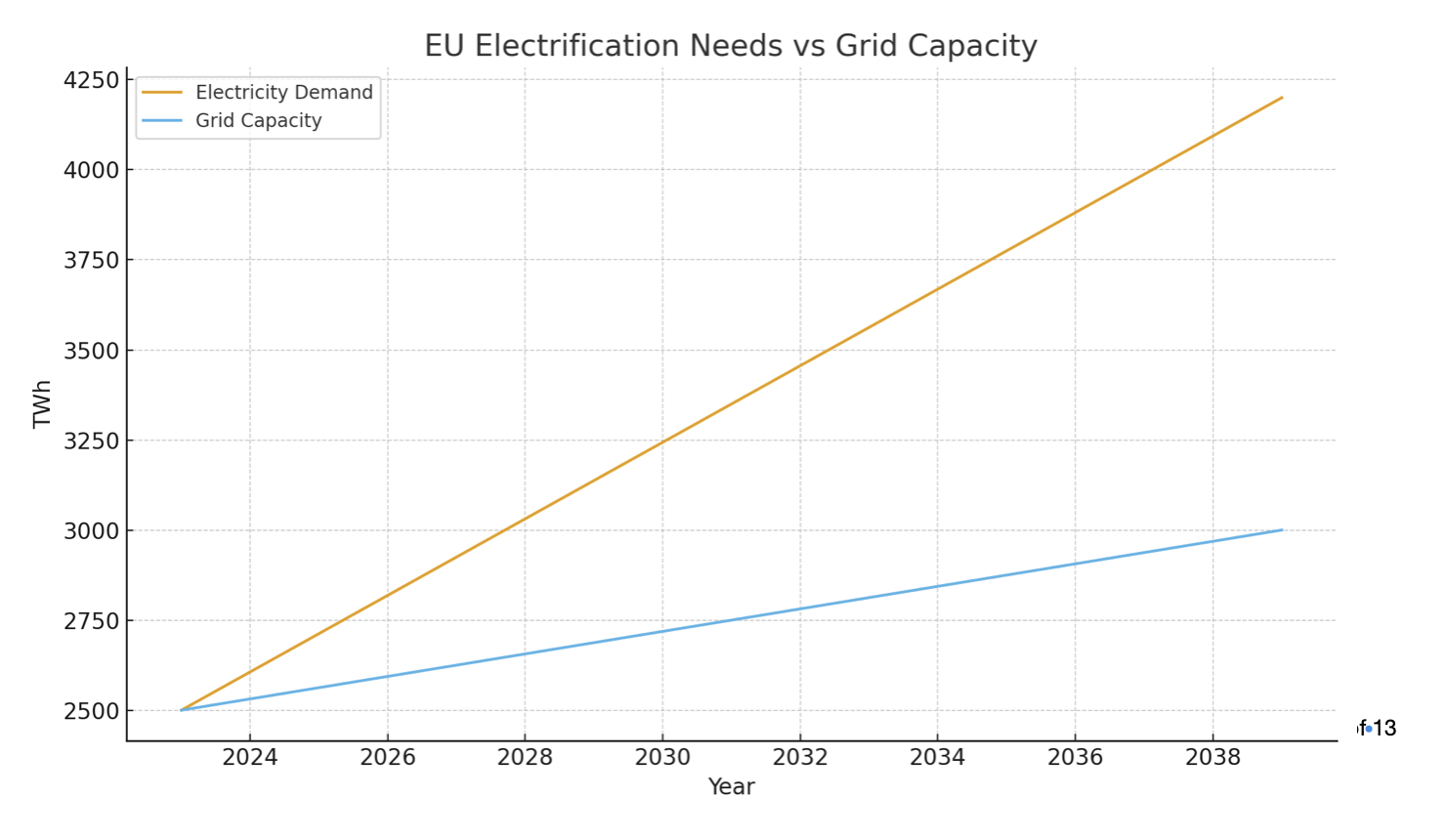
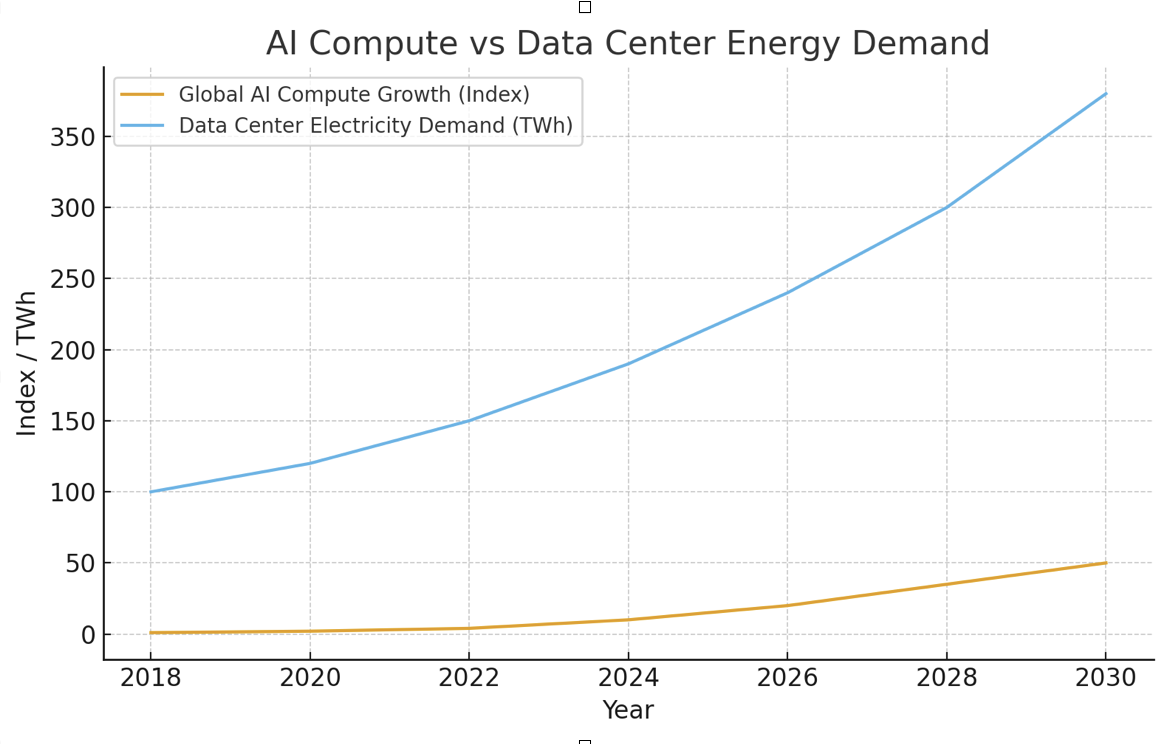
AI and data-centre growth intensify the challenge. Compute demand is rising far faster than Europe’s grid and renewable capacity can support. Without cheaper clean energy and modernised infrastructure, Europe cannot compete in high-compute AI, industrial automation, or smart-technology deployment. There is no digital sovereignty without energy sovereignty.
This article argues that Europe must forge a third model—neither the US’s platform-dominated ecosystem nor China’s state-integrated techno-bloc. A European path should combine: – sovereign cloud and compute capacity, – trusted data spaces, – AI grounded in rights and transparency, – decentralised energy systems to power digital growth, and – a regulatory framework aligned with industrial strategy, not separate from it.
The stakes are geopolitical. If Europe continues importing cloud, compute, and AI systems while its energy costs remain high, it risks becoming a digital client region—innovating at the edges while value creation and strategic leverage move abroad.
But with coordinated investment, grid modernisation, sovereign AI capabilities, and accelerated decarbonisation, Europe can still transform its regulatory strength into real technological power.
This article (2 of 3) lays out the foundations of a European model capable of competing in an age defined by hyper-compute, AI, and smart-technology systems—and avoiding digital subordination in the new global order.
The international system is undergoing a profound technological realignment. Artificial intelligence, smart systems, cloud–edge infrastructure, and digitally integrated energy networks are redefining industrial capacity, geopolitical power, and the very nature of sovereignty. This shift is not merely about innovation or efficiency; it is about political survival. In this emerging landscape, nations capable of uniting digital governance with clean electrified infrastructure will set the standards, capture the value chains, and define the rules of the next global economy. Those that fail will be locked into technological dependency and strategic irrelevance.
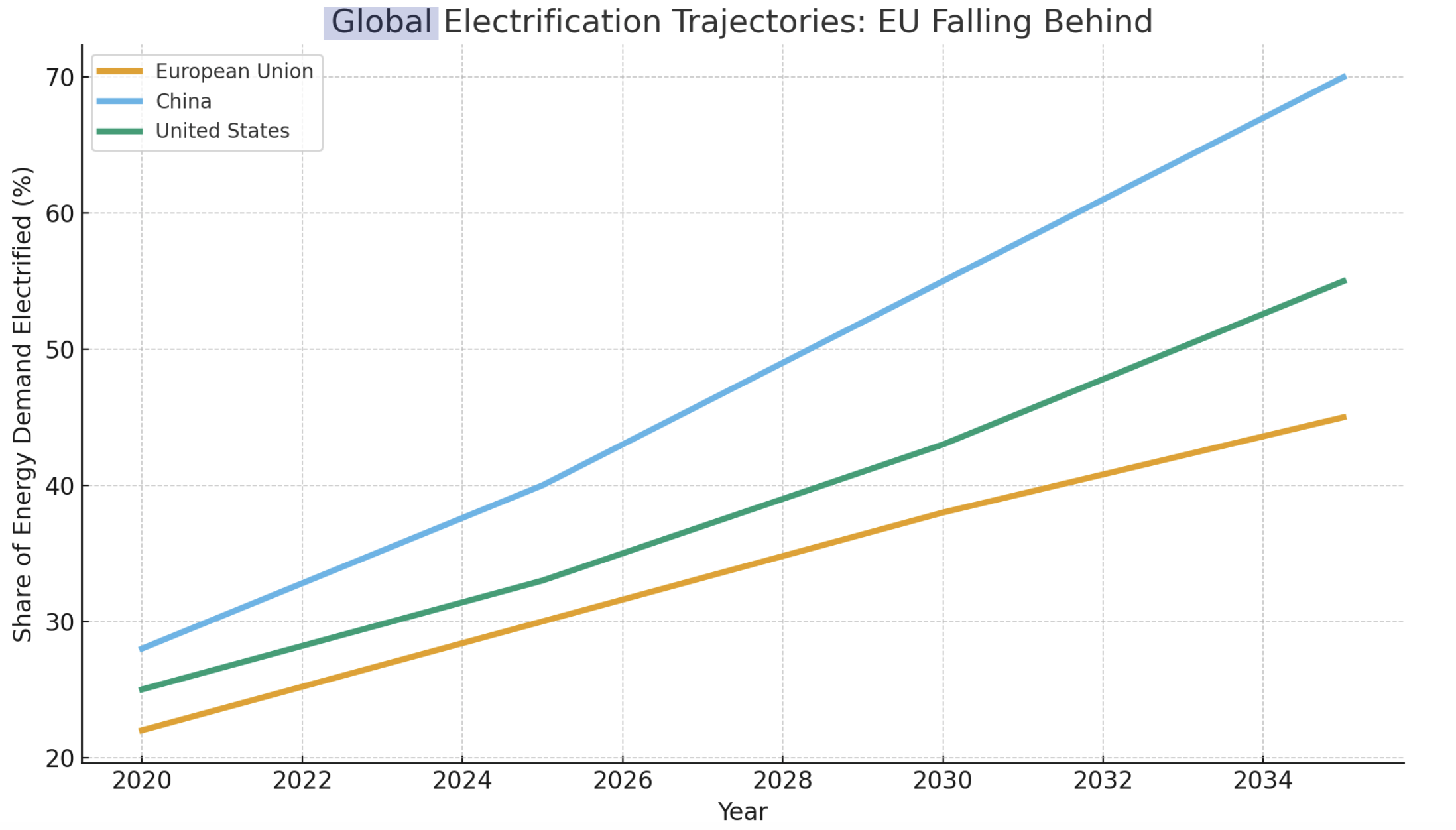
For Europe, the stakes are existential. The continent stands at a crossroads between two competing techno-industrial models: the United States’ frontier-innovation ecosystem, powered overwhelmingly by fossil energy and dominated by private monopolies, and China’s state-coordinated “electro-digital” model, where energy, data, and industrial scale are tightly integrated.
Neither path is viable for the European Union. Adopting the U.S. approach would tether Europe’s digital future to a fossil-fuel infrastructure it cannot sustain and does not control. Aligning with China would undermine democratic governance, privacy, and strategic autonomy. Europe must therefore forge a distinct third model: a sovereignty-based digital system built on transparent governance, clean electrification, and ethical technological standards.
This article examines the geopolitical contest unfolding around AI and smart technologies, the role of cloud–edge infrastructure in shaping industrial capacity, and the resulting implications for European sovereignty. It argues that Europe must avoid the dependence trap—technologically, energetically, and institutionally—by refusing to copy the U.S. fossil digital model and instead accelerating a clean-powered, regulated, sovereign AI ecosystem. Failure to act would leave Europe structurally dependent on foreign compute, foreign data, foreign platforms, and foreign energy, effectively removing Europe from the next phase of global technological leadership.
I. The New Technopolitical Divide: AI as Power, Energy as Precondition
Artificial intelligence has become the critical battleground of the 21st century. Unlike past technological races, AI is not a discrete industry but a general-purpose capability that permeates every sector: manufacturing, logistics, finance, healthcare, defense, and government itself. Nations with the most advanced AI capacity will shape economic productivity, military advantage, and the next generation of global norms and standards.
Yet the world often misunderstands what AI competitiveness truly requires. The limiting factor is not algorithms alone but energy—abundant, cheap, scalable energy. Training models now consumes gigawatt-hours of electricity; data centers are growing into quasi-industrial complexes; and the energy requirements of AI may soon exceed those of several heavy industries combined. CNBC and recent IEA estimates suggest that, by 2030, U.S. data centers alone will consume more electricity annually than the nation’s entire steel, aluminium, cement, chemical, and paper sectors.
This is why the U.S. can pursue its current AI expansion strategy: the American digital economy sits atop the world’s largest fossil-fueled energy system and continues to expand oil and gas production to sustain its growing compute demands. The U.S. digital model is thus inseparable from fossil incumbency; Big Tech is built on hydrocarbons. Europe, by contrast, does not have access to such an energy surplus, nor could it ever replicate America’s fossil-powered digital architecture without undermining its climate goals, fiscal stability, and long-term competitiveness.
China has taken a different route. Its “electrostate” model integrates renewable energy, electrified transport, AI governance, and massive cloud–edge deployment. China is building digital infrastructure on top of clean electricity at industrial scale. This is not an ecological preference but a geopolitical strategy: the world’s future data centers, factories, and logistics networks will be electrified—and China intends to dominate every stage of that value chain.
Europe is therefore caught between two incompatible systems: U.S. digital hegemony and Chinese electro-digital integration. The challenge is not to choose between them, but to avoid dependence on either.
II. The Infrastructure Behind Intelligence: Cloud, Edge, and the Struggle for Sovereignty
AI is often described as a software revolution, but this is misleading. The real battleground lies in the infrastructure: the cloud platforms, semiconductor supply chains, edge computing hubs, and data-processing networks that collectively form the “nervous system” of the modern economy. Whoever controls this infrastructure controls not only data and computation but also industrial production, national security, and economic growth.
China’s model is unified, state-coordinated, and vertically integrated. Through initiatives such as the East–West Computing Project, Beijing is building a connected cloud–edge continuum across the country, equalizing computational capacity and linking industrial clusters with strategic data hubs. This system, supported by massive public investment, delivers scale, speed, and cohesion unmatched by any other actor.
The United States, meanwhile, relies on the private sector. AWS, Google Cloud, and Microsoft Azure command vast hyperscale infrastructure, supported by Silicon Valley innovation and deep venture capital. This decentralised model prioritises frontier breakthroughs, fast experimentation, and private-driven competition. However, it also leads to fragmentation, uneven deployment, and concentration of power in a handful of corporations. These companies now possess capabilities that rival—and in some cases exceed—those of nation-states.
Europe sits somewhere between these models. Through initiatives such as GAIA-X, the European Data Spaces framework, and the AI Act, the EU seeks to establish an ethical, rights-based digital system. However, Europe remains dependent on foreign cloud providers and increasingly faces supply-chain, talent, and compute constraints.
The consequence is stark: Europe risks becoming a digital protectorate, reliant on U.S. or Chinese infrastructure to power its own economy. Digital sovereignty is impossible without control over cloud infrastructure, compute capacity, and the energy systems that power them. Unless Europe accelerates the deployment of sovereign cloud–edge systems powered by renewables, it will lose the ability to govern its own digital future.
III. Smart Technologies and the New Industrial Systems
The rise of smart technologies—AI-enhanced manufacturing, IoT networks, automated logistics, intelligent mobility—marks a shift as transformative as the first Industrial Revolution. These systems rely on continuous data flows, distributed computation, machine learning algorithms, and advanced energy management. They make production flexible, transport autonomous, cities efficient, and infrastructure self-regulating.
China has embraced this integration aggressively. Its “AI factories,” industrial robotics networks, and city-scale smart systems are expanding rapidly. Beijing’s model is one of coordinated deployment: scaling proven technologies, reducing costs via learning curves, and embedding digital intelligence in every industrial sector.
The U.S. approach is decentralised and innovation-driven: private firms lead smart-manufacturing advancements, autonomous vehicles, and generative AI breakthroughs. But again, the underlying assumption is abundant cheap energy, supplied by fossil fuels, enabling large-scale compute without the structural constraints faced by Europe.
Europe is attempting to pursue smart-tech development through the Green Deal, the Digital Europe Programme, and strict regulatory standards. However, these systems require vast quantities of renewable power, storage, and high-capacity transmission lines. Without massive grid expansion and renewable scaling, Europe risks building an AI and smart-tech economy on an energy foundation that cannot support it.
Simply put: AI without clean energy is an illusion in
Europe.
And smart technologies without sovereign data governance risk becoming
Trojan horses for external influence.
IV. Governance and Ethical Sovereignty: Europe’s Strategic Advantage—If It Can Sustain It
Europe’s strength lies in governance. The GDPR reshaped global data norms; the AI Act establishes the first comprehensive AI regulatory framework; and European digital standards emphasise privacy, safety, transparency, and human oversight. This governance-led model has the potential to become a global benchmark, especially among democratic nations and emerging economies wary of both U.S. platform dominance and Chinese state surveillance.
However, governance without capacity is not sovereignty. European regulations cannot meaningfully shape the global digital system if Europe does not possess the technological and industrial capabilities to enforce them. Without sovereign compute power, Europe’s rules risk becoming advisory preferences rather than binding standards.
If Europe continues to rely on U.S. fossil-powered cloud monopolies, it will face three risks:
- It will lose the ability to set global AI norms, ceding governance to U.S. corporations or Chinese infrastructure.
- Its energy-dependent digital systems will be exposed to price volatility, supply shocks, and geopolitical leverage.
- Its competitiveness will decline, as foreign infrastructure gives other powers—not Europe—the productivity gains of the AI revolution.
Europe’s regulatory power is its greatest asset, but it must be paired with domestic deployment, sovereign infrastructure, and a clean-energy foundation. Without this, Europe’s governance advantage will fade.
V. The Digital–Energy Nexus: Why Following the U.S. Model Would Destroy Europe’s Competitiveness
The U.S. can operate an AI system powered by fossil fuels. Europe cannot.
The U.S. energy system is structurally different:
- It is the world’s largest producer of oil and gas.
- It has massive territorial resources and low energy prices.
- It can expand fossil production to meet data-center demand.
- Its AI giants have direct access to domestic hydrocarbon-based electricity.
Europe has none of these advantages.
Its energy import dependence is above 55%.
Its electricity prices are among the highest in the OECD.
Its fossil infrastructure cannot support multi-gigawatt AI
clusters.
And its climate commitments legally constrain fossil
expansion.
If Europe attempts to scale AI on a fossil-powered model, it will face:
- skyrocketing energy costs
- weakened industry competitiveness
- higher import dependence
- strategic vulnerability to foreign suppliers

- increasing political instability as costs rise
- escalating tensions within the internal market
Moreover, a fossil-powered AI model would undermine the Green Deal, violate climate legislation, and derail Europe’s long-term competitiveness strategy.
Europe must not follow the U.S. path.
It must build the world’s first clean-powered, sovereign AI
ecosystem, powered by renewable electrification and governed by
ethical standards.
VI. The Strategic Imperative: Europe’s Third Path
Europe must define a coherent model that aligns digital sovereignty with energy transition. This requires:
- sovereign cloud–edge infrastructure
- massive renewable deployment
- accelerated grid expansion
- domestic compute and semiconductor capacity
- AI aligned with rights, ethics, and democracy
- strategic autonomy in critical technologies
Europe’s competitors have already chosen their model.
China integrates everything under state direction.
The U.S. places its faith in private giants and fossil abundance.
Europe must champion a governance-led, clean-electrified model that
protects sovereignty and ensures long-term competitiveness.
This is not only a technological choice but a civilizational one. Europe must decide whether it remains an independent actor shaping the future of the global digital system—or whether it becomes a technological appendage of other powers.
Conclusion: From Compute to Capital
Artificial intelligence and smart technologies are often discussed in terms of innovation speed and regulatory readiness. In practice, their strategic viability is determined by capital duration: the ability to finance, build, and sustain energy-intensive infrastructure over decades rather than quarters.
Sovereign AI systems require long-cycle investment in grids, generation, data centres, semiconductor fabrication, and industrial coordination. These assets do not conform to venture-style timelines or short-term return expectations. Regions that lack patient capital, stable financing structures, and coordinated public–private investment struggle to scale compute regardless of regulatory ambition or talent availability.
This is where Europe’s digital challenge ultimately converges with its financial architecture. Without mechanisms to mobilise long-duration capital at scale, Europe risks pursuing digital sovereignty through regulation while financing the underlying infrastructure elsewhere. In such a configuration, control over AI systems, data flows, and productivity gains inevitably migrates toward jurisdictions able to absorb upfront costs and sustain system build-out through volatility.
The tech war is therefore not decided by who deploys the most advanced models first, but by who can hold systems together over time. Energy-secure grids, domestically anchored compute, and industrial coordination only become strategic assets when backed by capital structures capable of enduring political cycles, market shocks, and technological transitions.
For Europe, the sovereignty question is no longer whether it can regulate AI effectively, but whether it can finance the physical and digital systems on which that regulation depends. Without capital duration, digital ambition becomes dependence by design. With it, Europe retains the possibility of building a clean-powered, sovereign AI ecosystem aligned with its economic model and democratic values.
Suggested Reading (System Context)
To situate this analysis within the broader Tech War framework, readers may wish to consult:
- System
Foundations of the Energy–AI–Industrial Economy
Why economic and technological power now flow through integrated energy, industry, and compute systems. - The
Energy–Industry–Compute Stack
How control over foundational layers propagates upward into digital, industrial, and geopolitical leverage. - Compute
Locality as Energy Sovereignty
Why the geography of compute is inseparable from grid capacity and energy system design. - Grid
Intelligence as Industrial Sovereignty
How digital coordination of electricity systems becomes a decisive industrial capability. - Capital
Duration as System Power
Why long-cycle finance and patient capital determine who can build, scale, and sustain sovereign systems.
Together, these analyses frame AI not as a standalone technology race, but as one arena within a wider struggle over system control in an energy-bound world.
Suggested Reading
- Compute Locality as Energy Sovereignty
- Why Europe’s Digital Strategy Deepens Electrification Risk
- [Energy–Industry–Compute Stack]
- Digital Governance vs Physical Control (EU Sovereignty)
REFERENCES
- IEA — Data Centres & AI – Tracking Report
- Nature — AI’s growing energy problem
- JRC (EC) — Energy-efficient Cloud & Data Centres
- Eurostat — Cloud computing statistics
- European Commission — European Data Strategy
- GAIA-X Initiative
- European Commission — AI Act
- OECD — OECD AI Principles
- UNESCO — AI Ethics Recommendation
- Stanford HAI — AI Index 2024
- Tsinghua University — China AI Development Report
- NBER — AI impact studies
- UN-Habitat — Smart Cities Reports
- OECD — Smart Cities & Inclusive Growth
- EC — 100 Climate-Neutral & Smart Cities Mission