GLOBAL - System Power in an Energy-Bound World

I. Foundational System Logic - Core Doctrines

• The Energy-Bound System

• Energy As Operating System Of Power

• Physical Constraint

• Energy–Capital–Currency Hierarchy

• Infrastructure Currency Doctrine

• Energy Sovereignty As System Control

•  System Stack Architecture

• Doctrine — Systems Sovereignty

• Centralised Vs Distributed Systems

•  Hybrid Infrastructure Sovereignty

•  Ecosystem Sovereignty


II. Energy Transition and System Transformation -Structural Transition

• Global Energy Paradigm Shift

• Global Energy System Transition

•  Energy System Transformation

• Energy Geopolitics Global Shift

• The Energy Transition J-Curve

• Decarbonisation, Electrification, and Cost

•  The European Sovereignty Stack


III. AI, Compute, and Infrastructure - AI–Energy System Layer

•  AI, Energy, and the Future of Sovereignty

•  AI Has Become Physical

• The Architecture of Energy, Capital, and Compute

• Energy, Industry, and Compute Convergence

• The Global Compute Shift

•  Hyperscaler Infrastructure Sovereignty

•  Strategic Minerals in the AI–Energy System

•  System Re-Concentration


IV. Monetary and Capital Architecture - Monetary Layer

• Energy Constraint and the Monetary Ceiling

• Energy, Financialisation, and Capital Hierarchy

• Energy Capital Currency Index

•  From Petrodollar to Electrodollar

• US Energy and Monetary Power

• Monetary Power

• Monetary Sovereignty Energy Bound System


V. Structural Asymmetry - Constraint and Divergence

• System Default

• Systemic Asymmetry

• Asymmetry under Stress

• Peripheral Nodes in an Energy-Bound System

• The AI–Energy–Cost Chasm

•  Financialised AI and the Infrastructure Reality

•  AI–Energy Sovereignty Threshold


VI. Global Order Under Stress - Geopolitical System Stress

• Global Order Under Stress — Index

• Executive Summary

• Tech War as Energy War

•  The Petrodollar Rewired

•  LNG, NATO, and the Enforcement of System Power

• New Monetary Cold Warglobal

•  China’s Industrial System

•  China’s Technology–Energy Transition

•  US Energy Abundance and System Power

•  Global System Power — Comparative Architecture


VII. Systems Under Constraint - Execution Under Structural Limits

• Systems Under Constraint — Index

• Executive Summary

• Energy as the Base Layer of Constraint

• System fragmentation in Eurasia

• Corridors, Chokepoints, and the Geography of Leverage

• Finance and Sanctions

• Tech Standards and Digital Control Layers

• Industrial Policy Inside Constrained Systems

• Agency Under Constraint


VIII. Evidence Layer - Validation and Transmission

• Evidence — Index

• Energy System Data Companionglobal

• Energy–Capital–Currency Map

• Energy Shock Transmission Chain

• Global Lng Routesglobal


IX. Strategic Interfaces - Mediterranean and Global South

• Mediterranean Guide to the System

•  Mediterranean System Navigation

•  The European Sovereignty Stack

•  Global South Electrification Leapfrog

SYSTEM ARCHITECTURE

Mapping the Energy–Industry–Compute System
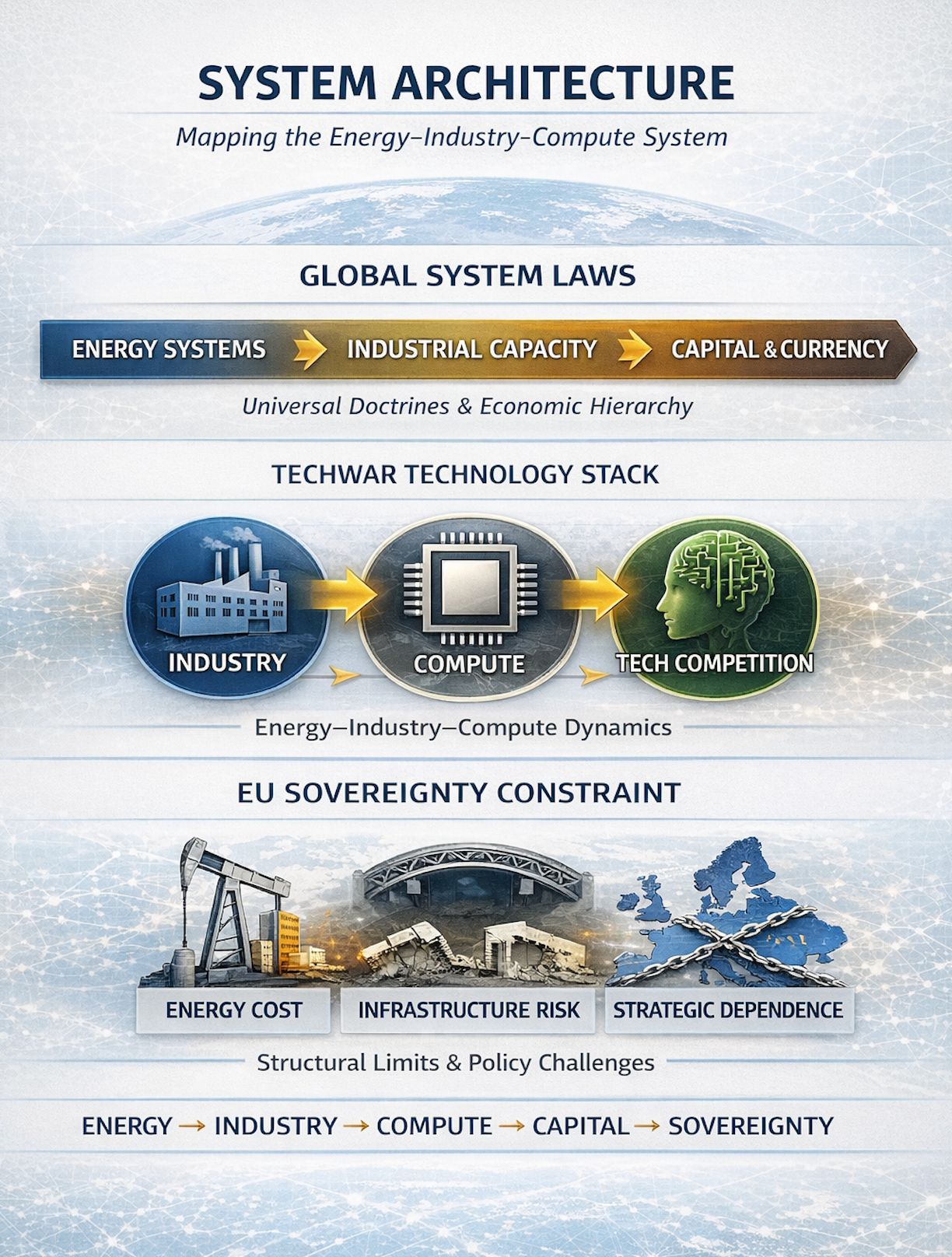

The analytical framework of this project is built around a simple structural observation:

Energy systems structure industrial capacity.
Industrial capacity structures compute infrastructure.
Compute infrastructure shapes capital formation, monetary stability, and sovereignty.

In an energy-bound world, power therefore propagates through a system stack:

Energy → Industry → Compute → Capital → Currency → Sovereignty

This framework is analysed across three panels of the project.


GLOBAL — System Laws

The GLOBAL panel establishes the structural doctrines governing the emerging energy-bound system.

These analyses examine how energy systems shape industrial capacity, capital formation, and geopolitical power.

Key doctrines:

Energy-Bound System

Energy as the Operating System of Power

System Stack Architecture

Energy–Capital–Currency Hierarchy


TECHWAR — System Architecture and Competition

The TECHWAR panel examines how technological competition unfolds across the energy–industry–compute stack.

It analyses the mechanisms through which power concentrates, propagates, or fractures within the technological system.

Key analyses:

Energy–Industry–Compute Stack

System Foundations of the Energy–AI–Industrial Economy

Stack-Level Fractures in the Tech War


EU SOVEREIGNTY — Structural Constraint and Agency

The EU Sovereignty panel examines how these structural dynamics affect Europe’s strategic position.

It analyses how energy cost, infrastructure, and industrial capacity constrain European sovereignty and technological competitiveness.

Key analyses:

EU Energy Paradigm Shift — Part I

EU Energy Paradigm Shift — Part II

Energy Constraint and the Monetary Ceiling


Core Principle

Across all panels, the same structural relationship applies:

Energy determines industrial capacity.
Industrial capacity anchors compute infrastructure.
Compute infrastructure shapes capital formation and monetary power.

Technological competition therefore increasingly functions as competition between integrated systems.