SYSTEM STACK ANALYSIS
Propagation pf power in an energy-bound system
System Architecture
Power propagates through a structured chain:
Energy → Industry → Compute → Ecosystems → Platforms → Standards → Capital → Currency → Sovereignty
Control of lower layers determines the structure and limits of higher layers.
I. Energy Systems — Physical Input Layer
→ defines cost, availability, and the structural ceiling of the system
• Energy Systems — Cross-Panel Index
• Decarbonisation, Electrification, and Cost
II. Industrial & Ecosystem Systems — Transformation Layer
→ converts energy into production, capability, and scaling capacity
• Industrial Ecosystems — Cross-Panel Index
III. Compute & AI Systems — Acceleration Layer
→ converts energy and industry into computation, intelligence, and infrastructure
• Energy–AI Infrastructure — Cross-Panel Index
IV. Digital Sovereignty — Control Layer
→ determines access, governance, and system-level control of computation
• Digital Sovereignty — Index
V. Capital & Monetary Systems — Outcome Layer
→ reflects how system control translates into capital formation, pricing power, and monetary stability
• Energy Capital Currency Index
• Energy Constraint Index
VI. Geopolitics of Systems — External Constraint Layer
→ shapes system interaction through competition, chokepoints, and external dependencies
• Energy Geopolitics — Index
VII. System Interface — Strategic Interpretation Layer
→ where system structure becomes geographically and operationally visible
• Mediterranean Guide to the System
GLOBAL — System Power in an Energy-Bound World
I. Foundational System Logic
Doctrines
• Doctrine Index
• The Energy-Bound System
• Energy As Operating System Of Power
• Energy System Transformation
• Energy–Capital–Currency Hierarchy
• Infrastructure Currency Doctrine
• Energy Sovereignty As System Control
• Energy Constraint and the Monetary Ceiling
• Energy, Financialisation, and Capital Hierarchy
• US Energy and Monetary Power
• Energy Os G2 Comparative
• Energy Geopolitics Global Shift
• Global Energy Paradigm Shiftglobal
• Global Energy System Transition
• Physical Constraint
• Financial–Physical Asymmetry in an Energy-Bound System
• System Architecture
• System Stack Architecture
Foundational Laws
• Energy Systems Index
• Decarbonisation, Electrification, and Cost
• Centralised Vs Distributed Systems
• The Global Compute Shift
• The Architecture of Energy, Capital, and Compute
• Energy, Industry, and Compute Convergence
• System Foundations of the Energy–AI Industrial Economy
• System Re-Concentration
II. Systemic Asymmetry
• System Default
• Systemic Asymmetry
• Asymmetry under Stress
• Peripheral Nodes in an Energy-Bound System
• The AI–Energy–Cost Chasm
• Gvc In Energy Bound World
• Tech War as Energy War
III. System Guides — Strategic Interpretation Layer
• Mediterranean Guide to the System
IV. Monetary Systems — Control Layer
• Energy Capital Currency Index
• Monetary Power
• Monetary Sovereignty Energy Bound System
V. Global Order Under Stress
• Global Order Under Stress — Index
• Executive Summary
• Europe and Russia
• Energy Leverage
• 2B Energy As Os G2 Comparative White Paper
• Global Cycles and Dollar Strategy
• Tech War as Energy War
• Digital Economy, Platforms, and Currencies
• The Petro-Electrostate
• Global Value Chains
• Intellectual Property and Technology
• Military Buildup
• Demographics and Technology
• The UN Security Council
• Global Energy Flows and Dependencies
• ..
• US Energy Abundance and System Power
• China’s Industrial System
• System Re-Concentration
• Global System Power — Comparative Architecture
• China’s Industrial System
VI. Systems Under Constraint
*Execution under structural limits*
• Systems Under Constraint — Index
• Executive Summary
• Energy as the Base Layer of Constraint
• System fragmentation in Eurasia
• Corridors, Chokepoints, and the Geography of Leverage
• Finance and Sanctions
• Tech Standards and Digital Control Layers
• Industrial Policy Inside Constrained Systems
• Agency Under Constraint
• Energy System Data Companion
VII. Evidence — System Validation Layer
• Evidence — Index
• Energy–Capital–Currency Map
• Energy System Data Companion
• Global LNG Routes
• Global Energy Flows Dependencies
• Gulf Petrodollar Architecture — Case Study
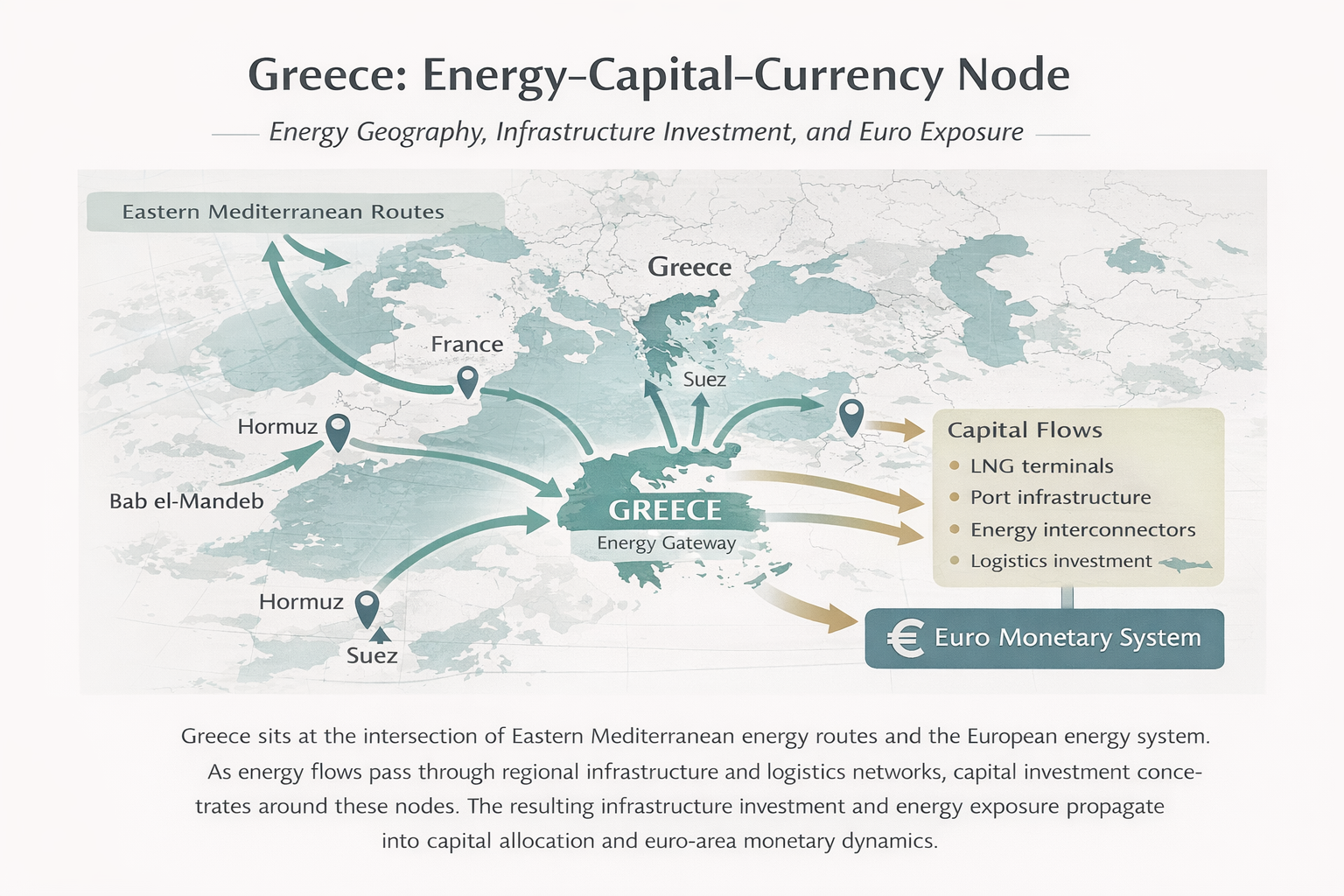
• Greece Energy Capital Currency Transmission
• Mediterranean Energy System Global
• Electrostate Deployment and Industrial Scale
• China’s Technology–Energy Transition
• Electrostate Deployment and Industrial Scale
• US Energy Abundance and System Power
• Global South Electrification Leapfrog
[AI, Energy Constraint, and Compute Infrastructure]
• LNG, NATO, and the Enforcement of System Power
• Global System Power — Comparative Architecture
• Security Architecture and Technological Sovereignty
• Global System Power — Comparative Architecture
• Electrostate Deployment and Industrial Scale
• China’s Technology–Energy Transition
• US Energy Abundance and System Power
• Global South Electrification Leapfrog
• LNG, NATO, and the Enforcement of System Power
• Security Architecture and Technological Sovereignty
• US Energy Abundance and System Power
• China’s Industrial System
• System Re-Concentration
• Global System Power — Comparative Architecture
• Security as System Enforcement
• System Re-Concentration
• Mediterranean Guide to the System