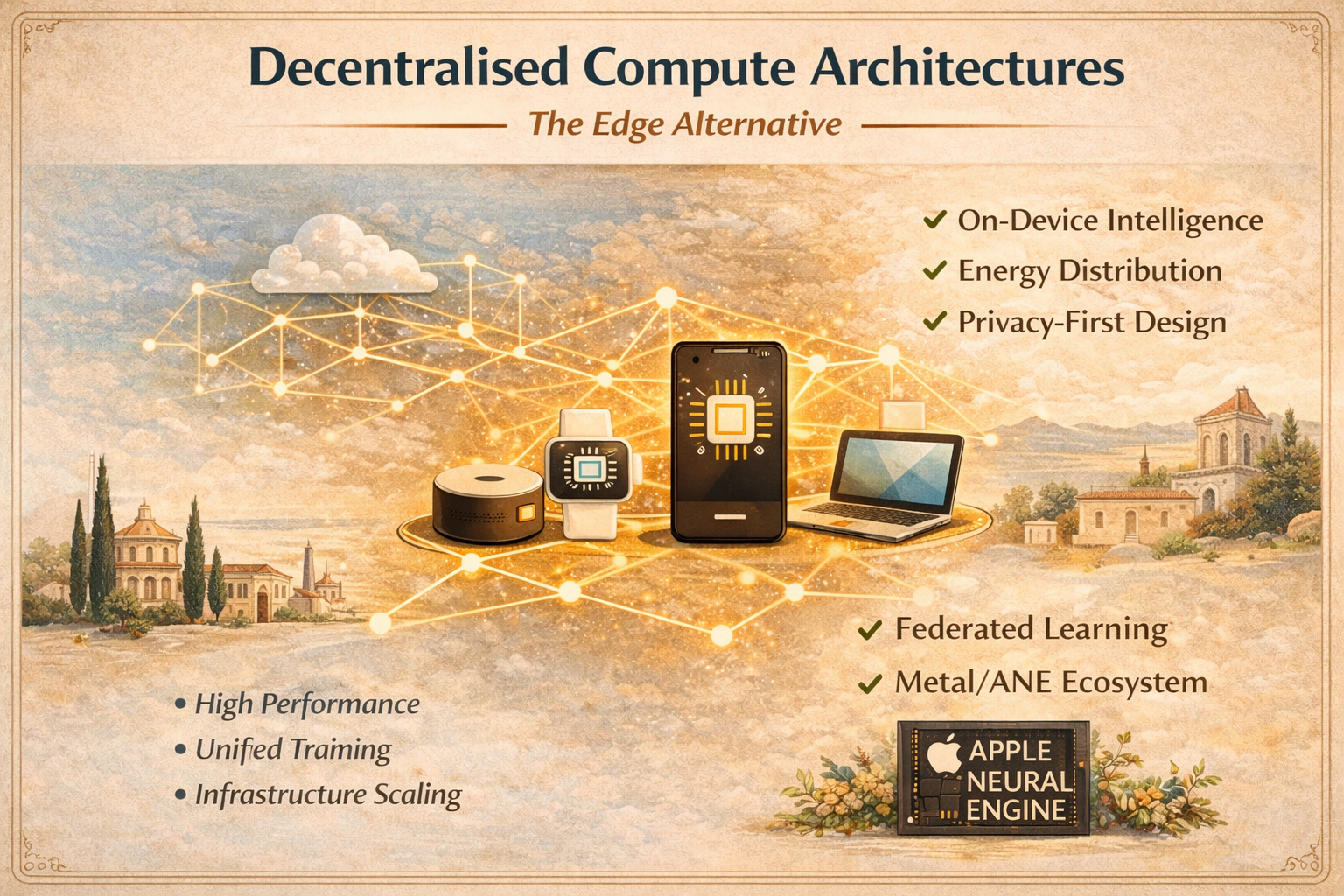
Architetture di Calcolo Decentralizzate — L’Alternativa Edge
Intelligenza Distribuita, Sovranità dell’Edge e Calcolo Resiliente sotto Vincolo
Navigazione del Sistema
Il sistema si sviluppa attraverso tre livelli:
Vincolo → Distribuzione → Resilienza
Centralised vs Decentralised Compute — System Architectures of AI
Decentralised Compute Architectures
Tesi Centrale — L’Intelligenza si Sta Spostando verso l’Edge
La prima fase della transizione dell’intelligenza artificiale è stata dominata dalla centralizzazione.
La potenza computazionale si è concentrata all’interno di infrastrutture hyperscale perché l’addestramento dei modelli richiedeva enorme densità computazionale, sistemi di rete integrati e dispiegamento di capitale su larga scala.
Ma mentre l’AI si sposta dalla creazione dei modelli verso il dispiegamento nel mondo reale, sta emergendo una seconda architettura:
intelligenza distribuita incorporata in dispositivi, reti, sistemi infrastrutturali e ambienti locali
Questa è l’ascesa delle architetture di calcolo decentralizzate.
L’importanza di questa transizione non risiede nel fatto che i sistemi decentralizzati sostituiscano l’AI hyperscale.
Non lo fanno.
La sua importanza risiede nel fatto che l’intelligenza stessa sta diventando geograficamente e infrastrutturalmente distribuita.
Sotto condizioni di vincolo energetico e infrastrutturale, questo modifica la logica strategica della scalabilità.
Il Principio Fondamentale — Calcolo Senza Concentrazione
Intelligenza Distribuita Attraverso il Sistema
Le architetture di calcolo decentralizzate distribuiscono la capacità di elaborazione attraverso reti di dispositivi invece di concentrarla in singoli nodi infrastrutturali.
Questo modello comprende:
edge AI
inference on-device
intelligenza incorporata
sistemi di elaborazione distribuiti
coordinamento computazionale locale
sistemi industriali edge
reti autonome
inference locale in tempo reale
Su larga scala, questo crea:
un livello computazionale incorporato direttamente nei sistemi fisici
Invece di richiedere che tutta l’elaborazione confluisca verso data centre centralizzati, l’intelligenza opera sempre più localmente all’interno di ambienti distribuiti.
Questo altera profondamente la topologia del livello computazionale.
Edge AI — Il Livello del Dispiegamento
L’AI Oltre il Data Centre
Man mano che i sistemi di intelligenza artificiale si spostano negli ambienti fisici, il dispiegamento edge diventa sempre più importante.
Questo include:
smartphone
sistemi industriali
infrastrutture logistiche
veicoli
porti
reti energetiche
macchine autonome
infrastrutture marittime
sistemi IoT
sistemi di difesa
Questi ambienti richiedono spesso:
bassa latenza
autonomia locale
elaborazione in tempo reale
resilienza a connettività intermittente
ridotta dipendenza dalla trasmissione dei dati
La sola elaborazione cloud centralizzata non può supportare efficientemente tutti questi sistemi.
Il risultato è un crescente spostamento verso architetture di inference localizzate.
Intelligenza Federata — Coordinamento Senza Centralizzazione
Sistemi di Apprendimento Distribuito
Uno dei meccanismi più importanti che rendono possibile il calcolo decentralizzato è l’intelligenza federata.
In questo modello:
i dati rimangono locali
mentre i modelli vengono aggiornati collettivamente attraverso nodi distribuiti
Questo modifica le esigenze economiche e infrastrutturali del dispiegamento dell’AI.
Invece di aggregare tutte le informazioni all’interno di infrastrutture computazionali centralizzate:
i dispositivi elaborano localmente
l’intelligenza si sincronizza globalmente
il coordinamento avviene senza completa centralizzazione
Questo genera vantaggi significativi:
riduzione della pressione sulla larghezza di banda
minore dipendenza dalla trasmissione dati
maggiore privacy
autonomia operativa locale
resilienza in caso di interruzione delle reti
Le architetture federate consentono quindi all’intelligenza di scalare senza richiedere una concentrazione equivalente di infrastrutture.
Logica Energetica — Distribuzione sotto Vincolo
L’AI è Diventata un Sistema Infrastrutturale
L’importanza del calcolo decentralizzato diventa evidente soltanto sotto condizioni di vincolo energetico.
L’intelligenza artificiale non è più soltanto un livello software.
Ora è profondamente legata a:
sistemi elettrici
dispiegamento infrastrutturale
capacità di raffreddamento
reti di trasmissione
disponibilità di semiconduttori
geografia fisica del calcolo
Questa è la logica strutturale del:
All’interno di questo quadro, i sistemi decentralizzati possiedono un vantaggio critico.
Resilienza e Ridondanza
I Sistemi Distribuiti Sono Strutturalmente Diversi
I sistemi centralizzati ottimizzano l’efficienza attraverso la concentrazione.
I sistemi distribuiti ottimizzano la resilienza attraverso la ridondanza.
Questa distinzione diventa sempre più importante in condizioni di:
instabilità delle reti elettriche
interruzioni cyber
colli di bottiglia infrastrutturali
frammentazione geopolitica
conflitti fisici
degrado delle reti
Nei sistemi decentralizzati:
il fallimento è distribuito
l’infrastruttura è meno concentrata
l’elaborazione continua localmente
la continuità operativa diventa più resiliente
Questo non elimina la vulnerabilità.
Ma riduce la dipendenza da singoli punti di concentrazione infrastrutturale.
Ecosistemi di Piattaforma e Sovranità dell’Edge
I Dispositivi come Infrastruttura
L’ascesa del calcolo decentralizzato trasforma inoltre i dispositivi stessi in livelli infrastrutturali strategici.
Questo rafforza l’importanza di:
sistemi operativi
integrazione dei semiconduttori
ecosistemi di dispositivi
coordinamento delle piattaforme
livelli locali di orchestrazione
Aziende come Apple quindi non sono semplicemente produttori hardware.
Stanno costruendo:
ecosistemi di calcolo distribuito operanti su scala planetaria
Questo rappresenta un modello di sovranità differente rispetto alla centralizzazione hyperscale.
Invece di controllare il calcolo principalmente attraverso la concentrazione cloud, gli ecosistemi di piattaforma controllano:
il dispiegamento edge
l’orchestrazione al livello utente
l’integrazione dei sistemi operativi
il coordinamento dei dispositivi
l’intelligenza incorporata
Per questo motivo la sovranità degli ecosistemi diventa sempre più centrale nella transizione dell’intelligenza artificiale.
AI Fisica e Sistemi Distribuiti
Intelligenza Incorporata nelle Infrastrutture
Man mano che l’AI diventa fisica, le architetture decentralizzate acquisiscono maggiore importanza.
I sistemi di Physical AI richiedono:
capacità di risposta locale
elaborazione a bassa latenza
interazione ambientale in tempo reale
resilienza operativa distribuita
Questo vale per:
robotica
mobilità autonoma
sistemi logistici
manifattura intelligente
sistemi energetici distribuiti
coordinamento marittimo
sistemi militari
gestione autonoma delle infrastrutture
Questi sistemi non possono dipendere esclusivamente da infrastrutture hyperscale remote.
Richiedono intelligenza locale incorporata direttamente negli ambienti operativi.
Il Mediterraneo e i Sistemi Infrastrutturali Distribuiti
La Geografia come Vantaggio Distribuito
Il Mediterraneo possiede caratteristiche particolarmente compatibili con i sistemi infrastrutturali decentralizzati.
Queste includono:
connettività marittima
corridoi di cavi sottomarini
sistemi insulari distribuiti
espansione delle energie rinnovabili
reti di interconnessione
infrastrutture logistiche
geografia del dispiegamento edge
sistemi solari distribuiti
Questo crea un percorso strategico alternativo per regioni incapaci di dominare direttamente la concentrazione hyperscale.
Per paesi come la Grecia, le architetture decentralizzate potrebbero rivelarsi particolarmente importanti perché si allineano con:
geografia distribuita
topologia marittima
integrazione delle energie rinnovabili
logica infrastrutturale resiliente
coordinamento energetico locale
sistemi di dispiegamento edge
All’interno di un paradigma computazionale distribuito, la geografia periferica può trasformarsi in vantaggio infrastrutturale.
I Limiti del Calcolo Decentralizzato
La Distribuzione Non Sostituisce la Concentrazione
I sistemi decentralizzati non costituiscono un sostituto dell’AI hyperscale.
Non possono autonomamente eseguire:
addestramento di modelli frontier
sviluppo di modelli su scala massiva
aggregazione computazionale ad alta densità
workload di simulazione hyperscale
Il loro ruolo è diverso.
Si specializzano in:
deployment
inference
coordinamento
intelligenza locale
autonomia operativa
resilienza distribuita
Il sistema futuro dipende quindi dall’interazione tra:
calcolo centralizzato
inference distribuito
orchestrazione cloud
esecuzione edge
Architetture Computazionali Ibride
Il Livello della Convergenza
Il sistema emergente dell’intelligenza artificiale sta diventando sempre più ibrido.
Questa architettura combina:
addestramento hyperscale dei modelli
inference distribuito
autonomia locale
coordinamento cloud-edge
intelligenza federata
sistemi operativi incorporati
Questa convergenza produce un ordine computazionale stratificato nel quale l’intelligenza:
viene prodotta centralmente,
distribuita sistemicamente,
ed eseguita localmente.
Questa è la logica operativa della:
Conclusione — Intelligenza Distribuita in un Mondo Energy-Bound
Il futuro dell’intelligenza artificiale non sarà definito esclusivamente da chi possiede i più grandi data centre.
Sarà determinato anche da:
chi sarà in grado di distribuire l’intelligenza in modo efficiente,
chi saprà coordinare sistemi edge,
chi riuscirà a integrare capacità computazionale locale,
e chi potrà costruire infrastrutture resilienti sotto vincoli fisici.
I sistemi centralizzati massimizzano l’intensità.
I sistemi decentralizzati massimizzano resilienza, distribuzione e portata operativa.
Con l’aumento delle pressioni energetiche, infrastrutturali e geopolitiche, le architetture computazionali decentralizzate diventano strategicamente sempre più importanti.
La transizione dell’AI quindi non sta semplicemente producendo infrastrutture più grandi.
Sta producendo:
un livello di intelligenza geograficamente distribuito e incorporato nell’intero mondo fisico