DATA ANNEX — Monetary Transmission in an Energy-Bound System
Energy → CPI → Fiscal → Capital → Currency
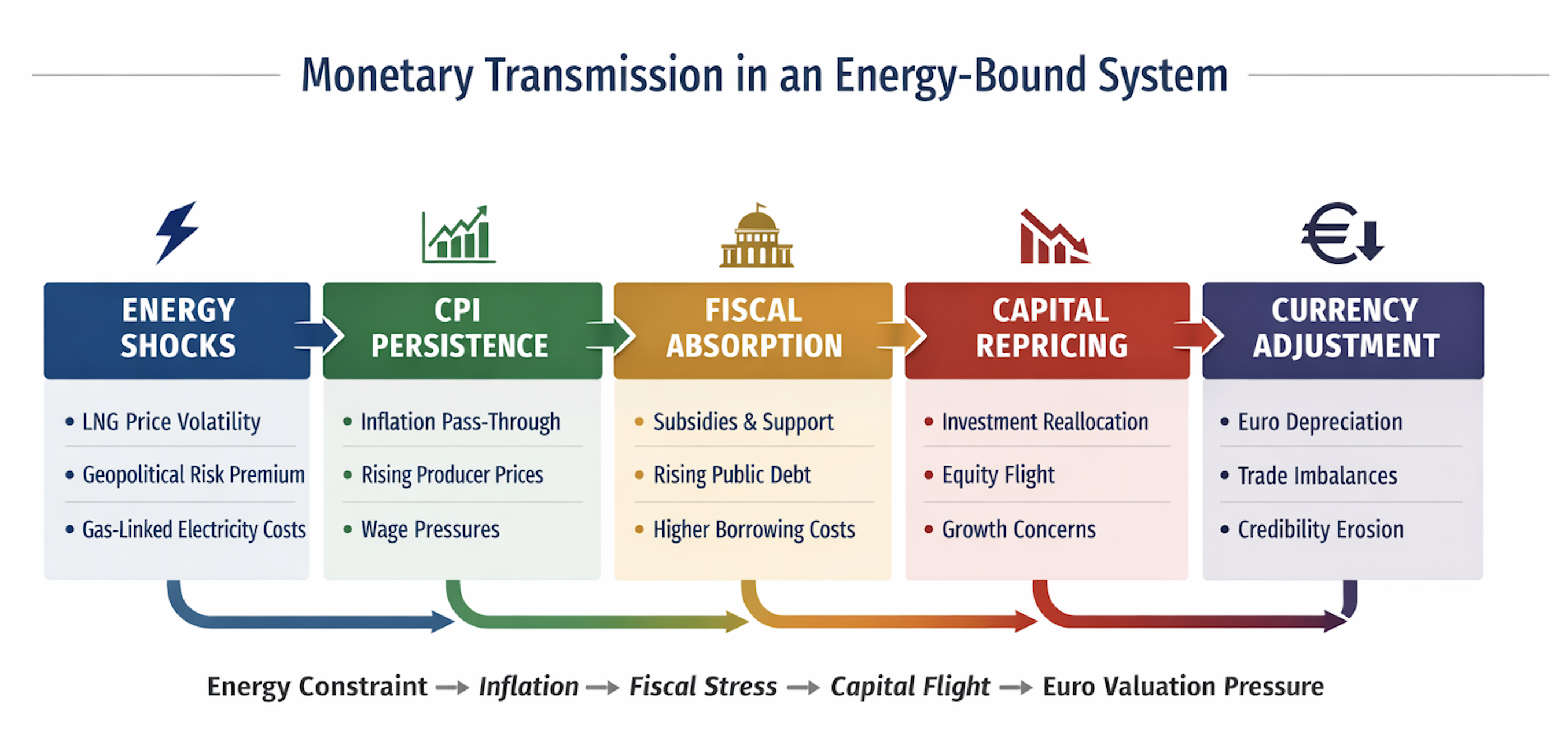
This annex formalises the structural transmission mechanism through which energy constraint propagates into monetary systems. It should be read as a causal chain, not a cyclical model.
I. Energy Shock Layer — Marginal Cost Transmission
External marginal pricing (LNG, oil benchmarks), corridor risk premiums, and gas-linked electricity pricing transmit directly into domestic cost floors where energy is imported and externally indexed.
II. CPI Layer — Inflation Persistence
Energy pass-through affects CPI, producer prices, wage bargaining, and inflation expectations. Monetary tightening can compress demand, but cannot structurally lower externally priced energy inputs.
III. Fiscal Layer — Balance Sheet Stress
States socialise volatility via subsidies, compensation schemes, and strategic investment. Debt servicing sensitivity rises under tightening cycles.
IV. Capital Markets Layer — Repricing of Material Exposure
Investors reprice duration risk and growth expectations. Capital allocates toward jurisdictions perceived as materially resilient (energy-secure, industrially deep, liquidity-rich).
V. Currency Layer — External Valuation Pressure
Persistent energy cost differentials influence trade structure, investment attractiveness, and long-term growth, resulting in gradual valuation compression rather than abrupt instability.
Duration Test — Sovereignty Under Constraint
Energy constraint weakens monetary sovereignty where it remains externally priced and structurally expensive. It strengthens where energy architecture is resilient, integrated, and domestically anchored.
Suggested Strategic Reading
The following materials provide additional context for the structural dynamics examined across this project, particularly the interaction between energy systems, industrial capacity, capital allocation, and technological infrastructure.
Core Essays on this Site
EU Energy Paradigm Shift Explains how Europe’s industrial competitiveness and monetary space are increasingly shaped by energy cost structure.
AI Sovereignty Stress Test Examines how energy volatility and compute localisation shape technological sovereignty and digital infrastructure risk.
Energy Constraint and the Monetary Ceiling Traces the transmission from energy systems to industrial margins, capital flows, and monetary policy space.
Strategic Context
These external works provide broader analytical perspectives on energy systems, industrial transformation, and technological competition.
Vaclav Smil — Energy and Civilization
A foundational history of how energy systems shape economic structures.Daniel Yergin — The New Map
Explores the geopolitical implications of the evolving global energy landscape.International Energy Agency (IEA)
Global energy investment and transition analysis.International Monetary Fund — Energy Price Pass-Through Studies
Research on how energy shocks transmit into inflation and industrial margins.