Europe and the Energy Constraint
Inflation, Competitiveness, and the Limits of Strategic Autonomy
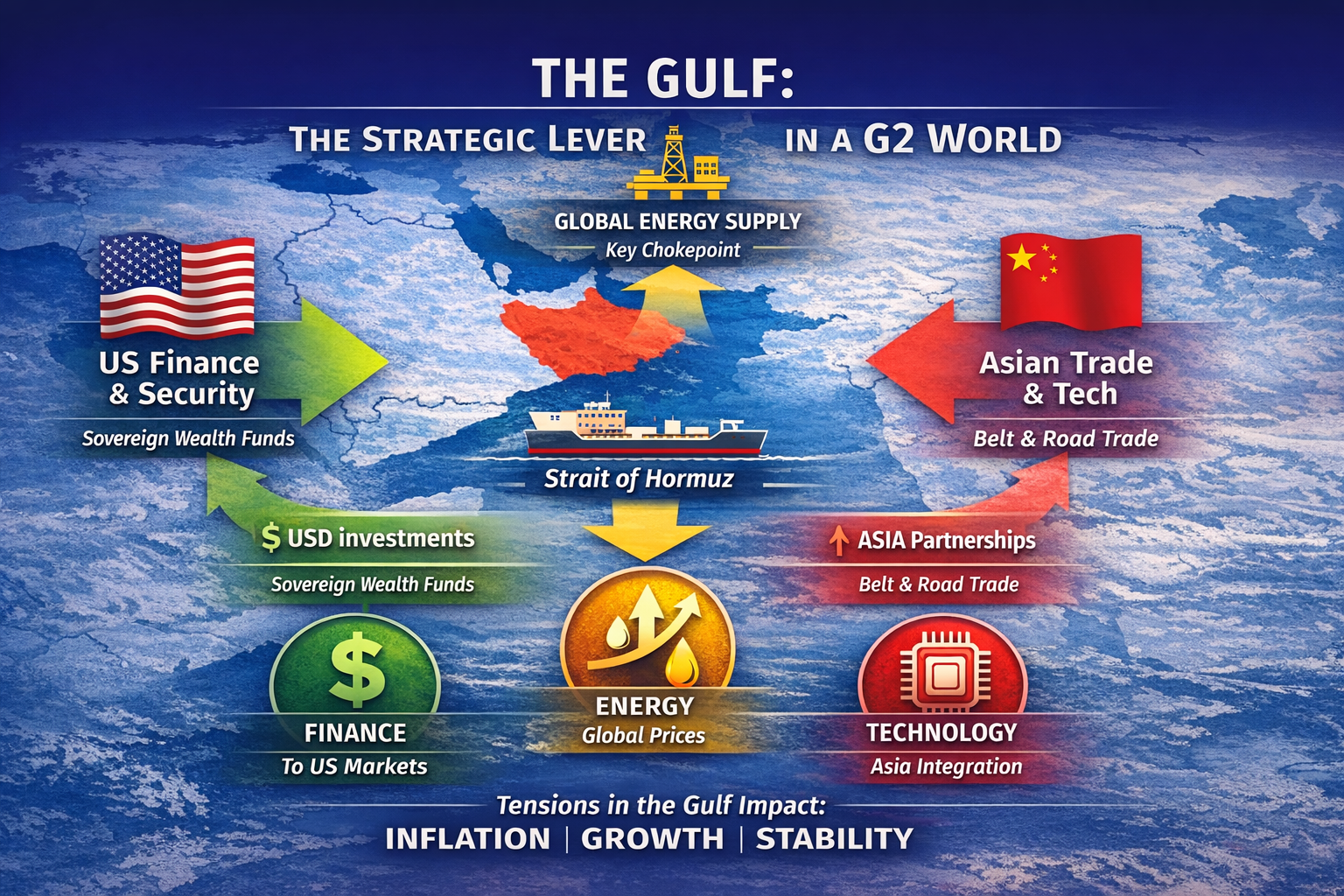
An applied reading of the New Energy Power Equation in the European political economy.
Introduction — When Energy Becomes Political
The structural argument is established in Energy and the Base Layer of Constraint (GLOBAL panel): energy has re-emerged as the first binding constraint in the modern system. Energy availability, cost, and system design now condition industrial viability, inflation dynamics, technological scale, and geopolitical leverage.
For Europe, this constraint is not abstract. It is domestic.
Energy volatility no longer functions as a cyclical shock. It acts as a transmission mechanism through which geopolitical tension, corridor insecurity, and financial tightening feed directly into household budgets, industrial margins, and coalition stability. In an electrifying, AI-intensive economy, exposure to energy cost is exposure to political fragility.
Europe’s strategic challenge is therefore not whether energy matters — but whether sovereignty can be executed under sustained energy constraint.
I. Inflation as the Political Transmission Channel
In European democracies, inflation is not merely an economic variable. It is a political accelerant.
Higher energy prices flow through:
Household electricity and heating bills
Transport and food costs
SME operating margins
Industrial input pricing
Unlike more flexible labour markets, Europe’s social models are designed around price stability and predictable purchasing power. When energy volatility becomes structural rather than temporary, it erodes trust in institutions and narrows the space for reform.
Industrial ambition becomes politically fragile when households feel poorer.
This is the first execution dilemma: energy constraint compresses democratic tolerance for long-horizon strategy.
II. Competitiveness Inside an Energy Cost Envelope
Europe’s industrial policy is energy-intensive by definition.
Advanced manufacturing, semiconductor fabrication, battery production, data centres, defence supply chains, electrified transport systems — all require stable, affordable electricity.
Yet Europe operates inside an energy cost envelope it does not fully control.
Energy-intensive sectors already under strain include:
Chemicals and petrochemicals
Steel and aluminium
Fertilisers and cement
Glass and paper
Emerging “strategic” sectors such as EVs, AI infrastructure, and defence manufacturing
When energy prices rise or remain structurally elevated, competitiveness erodes. Firms reduce output, defer investment, relocate production, or compress margins. Industrial strategy cannot scale if the energy base is unstable.
The result is not dramatic collapse, but gradual industrial thinning — capacity leaves quietly.
This is the second execution dilemma: industrial policy cannot outrun energy exposure.
III. Strategic Autonomy Versus Structural Dependence
Europe increasingly speaks the language of strategic autonomy: trade defence instruments, subsidy frameworks, digital regulation, industrial strategy, and rearmament.
But strategic autonomy requires material depth.
An energy-constrained Europe cannot simultaneously:
Escalate trade confrontation
Subsidise large-scale industrial transformation
Rearm at scale
Maintain fiscal stability
Protect household purchasing power
One of these objectives eventually collides with energy reality.
Rearmament without industrial regeneration risks deepening reliance on external platforms and supply chains. Subsidy races without energy stability inflate costs without securing competitiveness. Trade assertiveness without energy buffers invites retaliation during vulnerability.
Strategic autonomy cannot exceed the material base that sustains it.
IV. The Decarbonisation Paradox
Europe’s energy transition is necessary. But execution speed and sequencing matter.
Electrification increases electricity demand.
Digitalisation increases energy intensity.
AI multiplies compute load.
Reindustrialisation raises base demand further.
If electrification outpaces grid expansion, storage deployment, and pricing reform, volatility intensifies rather than declines.
The political paradox is clear:
Europe must decarbonise to reduce dependency —
but the transition itself raises short-term exposure.
Managing this sequencing challenge is central to Europe’s execution capacity.
V. The External Lever: Geopolitics and Energy Risk Premiums
Instability in the Middle East, corridor disruptions, or chokepoint tensions need not result in physical supply interruptions to matter. The risk premium alone affects pricing.
For Europe — structurally import-dependent — geopolitical tension translates quickly into inflationary pressure.
That pressure constrains:
Fiscal manoeuvre
Subsidy design
Monetary flexibility
Public tolerance for trade or defence escalation
Energy exposure becomes a lever acting indirectly on European domestic politics.
This is not a narrative of weakness. It is a structural reality.
VI. Execution Under Democracy
The European challenge is therefore distinct from that of more energy-abundant powers.
Europe must:
Reconfigure its energy architecture
Rebuild industrial competitiveness
Expand defence capacity
Maintain fiscal credibility
Sustain democratic consent
Simultaneously.
Execution is not merely technical. It is distributive.
Who pays?
Who benefits?
How quickly?
Under what inflation environment?
These are not abstract questions. They determine political durability.
Conclusion — The Real Test of Sovereignty
The energy constraint is structural.
Europe cannot eliminate it through rhetoric or regulatory ambition.
The question is whether Europe can:
Stabilise its energy base
Protect industrial depth
Sequence decarbonisation intelligently
Expand capacity without eroding consent
Sovereignty in this environment is not a declaration. It is a managed balance between ambition and material limits.
The global energy-power equation sets the boundary.
Europe’s challenge is execution within it.
Related Reading
Europe’s Energy Paradigm Shift (EU Sovereignty)
Energy Sovereignty as System Control (EU Sovereignty)