Energy Constraint and the Monetary Ceiling
The Energy → Industry → Trade → Currency Transmission Chain
Doctrine — EU Sovereignty Panel
In an energy-bound system, persistently higher marginal energy costs impose a structural ceiling on currency strength by compressing industry, investment, and external balances over time.
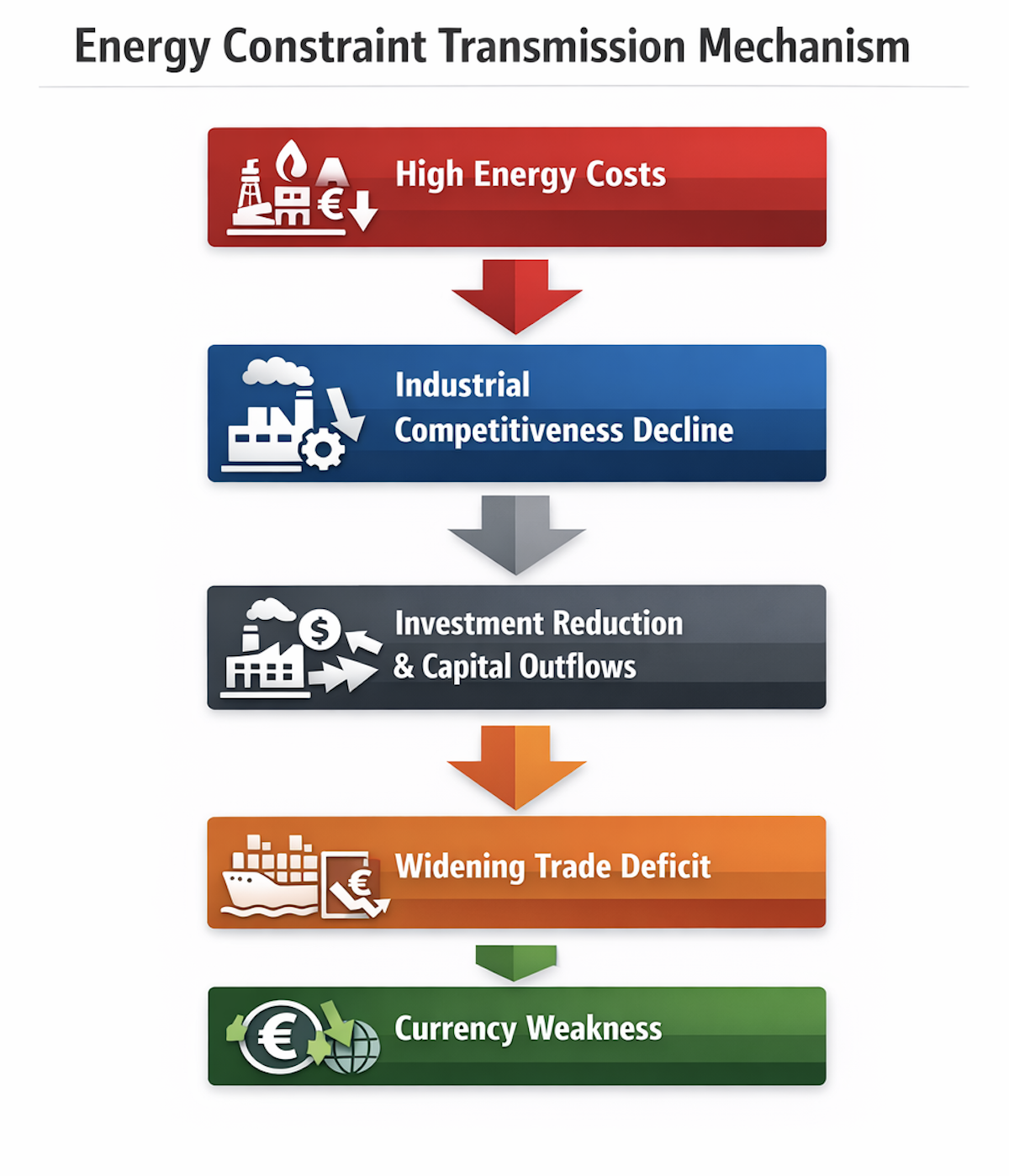
Transmission Mechanism
Energy systems shape industrial competitiveness, capital allocation, and ultimately the durability of monetary systems.
Persistent energy cost divergence propagates through the real economy:
Energy cost divergence
→ industrial margin compression
→ reduced reinvestment and industrial relocation
→ trade balance deterioration
→ currency vulnerability
Monetary systems ultimately reflect the underlying structure of production and trade.
When energy costs structurally weaken industry and external balances, monetary strength becomes constrained regardless of monetary policy settings.
1. Industrial Energy Price Divergence
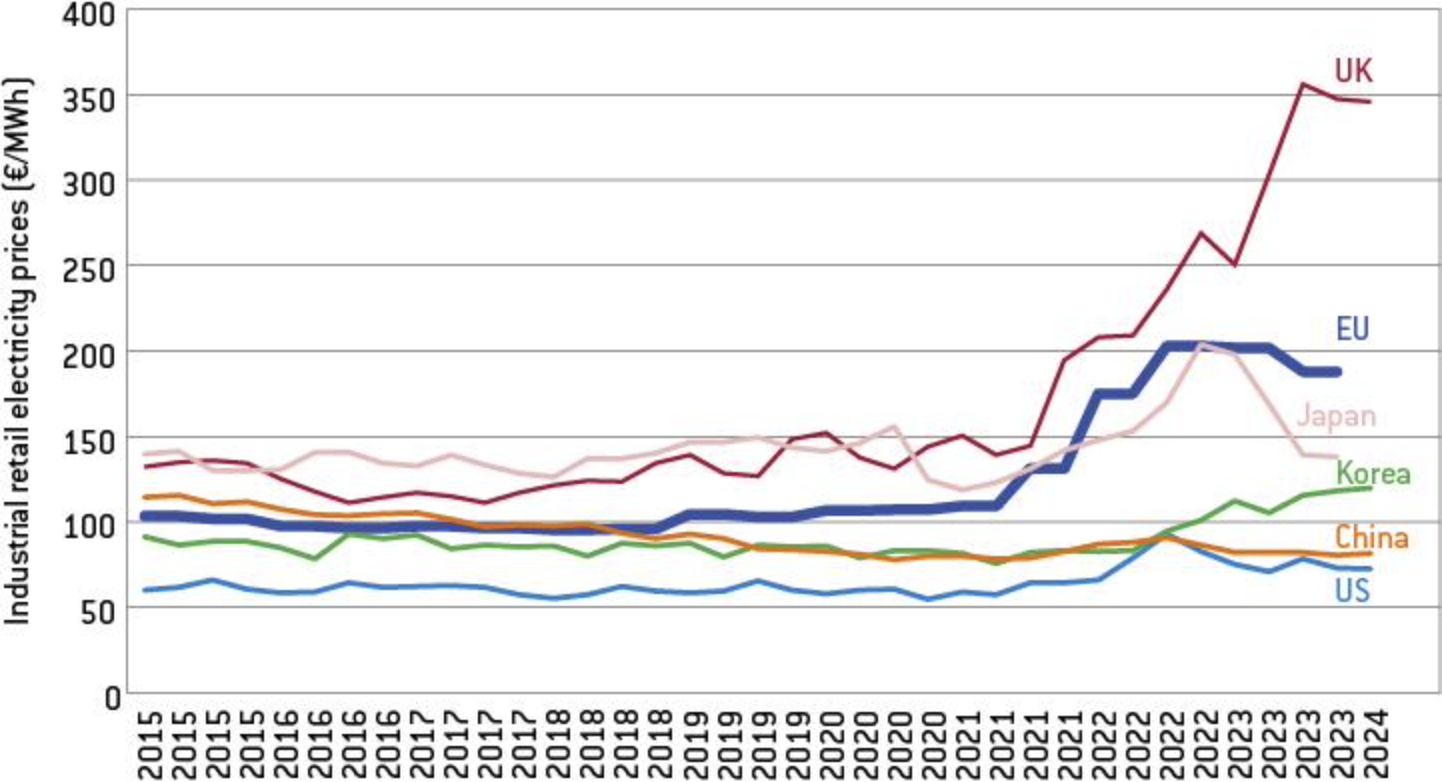
A growing body of empirical research demonstrates that energy prices are a critical determinant of industrial competitiveness and production location.
Research from several institutions highlights this relationship:
International Energy Agency (IEA)
documents that European industrial electricity prices are frequently two to three times higher than those in the United States.European Central Bank (ECB)
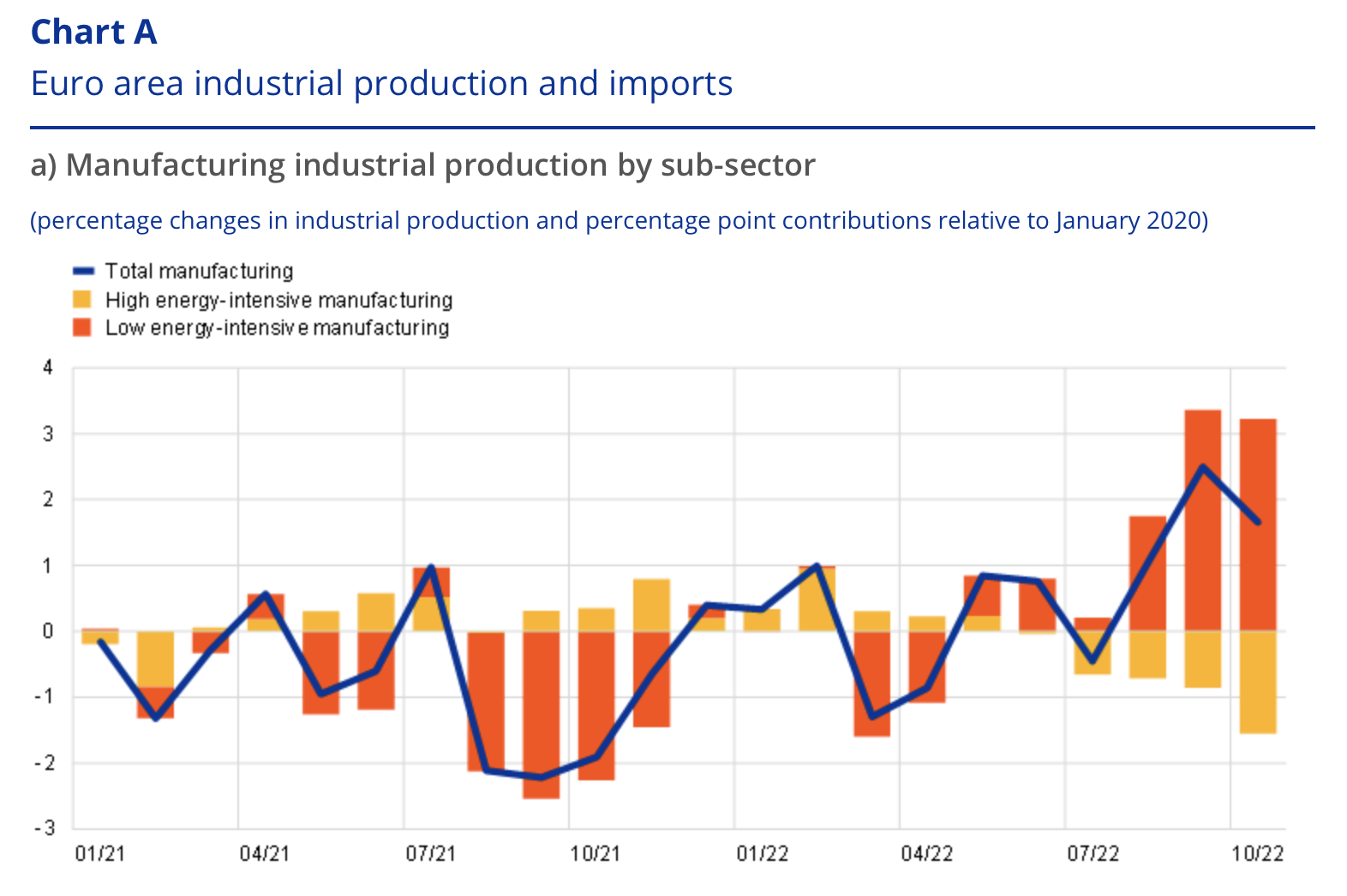
analysis since 2022 shows that energy price shocks significantly reduced European industrial margins and production output.International Monetary Fund (IMF)
research links energy shocks to manufacturing competitiveness losses and trade balance deterioration.
Structural patterns in global industry reflect these price differences.
Industrial electricity prices for manufacturing:
Europe: structurally higher
United States: structurally lower (domestic gas abundance)
China: partially state-managed and subsidised
Observed empirical developments since the 2022 energy shock:
EU industrial production declined
US manufacturing investment surged
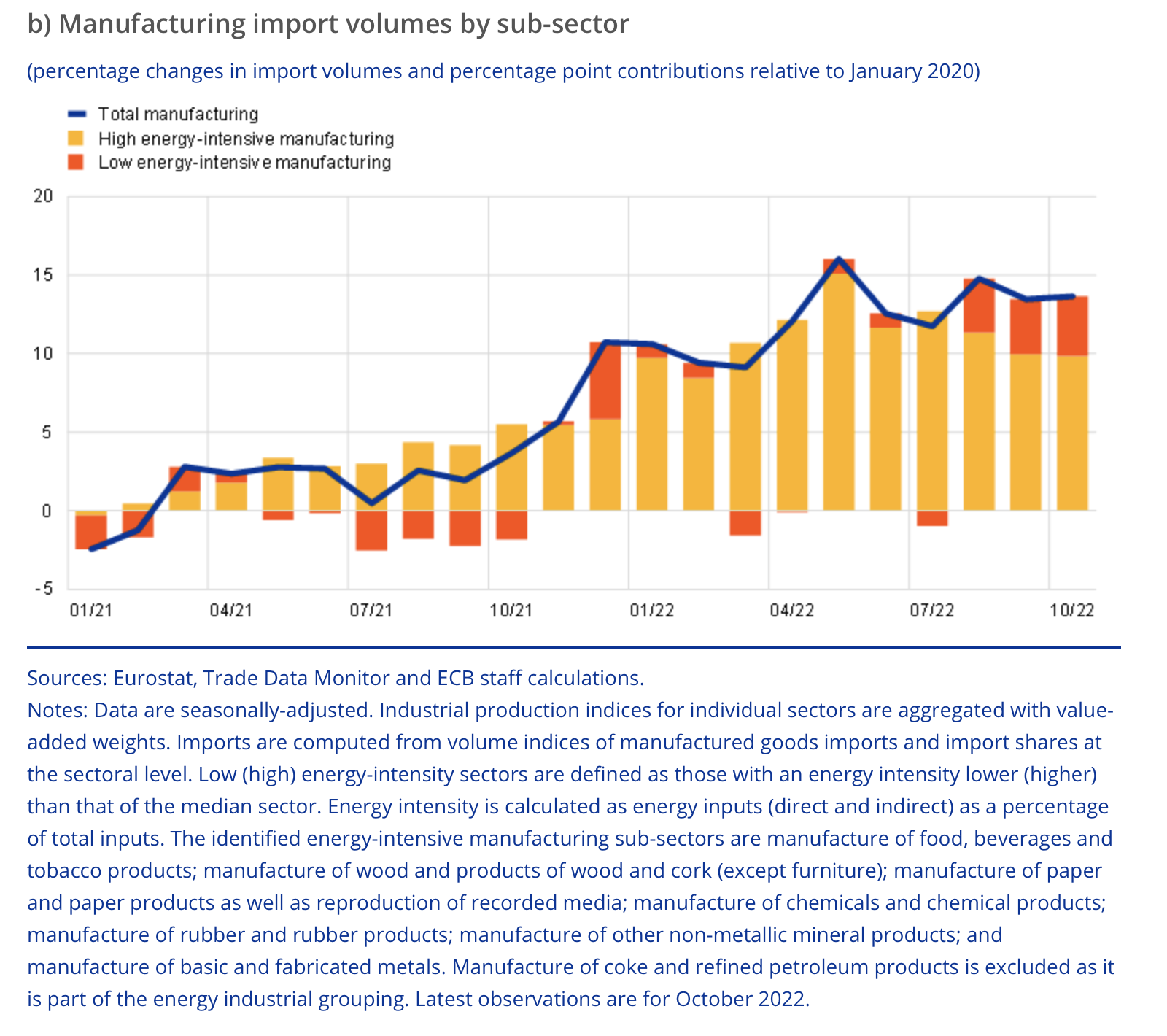
energy-intensive sectors began relocating outside Europe
Energy cost divergence
→ industrial margin compression
→ reduced reinvestment
→ industrial relocation
Evidence: Industrial Energy Price Divergence
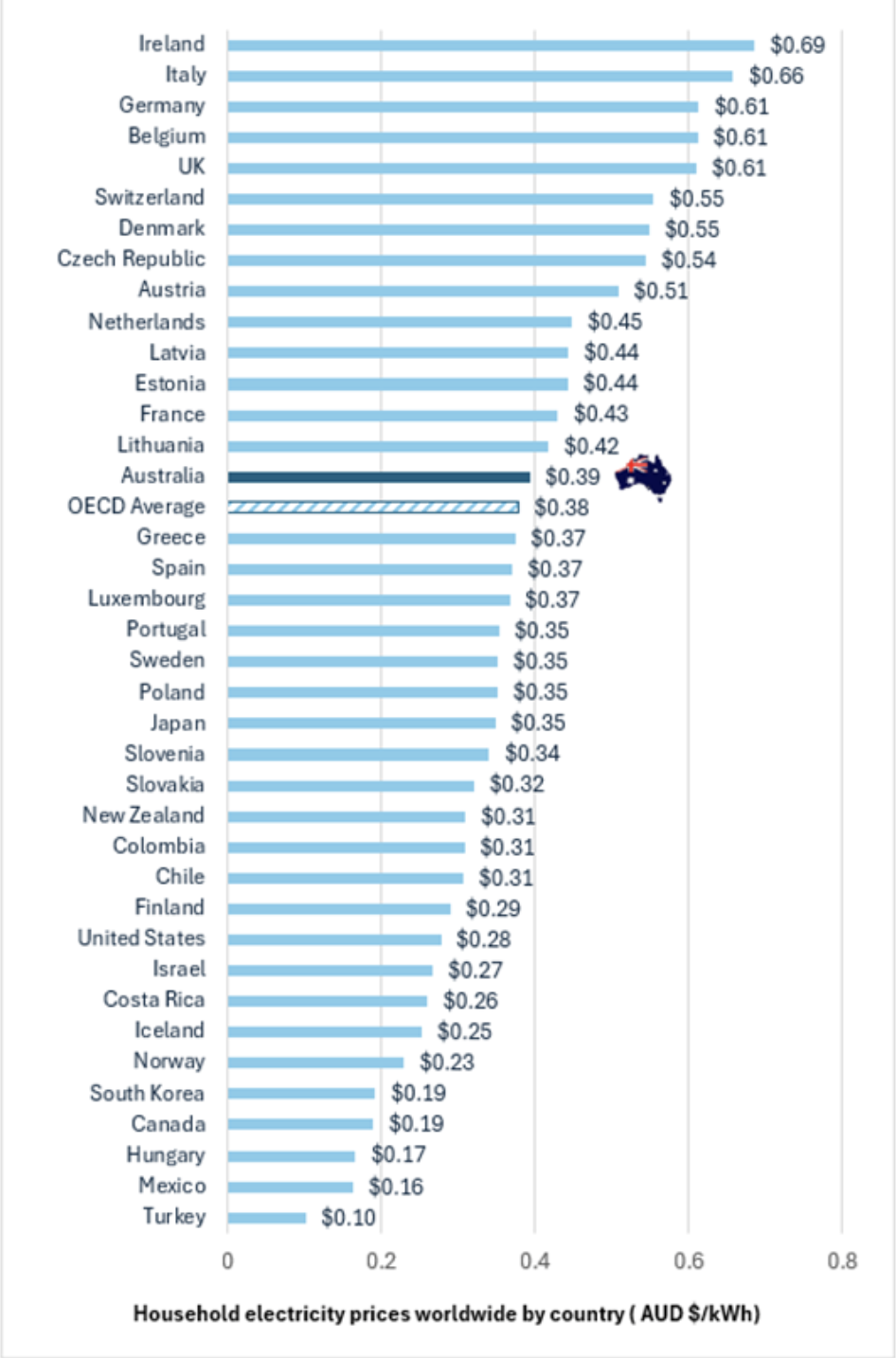
OECD Electricity Price Comparison
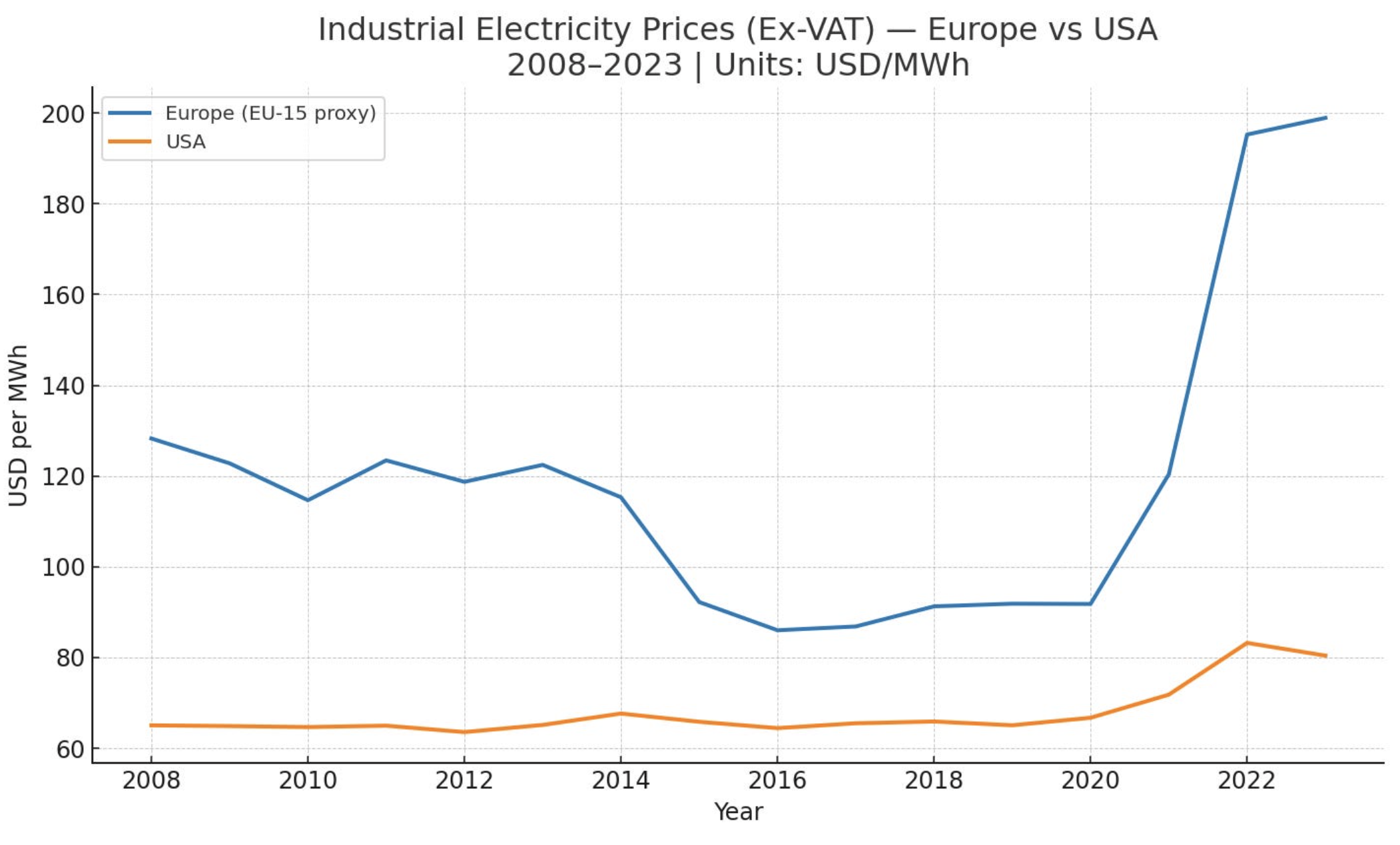
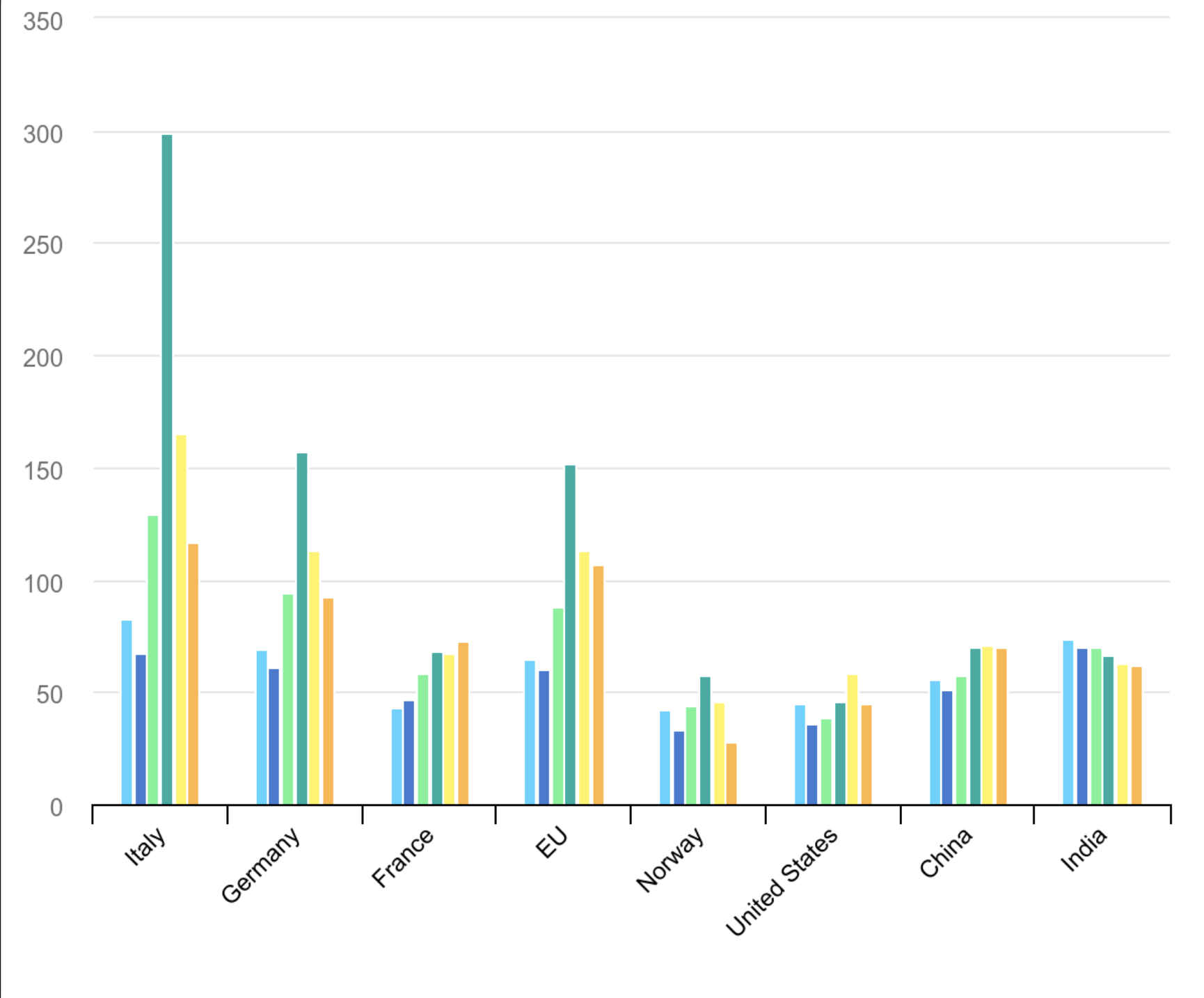
Ref: Comparative Industrial Energy Prices: Europe vs China and the USA (2008–2025) — João Neves Analytics
Bruegel — Decarbonising for Competitiveness
2. Energy Import Dependency and Trade Balance
Energy-importing economies are structurally vulnerable to energy price shocks.
Rising energy prices directly increase the cost of imports, affecting the external balance:
Energy price increase
→ larger energy import bill
→ current account deterioration
Evidence for this mechanism has been widely analysed by:
International Monetary Fund (IMF)
European Central Bank (ECB)
Following the 2022 energy shock:
Europe’s energy import bill increased dramatically
the euro area temporarily moved into trade deficit
This supports the second transmission stage:
Energy constraint
→ external balance deterioration
Evidence: Energy Import Dependency and External Balance
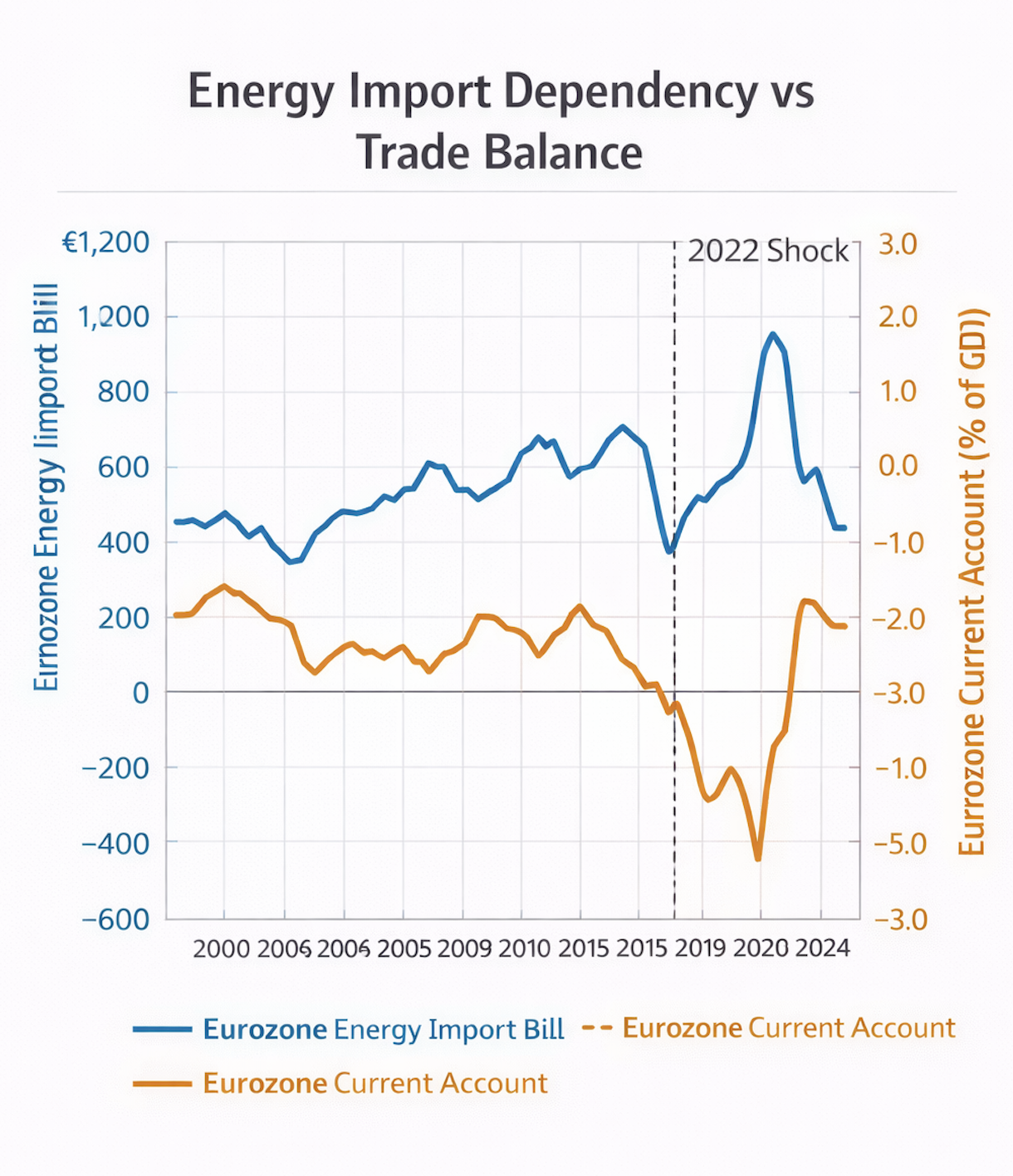
Energy Import Dependency and the Eurozone Current Account
Rising energy import costs directly affect the euro area’s external balance.
The 2022 energy shock sharply increased the energy import bill and coincided with the eurozone’s temporary shift into trade deficit.
Supporting Evidence
Sources:
ECB Economic Bulletin
Eurostat: EU imports of energy products
IMF research on energy shocks and current account balances
Further reading:
ECB Economic Bulletin — Energy Shock Analysis
Eurostat — EU Imports of Energy Products
Energy Price Shocks and Current Account Balances — Science Direct (2024)
3. Current Account Balance and Currency Strength
External balances are one of the strongest long-run determinants of currency stability.
Persistent patterns observed across global economies include:
Persistent trade surplus
→ currency stability or appreciation
Persistent trade deficit
→ currency vulnerability
This relationship is frequently analysed by:
Bank for International Settlements (BIS)
International Monetary Fund (IMF)
Examples across different economies:
| Country / System | Energy position | Currency pattern |
|---|---|---|
| Norway | energy exporter | strong currency |
| Gulf economies | energy exporters | persistent external surpluses |
| Japan (post-Fukushima) | energy importer | structural yen weakness |
| Eurozone (post-2022 shock) | energy import shock | euro depreciation pressure |
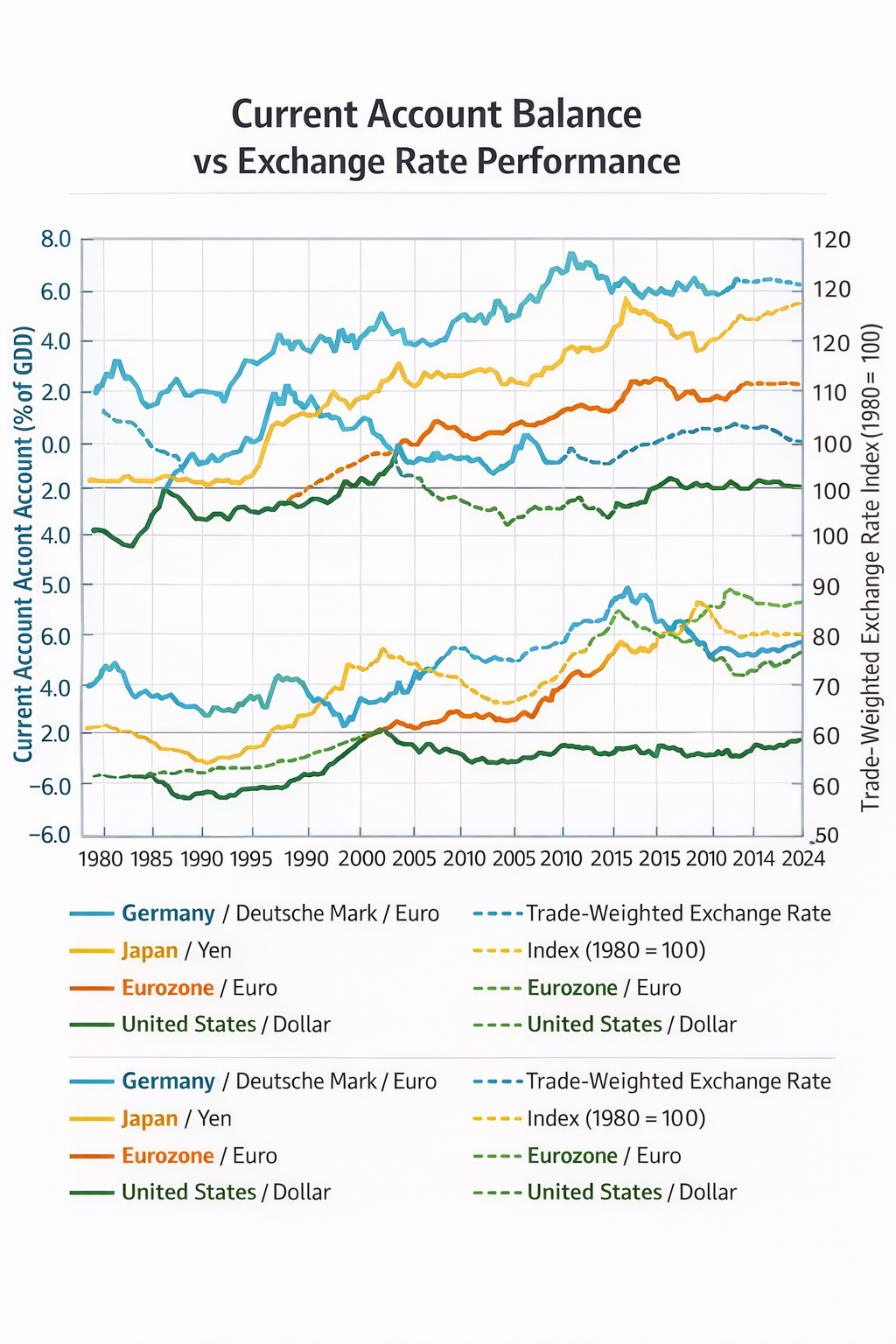
Current Account Balances and Long-Run Currency Performance (1970–2024)
Economies with persistent external surpluses tend to experience stronger or more stable currencies over long horizons. External deficits, by contrast, require sustained capital inflows and often coincide with periods of currency vulnerability.
Structural Implication
Energy systems ultimately shape monetary durability.
When marginal energy costs remain persistently higher than those of competing industrial systems, the effects accumulate across the real economy:
industrial competitiveness weakens
investment relocates
external balances deteriorate
Over time these pressures impose a structural ceiling on currency strength, regardless of monetary policy settings.
In an energy-bound global system, currencies are therefore anchored not only in financial credibility, but in the energy systems that sustain industrial production and capital formation.