SYSTEM STACK ANALYSIS

Propagation pf power in an energy-bound system


System Architecture
Power propagates through a structured chain:

Energy → Industry → Compute → Ecosystems → Platforms → Standards → Capital → Currency → Sovereignty


Control of lower layers determines the structure and limits of higher layers.

I. Energy Systems — Physical Input Layer


→ defines cost, availability, and the structural ceiling of the system

• Energiesysteme — Panelübergreifender Index

• Dekarbonisierung, Elektrifizierung und Kosten

II. Industrial & Ecosystem Systems — Transformation Layer


→ converts energy into production, capability, and scaling capacity

• Industrielle Ökosysteme — Panelübergreifender Index

III. Compute & AI Systems — Acceleration Layer


→ converts energy and industry into computation, intelligence, and infrastructure

• Energie–KI-Infrastruktur — Panelübergreifender Index

IV. Digital Sovereignty — Control Layer


→ determines access, governance, and system-level control of computation

• Digitale Souveränität — Index

V. Capital & Monetary Systems — Outcome Layer


→ reflects how system control translates into capital formation, pricing power, and monetary stability

• Energy Capital Currency Index

• Energy Constraint Index

VI. Geopolitics of Systems — External Constraint Layer


→ shapes system interaction through competition, chokepoints, and external dependencies

• Energiegeopolitik — Index

VII. System Interface — Strategic Interpretation Layer


→ where system structure becomes geographically and operationally visible

• Mediterraner Leitfaden zum System


EUROPEAN SOVEREIGNTY

Core Navigation

• Strategische Begrenzung

• Europas Herausforderung

• Energiebegrenzung und monetäre Obergrenze

• Digitale Souveränität — Index

• Doktrin — Index

• Auf dem Weg zu einer europäischen Machtarchitektur

• Monetäre Obergrenze — Kernübertragung (Nordeuropa)

• Umsetzung unter Druck

• Legitimität — Index

•  Karte des Kapitalallokationsproblems — Griechenland

•  Systemische Evidenz — Validierungsebene

• Investoren — Index

• Strategic Autonomy

•  Von der Begrenzung zur Souveränität — europäische Systemarchitektur

Key Reading Paths

Energy → System → Monetary

• Energie als strategische Begrenzung Europas

• Systemische Asymmetrie in Europa

• Engpässe unter Druck

• Energiebegrenzung und monetäre Obergrenze

AI, Compute, Platform

• KI- und Rechenökosysteme in Europa

• Rechenlokalisierung in einem energiegebundenen KI-System

• Plattformabhängigkeit und Kapitalabfluss in Europa

• Standards als Macht


Execution → Limits

• Monetäre Obergrenze — Kernübertragung (Nordeuropa)

• Umsetzung unter Druck

• Grenze der Legitimität

• Die physischen Grenzen der Macht

Mediterranean / Regional

• Griechenland als Energie–Rechenleistungsknoten

• Energie–Rechenleistungskorridore im Mittelmeerraum

• Greece Capital Allocation Problem Eu Sovereignty

Evidence / Investor

•  Evidenz für Investoren

• Strukturresilienzmatrix EU–USA

• Die monetäre Obergrenze — Griechenland

• Investorenpfad — Kapitalallokation in einem energiegebundenen System

•  Executive Brief — Kapitalallokation in einem energiegebundenen System

•  Exekutiver Allokationsvermerk — Mittelmeerraum

•  Griechenland — Investorenbrief zur Marktübertragung

•  Energie–Rechenleistungs-Investitionsplattform im Mittelmeerraum (MECIP)

Miscellaneous / Supplementary

•  Finanzielle–physische Asymmetrie in einem energiegebundenen System

•  Investitionsvehikel für Energieinfrastruktur — Mittelmeersystem

•  Renditevehikel für griechische Energieinfrastruktur (GEIYV)

•  GEIYV — Asset-Übersicht Phase 1

•  GEIYV — Erweiterungsrahmen Phase 2


EU Asymmetry Under Stress
Inflation, External Cost Transmission, and the Case for System Building

In an energy-bound global order, asymmetry becomes visible under stress — particularly when energy, currency, and financial dynamics interact.

In recent years, Europe has absorbed significant externally generated inflation through energy imports, currency dynamics, and global pricing power. These effects are often misinterpreted as trade imbalances or competitiveness failures. In reality, they reflect cost transmission through energy-dependent systems.

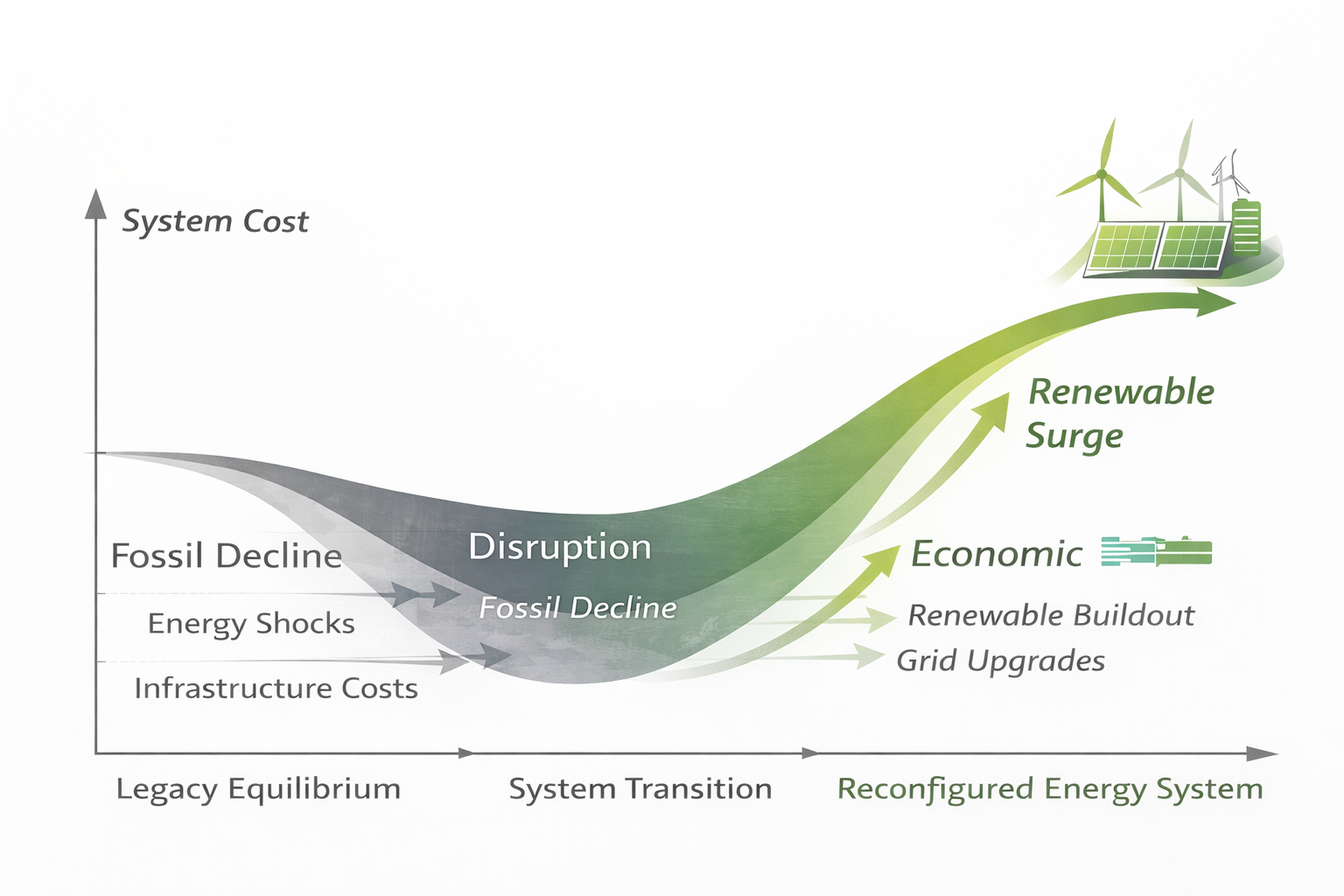
When energy prices rise globally, regions with domestic, capital-intensive energy systems experience inflation differently from regions dependent on imports and price-indexed markets. Inflation is not only a monetary phenomenon; it is a system cost outcome. It reflects the structure of energy dependence embedded in the economy itself.

This distinction matters for how Europe interprets external pressure. Claims that trade imbalances result from unfair practices often ignore the structural reality that inflation and cost volatility are exported through energy and system architecture, not tariffs alone. For Europe, the strategic response is therefore not reactive trade measures, but reducing exposure by changing the cost base itself. This dynamic has particular relevance for Southern Europe, where energy import exposure and capital outflows compound adjustment pressures. Under electrification, system building at regional level alters that equation.

Decentralised energy and infrastructure investment do exactly this. By shifting expenditure from ongoing imports and price volatility to domestic, capital-based systems, Europe reduces :

(See Energy System Data Companion and Investor Reframing for empirical cost and capital flow analysis.)

This has direct implications for investors.

Europe’s private investors have historically assessed profitability through shorter time horizons and liquid market benchmarks, often favouring external markets with faster returns. In a system transition, this logic becomes self-defeating. What appears more profitable in the short term often compounds long-term cost exposure and structural dependency.

Strategic assets — whether decentralised energy systems, grids, storage, or critical materials such as rare earths — require long-cycle, system-level planning in partnership with the private sector. Their returns are not captured solely through price appreciation, but through cost reduction, system resilience, and internal value creation.

Under stress, asymmetry therefore clarifies Europe’s real choice:
continue exporting capital and importing volatility — or redirect private investment toward building the internal systems that stabilise costs, strengthen SMEs, and deepen the internal market.

This is not primarily a political argument. It is a re-pricing of risk under structural constraint.

Asymmetry under stress does not demand ideology. It demands credible, European-scale system design that allows private capital to profit from building the foundations of competitiveness rather than arbitraging their erosion.