SYSTEM STACK ANALYSIS

Propagation pf power in an energy-bound system


System Architecture
Power propagates through a structured chain:

Energy → Industry → Compute → Ecosystems → Platforms → Standards → Capital → Currency → Sovereignty


Control of lower layers determines the structure and limits of higher layers.

I. Energy Systems — Physical Input Layer


→ defines cost, availability, and the structural ceiling of the system

• Sistemi energetici — Indice trasversale

• Decarbonizzazione, elettrificazione e costo

II. Industrial & Ecosystem Systems — Transformation Layer


→ converts energy into production, capability, and scaling capacity

• Ecosistemi industriali — Indice trasversale

III. Compute & AI Systems — Acceleration Layer


→ converts energy and industry into computation, intelligence, and infrastructure

• Infrastruttura energia–IA — Indice trasversale

IV. Digital Sovereignty — Control Layer


→ determines access, governance, and system-level control of computation

• Sovranità digitale — Indice

V. Capital & Monetary Systems — Outcome Layer


→ reflects how system control translates into capital formation, pricing power, and monetary stability

• Energy Capital Currency Index

• Energy Constraint Index

VI. Geopolitics of Systems — External Constraint Layer


→ shapes system interaction through competition, chokepoints, and external dependencies

• Geopolitica dell’energia — Indice

VII. System Interface — Strategic Interpretation Layer


→ where system structure becomes geographically and operationally visible

• Guida Mediterranea al Sistema


EUROPEAN SOVEREIGNTY

Core Navigation

• Vincolo strategico

• La sfida europea

• Vincolo energetico e soglia monetaria

• Sovranità digitale — Indice

• Dottrina — Indice

• Verso un’architettura europea della potenza

• Tetto monetario — trasmissione centrale (Europa settentrionale)

• Esecuzione sotto compressione

• Legittimità — Indice

•  Mappa del problema di allocazione del capitale — Grecia

•  Evidenze di sistema — livello di validazione

• Investitori — Indice

• Strategic Autonomy

•  Dal vincolo alla sovranità — architettura del sistema europeo

Key Reading Paths

Energy → System → Monetary

• L’energia come vincolo strategico dell’Europa

• Asimmetria sistemica in Europa

• Colli di bottiglia sotto pressione

• Vincolo energetico e soglia monetaria

AI, Compute, Platform

• Ecosistemi di IA e calcolo in Europa

• Localizzazione del calcolo in un sistema IA vincolato dall’energia

• Dipendenza dalle piattaforme e fuga di capitali in Europa

• Gli standard come potere


Execution → Limits

• Tetto monetario — trasmissione centrale (Europa settentrionale)

• Esecuzione sotto compressione

• Limite della legittimità

• I limiti fisici del potere

Mediterranean / Regional

• La Grecia come nodo energia–calcolo

• Corridoi energia–calcolo nel Mediterraneo

• Greece Capital Allocation Problem Eu Sovereignty

Evidence / Investor

•  Evidenze per gli investitori

• Matrice di resilienza strutturale UE–USA

• Il tetto monetario — Grecia

• Percorso investitore — Allocazione del capitale in un sistema vincolato dall’energia

•  Nota esecutiva — allocazione del capitale in un sistema vincolato dall’energia

•  Nota esecutiva di allocazione — Mediterraneo

•  Grecia — nota investitori sulla trasmissione di mercato

•  Piattaforma di investimento energia–calcolo nel Mediterraneo (MECIP)

Miscellaneous / Supplementary

•  Asimmetria finanziaria–fisica in un sistema vincolato dall’energia

•  Veicolo di investimento in infrastrutture energetiche — sistema mediterraneo

•  Veicolo di rendimento delle infrastrutture energetiche greche (GEIYV)

•  GEIYV — Mappa degli asset Fase 1

•  GEIYV — Quadro di espansione Fase 2


EU Asymmetry Under Stress
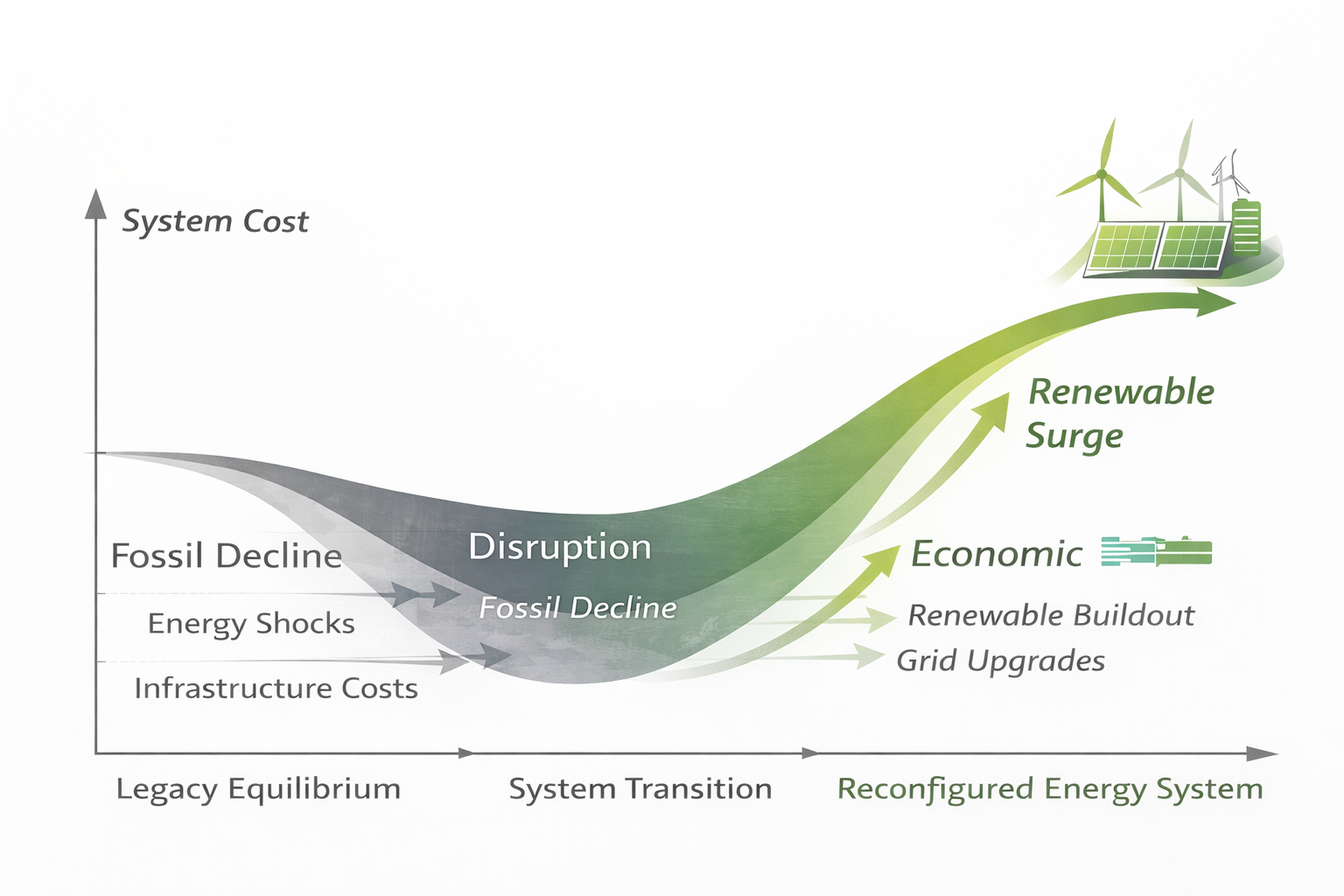
Inflation, External Cost Transmission, and the Case for System Building

In an energy-bound global order, asymmetry becomes visible under stress — particularly when energy, currency, and financial dynamics interact.

In recent years, Europe has absorbed significant externally generated inflation through energy imports, currency dynamics, and global pricing power. These effects are often misinterpreted as trade imbalances or competitiveness failures. In reality, they reflect cost transmission through energy-dependent systems.

When energy prices rise globally, regions with domestic, capital-intensive energy systems experience inflation differently from regions dependent on imports and price-indexed markets. Inflation is not only a monetary phenomenon; it is a system cost outcome. It reflects the structure of energy dependence embedded in the economy itself.

This distinction matters for how Europe interprets external pressure. Claims that trade imbalances result from unfair practices often ignore the structural reality that inflation and cost volatility are exported through energy and system architecture, not tariffs alone. For Europe, the strategic response is therefore not reactive trade measures, but reducing exposure by changing the cost base itself. This dynamic has particular relevance for Southern Europe, where energy import exposure and capital outflows compound adjustment pressures. Under electrification, system building at regional level alters that equation.

Decentralised energy and infrastructure investment do exactly this. By shifting expenditure from ongoing imports and price volatility to domestic, capital-based systems, Europe reduces :

(See Energy System Data Companion and Investor Reframing for empirical cost and capital flow analysis.)

This has direct implications for investors.

Europe’s private investors have historically assessed profitability through shorter time horizons and liquid market benchmarks, often favouring external markets with faster returns. In a system transition, this logic becomes self-defeating. What appears more profitable in the short term often compounds long-term cost exposure and structural dependency.

Strategic assets — whether decentralised energy systems, grids, storage, or critical materials such as rare earths — require long-cycle, system-level planning in partnership with the private sector. Their returns are not captured solely through price appreciation, but through cost reduction, system resilience, and internal value creation.

Under stress, asymmetry therefore clarifies Europe’s real choice:
continue exporting capital and importing volatility — or redirect private investment toward building the internal systems that stabilise costs, strengthen SMEs, and deepen the internal market.

This is not primarily a political argument. It is a re-pricing of risk under structural constraint.

Asymmetry under stress does not demand ideology. It demands credible, European-scale system design that allows private capital to profit from building the foundations of competitiveness rather than arbitraging their erosion.