EU ENERGY EXPOSURE & SOVEREIGNTY DATA COMPANION
(Indicative Structural Snapshot — Update Annually)
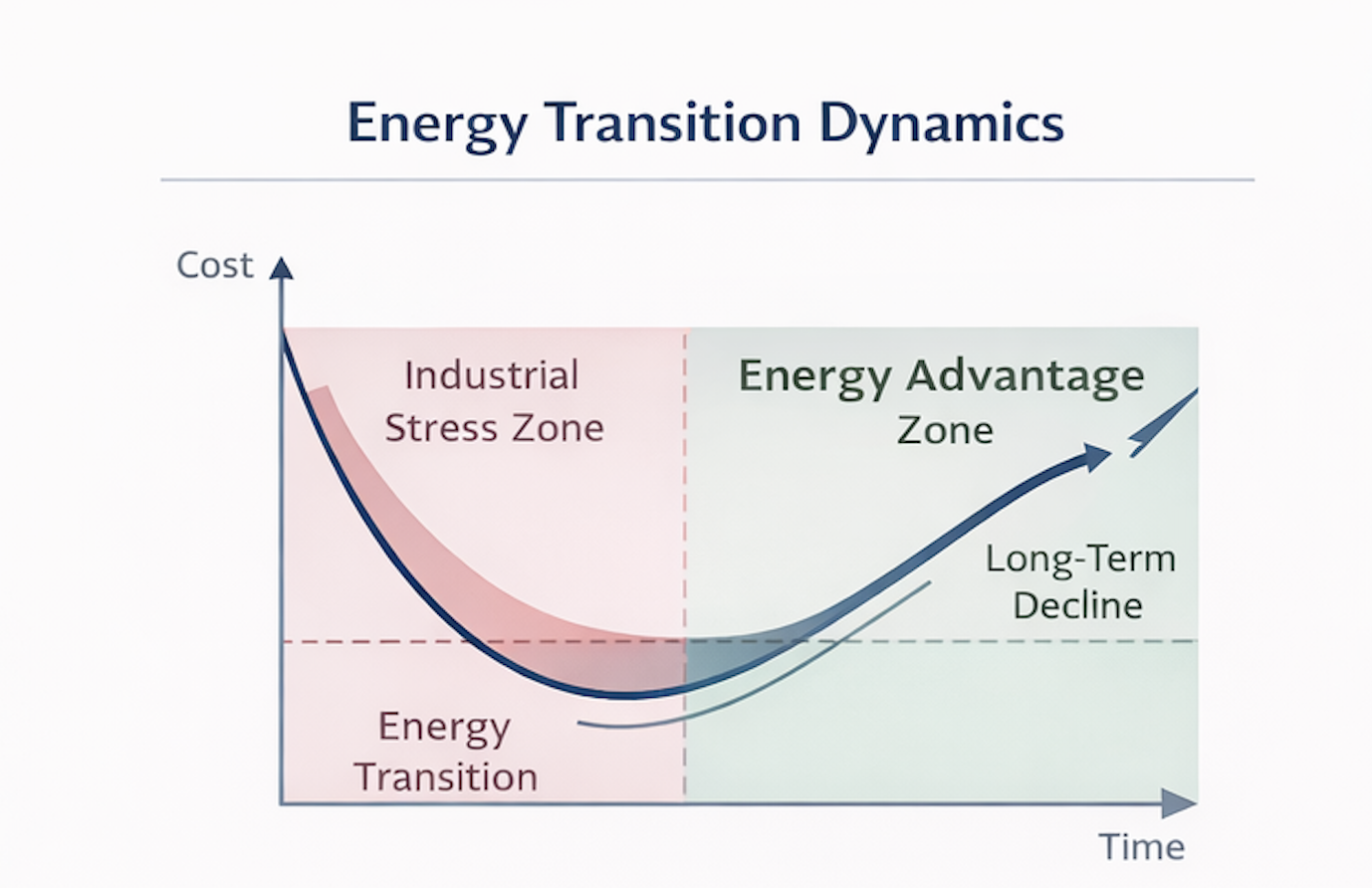 ## I. Energy
Import Dependence
## I. Energy
Import Dependence
EU gas imports ≈ 80–90% of consumption
LNG share of imports post-2022 significantly increased
Limited domestic fossil buffer
Implication: Marginal pricing exposure.
II. Electricity Marginal Architecture
Electricity often priced at gas marginal unit
Higher volatility transmission than energy-abundant peers
Structural industrial price differential vs US
| Region | Industrial Electricity |
|---|---|
| US | $70–90/MWh |
| EU | $130–200/MWh |
Implication: Margin compression risk.
III. Industrial Exposure
Energy-intensive sectors most affected post-2022
SME share ≈ 99% of firms
SMEs ≈ 2/3 private employment
Implication: Energy volatility = democratic stability variable.
IV. Capital & Monetary Transmission
Post-2022 industrial contraction in some sectors
Increased capital allocation toward US
Energy-driven inflation surge → ECB tightening
Transmission:
Energy Shock
→ Industrial Compression
→ Inflation
→ Rate Tightening
→ Fiscal Strain
Implication: Monetary ceiling risk.
V. Infrastructure Gap
Grid expansion lag relative to electrification targets
Permitting delays
AI load growth increasing system stress
Implication: Ceiling pressure unless architecture shifts.
Where It Should Sit
EU_Sovereignty / 7_evidence
or
EU_Sovereignty / 8_annex_public
Since you already have 9_monetary as a conceptual layer, the EU data companion fits cleanly in 7_evidence.
That preserves hierarchy.
Why This Matters
This EU version does three things:
Makes the Structural Ceiling measurable
Grounds Monetary Ceiling in exposure
Prevents critics from saying “this is abstract”
It also strengthens your LinkedIn authority because you can reference:
“See EU Energy Exposure Data Companion.”
That signals seriousness.
Important Distinction
GLOBAL Data Companion
→ structural system metrics
EU Data Companion
→ exposure + vulnerability + transmission metrics
They are complementary.
Not redundant.
Suggested Strategic Reading
The following materials provide additional context for the structural dynamics examined across this project, particularly the interaction between energy systems, industrial capacity, capital allocation, and technological infrastructure.
Core Essays on this Site
EU Energy Paradigm Shift Explains how Europe’s industrial competitiveness and monetary space are increasingly shaped by energy cost structure.
AI Sovereignty Stress Test Examines how energy volatility and compute localisation shape technological sovereignty and digital infrastructure risk.
Energy Constraint and the Monetary Ceiling Traces the transmission from energy systems to industrial margins, capital flows, and monetary policy space.
Strategic Context
These external works provide broader analytical perspectives on energy systems, industrial transformation, and technological competition.
Vaclav Smil — Energy and Civilization
A foundational history of how energy systems shape economic structures.Daniel Yergin — The New Map
Explores the geopolitical implications of the evolving global energy landscape.International Energy Agency (IEA)
Global energy investment and transition analysis.International Monetary Fund — Energy Price Pass-Through Studies
Research on how energy shocks transmit into inflation and industrial margins.